As the Denver Business Journal's Ed Sealover and Cathy Proctor report:
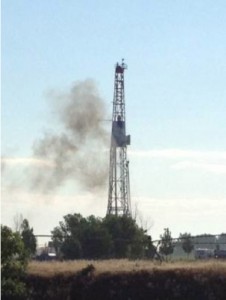
The oil and gas wars that many predicted at the Colorado Capitol still may be coming as the 2014 legislative session wanes, as industry representatives and elected officials are discussing a bill that would give local governments more control over drilling regulations.
A draft bill that was revised late Tuesday and was given to the Denver Business Journal would grant local governments regulatory authority — provided the rules don’t conflict with state statutes — over noise and over setback distance between a well site and schools, hospitals and homes. It also would give cities and counties the authority to conduct inspections and monitoring and to charge a “reasonable” fee to cover its costs.
House Majority Leader Dickey Lee Hullinghorst, D-Gunbarrel, said early Tuesday that she doubted such a bill would materialize this session because there is only a week left until the May 7 adjournment of the General Assembly. But several sources close to the negotiations said that discussions about the bill picked up throughout the day as a number of oil and gas companies began to see it as a favorable alternative to facing a proposed ballot measure in November that could allow local governments to push setbacks for well sites as far as 1,500 or 2,500 feet from homes and schools and permit local fracking bans…
A last-minute bill to increase the power of local communities to regulate drilling reflects a very simple reality, one that we've acknowledged in this space discussing the possibility of a much more stringent statewide ballot initiative:
Capitol sources say that some oil and gas companies, fearing the potential of losing to [Rep. Jared] Polis’ well-funded ballot effort, [Pols emphasis] are pushing to pass the proposed bill because they consider it to be much less extreme. But there a rifts over what details would be acceptable not just to that industry but to other industries that could be affected.
Negotiating a deal that would be good enough to please both local control initiative proponents and the oil and gas industry is a tall order, but some of the same people involved in the 2010 "Clean Air Clean Jobs" compromise to convert coal-fired power plants along the Front Range to natural gas are working to align these disparate interests enough to strike a deal. This late-session negotiation comes as other bills favored by conservationists, like a mere study of the health effects of oil and gas drilling which passed the House last week, die with help from Democrats in the one-vote Democratic majority Senate.
Apropos, a couple of weeks ago, Eli Stokols reported for Politico Magazine about the larger issues surrounding this debate. Without expressing an opinion on its conclusions, as negotiations progress, it's clear Stokols wrote a prescient story:
Ted Trimpa, a Denver power lawyer and strategist once dubbed “the Democrats’ Karl Rove,” was instrumental in helping Polis and the three other millionaires build Colorado’s progressive infrastructure and consolidate power over the last decade. Now he finds himself trying to hold it all together.
He worries that the ballot initiative would splinter a progressive coalition in Colorado that’s been so successful that it’s now seen as a blueprint for Democrats and Republicans in other states—its many successes attributable to an unusual and lasting harmony, an ability to avoid sticky policy fights that distract from the shared goal: winning.
Resolving Colorado’s fracking fight quickly may yet provide other states with a blueprint of how to deal with local control issues around oil and gas, a national example of how compromise and consensus can be achieved even in our polarized times. But if Polis’s measures move toward the November ballot, the country may find out that Colorado isn’t such a model after all, that coalition politics aren’t as easy as this state has made them seem.
“We’re a state known for the two sides working together,” Trimpa tells me, “but if this initiative makes the ballot, the age of that will be gone for a very long time.”
It is what it is, folks, and few of us are privy to the action going on behind the scenes. Politically, there's an undeniable need for Democrats to present a unified front in this tight election year. On the other hand, coalitions only work when sufficient common ground exists to move forward. This has always been the great challenge of holding together the center-left Democratic coalition that has held control of this state for going on a decade, and this isn't the first time the ability to hold that coalition together has been put to a high-stakes test.
We'll update as soon as we learn more–and that won't be long with session's end just days away.
Subscribe to our monthly newsletter to stay in the loop with regular updates!
Comments