U.S. Senate See Full Big Line

(D) J. Hickenlooper*

(D) Julie Gonzales

(R) Janak Joshi

80%

40%

20%

(D) Michael Bennet

(D) Phil Weiser
55%

50%↑
Att. General See Full Big Line

(D) Jena Griswold

(D) M. Dougherty

(D) Hetal Doshi

50%

40%↓

30%

Sec. of State See Full Big Line
(D) J. Danielson

(D) A. Gonzalez
50%↑

20%↓
State Treasurer See Full Big Line

(D) Jeff Bridges

(D) Brianna Titone

(R) Kevin Grantham

50%↑

40%↓

30%

CO-01 (Denver) See Full Big Line

(D) Diana DeGette*

(D) Wanda James

(D) Milat Kiros

80%

20%

10%↓

CO-02 (Boulder-ish) See Full Big Line

(D) Joe Neguse*

(R) Somebody

90%

2%

CO-03 (West & Southern CO) See Full Big Line

(R) Jeff Hurd*

(D) Alex Kelloff

(R) H. Scheppelman

60%↓

40%↓

30%↑

CO-04 (Northeast-ish Colorado) See Full Big Line

(R) Lauren Boebert*

(D) E. Laubacher

(D) Trisha Calvarese

90%

30%↑

20%

CO-05 (Colorado Springs) See Full Big Line

(R) Jeff Crank*

(D) Jessica Killin

55%↓

45%↑

CO-06 (Aurora) See Full Big Line

(D) Jason Crow*

(R) Somebody

90%

2%

CO-07 (Jefferson County) See Full Big Line

(D) B. Pettersen*

(R) Somebody

90%

2%

CO-08 (Northern Colo.) See Full Big Line

(R) Gabe Evans*

(D) Shannon Bird

(D) Manny Rutinel

45%↓

30%

30%

State Senate Majority See Full Big Line

DEMOCRATS

REPUBLICANS

80%

20%

State House Majority See Full Big Line

DEMOCRATS

REPUBLICANS

95%

5%

Generic selectors
Exact matches only
Search in title
Search in content
Post Type Selectors
November 02, 2023 01:08 PM UTC

Colorado is Fully Funding Education for First Time in 14 Years

  •  
  • by: Colorado Pols

Seth Klamann of The Denver Post reports on some great news coming out a new budget proposal unveiled Wednesday by Gov. Jared Polis:

Gov. Jared Polis proposed fully funding Colorado’s public education system for the first time in 14 years Wednesday, even as he unveiled a budget plan that he said signaled a return to a normal — and tight — financial state of affairs…

…It’s the first state budget proposal in several years that isn’t cushioned by significant COVID-19 pandemic aid from the federal government.

[mantra-pullquote align=”right” textalign=”left” width=”60%”]“This is the moment that parents, students and teachers have been waiting for, and I’m proud that our responsible budgets and consistent investment in our students have paved the way to make it a reality.”

— House Speaker Julie McCluskie[/mantra-pullquote]

There are a lot of other details on funding for affordable housing and public safety, but the public education piece is the biggest news:

The governor’s proposal includes a $564.1 million increase in K-12 spending, much of it devoted to finally eliminating the budget stabilization factor — the term for the gulf between what the state is spending on public education and what it’s required to spend under Amendment 23, which voters passed in 2000.

The increase would mean an additional $705 per pupil…

Polis’ proposal does not take into account potential benefits from the state-referred ballot measure Proposition HH, which, if passed, would direct hundreds of millions of dollars to public education annually in coming years by reducing state tax refunds.

Eliminating the budget stabilization factor had been a priority for Polis and legislators for years. Policymakers had pared it down earlier this year but had stopped short of fully wiping it out because they weren’t confident that elimination would be permanent.

Polis told The Denver Post on Wednesday that he was confident the factor could be nixed for good. [Pols emphasis]

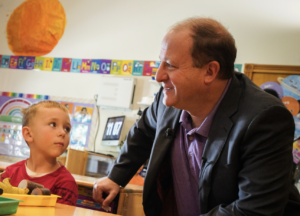
Governor Jared Polis had some great news for schools on Wednesday.

Talking about state budget matters necessarily introduces a lot of extraordinarily-wonky language, none wonkier than the phrase “the budget stabilization factor.” We’ll do our best to explain this with normal words, but the main takeaway is that THIS IS A REALLY BIG DEAL.

This story goes back to the 2010 legislative session, in which lawmakers were forced to make some awful budgetary decisions that were a consequence of reduced revenue from the aftermath of the “Great Recession.” Colorado’s Constitution requires that the state legislature craft a balanced budget every year, a process that usually gobbles up a significant chunk of the legislature’s time in late March; the 2010 discussion was so difficult that several lawmakers literally burst into tears.

As Marianne Goodland wrote for the Journal-Advocate in March 2010:

The House this week approved HB 1369, the school finance act, but it was a vote that brought some legislators to tears.

HB 1369 cuts $365 million in state funding for school districts statewide. According to the bill’s fiscal note, which explains the impact, the cut will result in a 6 percent drop in state funding for every school district in the state for 2010-11, and according to legislators, many districts will see even larger reductions…

During the bill’s second reading debate in the House, a tearful Rep. Cheryl Peniston, D-Westminster, apologized for what the legislature was about to do. [Pols emphasis]

“I apologize to all Colorado public school students,” she said; to her colleagues and friends in the teaching profession, those who will lose their jobs and those who will be left; to school boards throughout the state, and to her own grandchildren “who will not get the quality public education they deserve.”

Revenue was so tight in 2010 that lawmakers had to decide between cutting K-12 education funding and slashing Medicaid funding or potentially defunding higher education altogether. The legislature couldn’t try other options, such as raiding cash funds or suspending the “Homestead Exemption,” because that had already been done. In the end, a workaround related to public education funding (as required by Amendment 23) became the only real option for a balanced budget.

We could explain how education funding is often measured in terms of “factors,” which is where the term “budget stabilization factor” comes from, but it’s easier to think about what the legislature did in a different way: They essentially created a giant “IOU” for certain education “factors.” The state has been paying down the “negative factor” in every budget since 2010, which realistically meant that K-12 education was underfunded for more than a decade.

The legislature tried to find a way to pay off this “IOU” in 2022, but the economy hadn’t recovered quite enough to make that feasible. To use another crude analogy, this new budget proposal means that Colorado will no longer need to focus on paying off the interest on its K-12 credit card balance. Lawmakers will still have to work out all of the details and come to an agreement on the Polis budget proposal next spring, but both House Speaker Julie McCluskie and Senate President Steve Fenberg have expressed their support.

We still have a long way to go to get K-12 education funding back to where it should have been, but taking care of this “IOU” means that the state can at least get back to being forward-thinking when discussing funding for public schools. That could even mean addressing a long-sought goal of raising salaries for teachers.

Comments

Recent Comments


Posts about

Donald Trump
SEE MORE

Posts about

Rep. Lauren Boebert
SEE MORE

Posts about

Rep. Gabe Evans
SEE MORE

Posts about

Colorado House
SEE MORE

Posts about

Colorado Senate
SEE MORE

40 readers online now

Newsletter

Subscribe to our monthly newsletter to stay in the loop with regular updates!