U.S. Senate See Full Big Line

(D) J. Hickenlooper*

(D) Julie Gonzales

(R) Janak Joshi

80%

40%

10%

(D) Michael Bennet (D) Phil Weiser
55% 50%↑
Att. General See Full Big Line

(D) Jena Griswold

(D) M. Dougherty

(D) Hetal Doshi

50%

40%↓

30%

Sec. of State See Full Big Line
(D) J. Danielson (D) A. Gonzalez
50%↑ 20%↓
State Treasurer See Full Big Line

(D) Jeff Bridges

(D) Brianna Titone

(R) Kevin Grantham

50%↑

40%↓

30%

CO-01 (Denver) See Full Big Line

(D) Diana DeGette*

(D) Wanda James

(D) Milat Kiros

80%

20%

10%↓

CO-02 (Boulder-ish) See Full Big Line

(D) Joe Neguse*

(R) Somebody

90%

2%

CO-03 (West & Southern CO) See Full Big Line

(R) Jeff Hurd*

(D) Alex Kelloff

(R) H. Scheppelman

60%↓

40%↓

30%↑

CO-04 (Northeast-ish Colorado) See Full Big Line

(R) Lauren Boebert*

(D) E. Laubacher

(D) Trisha Calvarese

90%

30%↑

20%

CO-05 (Colorado Springs) See Full Big Line

(R) Jeff Crank*

(D) Jessica Killin

55%↓

45%↑

CO-06 (Aurora) See Full Big Line

(D) Jason Crow*

(R) Somebody

90%

2%

CO-07 (Jefferson County) See Full Big Line

(D) B. Pettersen*

(R) Somebody

90%

2%

CO-08 (Northern Colo.) See Full Big Line

(R) Gabe Evans*

(D) Shannon Bird

(D) Manny Rutinel

45%↓

30%

30%

State Senate Majority See Full Big Line

DEMOCRATS

REPUBLICANS

80%

20%

State House Majority See Full Big Line

DEMOCRATS

REPUBLICANS

95%

5%

[wpdreams_ajaxsearchlite]
March 02, 2026 12:47 PM UTC

Colorado Building Up Public Health Warning System that Trump Abandoned

  •  
  • by: Colorado Pols

In mid-January, the United States completed its withdrawal from the World Health Organization (WHO) after 78 years of membership and despite being a founding member of the group. The Trump administration cited concerns about the WHO’s “mishandling” of the COVID-19 pandemic and vague complaints about needed reforms and political influence from member countries.
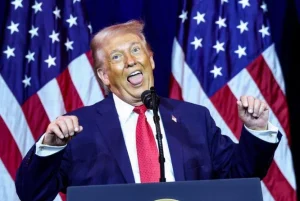
As Scott Greer, professor of Health Management and Policy and Global Public Health at the University of Michigan School of Public Health, said in response to President Trump’s decision to withdraw from WHO:

Leaving WHO is petty, self-defeating and bad for US foreign policy. Self-exclusion from the membership of one of the most broadly supported international organizations hurts the United States’ ability to promote its broad goals and influence while damaging an organization that is crucial in setting health care standards, vetting and promoting scientific advice to governments, and coordinating aid.

Americans will often not have seen the benefits of WHO membership directly, but they are everywhere if you learn where to look. They are in disease outbreaks avoided, as with the containment of Ebola outbreaks, as well as more regular and less visible disease responses. They are in the dissemination of better practice in medicine, where WHO committees are part of the process by which doctors establish best practice. And they are in the reduction of critical risks from war and disease that can destabilize countries around the world and affect our interests.

As The Washington Post reported two weeks ago, the U.S. is inexplicably now trying to make its own “WHO”:

The Trump administration is proposing spending $2 billion a year to replicate the global disease surveillance and outbreak functions the United States once helped build and accessed at a fraction of the cost, according to three administration officials briefed on the proposal.

The effort to build a U.S.-run alternative would re-create systems such as laboratories, data-sharing networks and rapid-response systems the U.S. abandoned when it announced its withdrawal from the WHO last year and dismantled the U.S. Agency for International Development, according to the officials, who spoke on the condition of anonymity to share internal deliberations.

While President Donald Trump accused the WHO of demanding “unfairly onerous payments,” the alternative his administration is considering carries a price tag about three times what the U.S. contributed annually to the U.N. health agency. [Pols emphasis] The U.S. would build on bilateral agreements with countries and expand the presence of its health agencies to dozens of additional nations, the officials said.

“This $2 billion in funding to HHS is to build the systems and capacities to do what the WHO did for us,” one official said.

Withdrawing from the WHO and trying to build out a new version — at three times the cost — is sadly typical of a President who acts first and thinks later.

In the meantime, as John Ingold reports for The Colorado Sun, officials in Colorado are trying to find a way to independently join the WHO’s Global Outbreak Alert and Response Network (GOARN):

Every week, a World Health Organization network of more than 360 institutions holds a call to talk about emerging disease threats around the globe. Topics might include, say, new cases of the deadly Nipah virus in India, or a new mpox strain found in Great Britain.

The idea is to give public health agencies worldwide a heads up on diseases that may have popped up in one place but, thanks to the ease of international travel, could soon be making an appearance at an airport near you. Ever since the United States government finalized its divorce from the WHO earlier this year, though, the U.S. is no longer on those calls.

Now, Colorado is working to get back into the group. Gov. Jared Polis announced this month that the state has applied for membership in the network, known formally as the Global Outbreak Alert and Response Network, or GOARN.

“Diseases don’t stop at borders,” Polis said in an interview. “What we want to do in Colorado is say we still understand that somebody could get on a plane in Europe or Asia and bring a disease here, and we want to know about that beforehand and know it’s a risk and understand what we can about it.”

Colorado’s move to join the GOARN is also a prominent example of how the state has worked to develop public health capabilities that were once left to the federal government. [Pols emphasis]

As Ingold reports, states such as California, Illinois, and New York are also joining GOARN independently of the federal government.

In recent months, Colorado has also joined a multistate alliance to offer public health messaging and response, as well as vaccine guidance, as Health and Human Services Secretary Robert F. Kennedy, Jr. destroys once-trusted organizations such as the Centers for Disease Control (CDC). In recent weeks, Kennedy has eliminated federal recommendations for flu shots — claiming, without evidence, that a flu shot is responsible for his weird, gravelly voice. The United States is also in the midst of a serious measles outbreak that was entirely preventable until RFK Jr. started his vaccine-bashing efforts as HHS Secretary. Officials at UCHealth in Colorado recently sounded a new warning about the highly-contagious measles virus.

As Ingold continues for the Sun:

Dr. Rachel Herlihy, the deputy chief medical officer at the Colorado Department of Public Health and Environment, said participating in the GOARN will give Colorado valuable notice about germs that could head our way…

…Herlihy said that, in the past when providing public health guidance, CDPHE might have simply linked on its website to a page on the CDC’s website.

“Now it’s not always clear that the information on a particular CDC website is really based in the best science,” she said. [Pols emphasis]

Perhaps Making America Healthy Again (MAHA) works better after the Trump administration Makes America Sicker First.

Comments

Recent Comments


Posts about Donald Trump

Posts about Rep. Gabe Evans

Posts about Rep. Lauren Boebert

Posts about the Colorado House

Posts about the Colorado Senate


42 readers online now

Newsletter

Subscribe to our monthly newsletter to stay in the loop with regular updates!