U.S. Senate See Full Big Line

(D) J. Hickenlooper*

(D) Julie Gonzales

(R) Janak Joshi

80%

40%

20%

(D) Michael Bennet

(D) Phil Weiser
55%

50%↑
Att. General See Full Big Line

(D) Jena Griswold

(D) M. Dougherty

(D) Hetal Doshi

50%

40%↓

30%

Sec. of State See Full Big Line
(D) J. Danielson

(D) A. Gonzalez
50%↑

20%↓
State Treasurer See Full Big Line

(D) Jeff Bridges

(D) Brianna Titone

(R) Kevin Grantham

50%↑

40%↓

30%

CO-01 (Denver) See Full Big Line

(D) Diana DeGette*

(D) Wanda James

(D) Milat Kiros

80%

20%

10%↓

CO-02 (Boulder-ish) See Full Big Line

(D) Joe Neguse*

(R) Somebody

90%

2%

CO-03 (West & Southern CO) See Full Big Line

(R) Jeff Hurd*

(D) Alex Kelloff

(R) H. Scheppelman

60%↓

40%↓

30%↑

CO-04 (Northeast-ish Colorado) See Full Big Line

(R) Lauren Boebert*

(D) E. Laubacher

(D) Trisha Calvarese

90%

30%↑

20%

CO-05 (Colorado Springs) See Full Big Line

(R) Jeff Crank*

(D) Jessica Killin

55%↓

45%↑

CO-06 (Aurora) See Full Big Line

(D) Jason Crow*

(R) Somebody

90%

2%

CO-07 (Jefferson County) See Full Big Line

(D) B. Pettersen*

(R) Somebody

90%

2%

CO-08 (Northern Colo.) See Full Big Line

(R) Gabe Evans*

(D) Shannon Bird

(D) Manny Rutinel

45%↓

30%

30%

State Senate Majority See Full Big Line

DEMOCRATS

REPUBLICANS

80%

20%

State House Majority See Full Big Line

DEMOCRATS

REPUBLICANS

95%

5%

Generic selectors
Exact matches only
Search in title
Search in content
Post Type Selectors

House GOP Pulls a Tancredo on Hurricane Sandy Relief

UPDATE #2: Under fire, Speaker John Boehner and Majority Leader Eric Cantor release a statement promising a quick vote on Hurricane Sandy relief…later:

“Getting critical aid to the victims of Hurricane Sandy should be the first priority in the new Congress, and that was reaffirmed today with members of the New York and New Jersey delegations. The House will vote Friday to direct needed resources to the National Flood Insurance Program. And on January 15th, the first full legislative day of the 113th Congress, the House will consider the remaining supplemental request for the victims of Hurricane Sandy.”

—–

UPDATE: A blistering joint statement hammering House Republicans from Govs. Andrew Cuomo (D) of New York and Chris Christie (R) of New Jersey:

“With all that New York and New Jersey and our millions of residents and small businesses have suffered and endured, this continued inaction and indifference by the House of Representatives is inexcusable,” the governors said. “It has now been 66 days since Hurricane Sandy hit and 27 days since President Obama put forth a responsible aid proposal that passed with a bipartisan vote in the Senate while the House has failed to even bring it to the floor. This failure to come to the aid of Americans following a severe and devastating natural disaster is unprecedented.”

“The fact that days continue to go by while people suffer, families are out of their homes, and men and women remain jobless and struggling during these harsh winter months is a dereliction of duty. When American citizens are in need we come to their aid. That tradition was abandoned in the House last night.”

—–

USA TODAY, as we’ll explain:

House Speaker John Boehner of Ohio indicated late Tuesday the 112th Congress would end its term without voting on federal emergency aid for victims of Superstorm Sandy.

“The speaker is committed to getting this bill passed this month,” Boehner’s spokesman, Brendan Buck, said in an email…

“I think it’s unprecedented for the United States Congress to walk away from a natural disaster,” [GOP Rep. Peter] King said, adding that he was not given a reason for the postponement. “This to me is just walking away from responsibility.”

King and Republican Rep. Michael Grimm of Staten Island, who represents some of the hardest-hit neighborhoods, joined Democrats at an impromptu news conference to publicly plead for Boehner to reconsider.

Grimm described himself as “somewhat in disbelief and almost ashamed,” adding that he’s “not proud” of the decision his party has made.

Back in 2005, then-Rep. Tom Tancredo became the only member of the Colorado delegation, and one of only 11 representatives in the House to vote against the bill funding assistance for Hurricane Katrina victims. It’s a pattern we observed last year, when House Republicans led by Rep. Eric Cantor demanded cuts to offset emergency funding in the wake of Hurricane Irene. Here at home, we’ve got Rep. Doug Lamborn, who eagerly badmouths President Barack Obama’s “politicized” disaster declarations…until he needs one himself.

Each time this happens, we marvel at the political cluelessness on display–perhaps a popular move with a small percentage of, you know, heartless people, it’s a terrible attitude with which to win over soccer moms. In this case, Speaker John Boehner says he wants the bill to come to a vote, while conservative House members decry its “pork,” thinly concealing what appears to be a temper tantrum over the totally unrelated “fiscal cliff” compromise passed last night.

So ends the 112th Republican Congress.
Welcome New and Returning Front Page Editors

We’ve just finished setting up the permissions for our newest front page guest editor, Voyageur, who begins his term of service today after winning last month’s election. Voyageur joins re-elected front page editor ProgressiveCowgirl, our longest serving guest editor who will mark an unprecedented two years of continuous service in June of 2013.

Just a reminder that later this month, Colorado Pols will make the transition to an all-new software platform and site design. We look forward to our editors taking advantage of the site’s significantly enhanced functionality once that process is complete.

In the meantime, write good content, and these are the smart folks we trust to promote it.

2012’s Top Story: The “Tipping Point,” Well and Truly

Colorado Pols is recapping the top ten stories in Colorado politics from the 2012 election year.

As the New York Times’ poll guru Nate Silver explained just after the elections:

In the simulations we ran each day, we accounted for the range of possible outcomes in each state and then saw which states provided Mr. Obama with his easiest route to 270 electoral votes, the minimum winning number. The state that put Mr. Obama over the top to 270 electoral votes was the tipping-point state in that simulation.

Now that the actual returns are in, we don’t need the simulations or the forecast model. It turned out, in fact, that although the FiveThirtyEight model had a very strong night over all on Tuesday, it was wrong about the identity of the tipping-point state. Based on the polls, it appeared that Ohio was the state most likely to win Mr. Obama his 270th electoral vote. Instead, it was Colorado that provided him with his win – the same state that did so in 2008. [Pols emphasis]

So according to Silver’s initial analysis, Colorado, which the incumbent carried by just under five points, was the tipping-point state that gave President Barack Obama his Electoral College win. But there’s a little more to our state’s pivotal role we’d like our readers to consider.

As was the case going into the 2010 elections, pundits going into 2012 frequently cited Colorado as a state that, although President Obama won handily here in 2008, was very much “back in contention” due to a number of factors: Democratic and independent disillusionment with Obama’s first-term accomplishments, pent-up conservative angst after a rough recent history in this state for Republicans, and a healthy Mormon population to provide a natural base constituency for eventual GOP nominee (and always the institutional favorite) Mitt Romney.

Not only did Romney lose the GOP caucuses in Colorado to the laughably unelectable Rick Santorum, Romney’s entire campaign in Colorado came to symbolize what was wrong both with his campaign and the Republican Party in general today. Every lurch to the right from Romney to win “Tea Party” primary votes was carefully recorded and amplified by Democrats and their allies in Colorado, who never lost sight of Romney as their long-term target through the long GOP primary season. In addition, Romney’s campaign had a bizarrely, pre-emptively hostile relationship with the local press that we were never able to understand.

It’s difficult to enumerate just how many ways the Romney campaign made no sense in its misbegotten approach to winning the state of Colorado. This was especially clear from the earliest visits by the campaign to the state after securing the nomination. Instead of mounting a determined effort in the pivotal suburbs of Denver, Romney’s early campaign visits were to unpopulated places like Ft. Lupton, and remote Craig in the northwest corner of the state. Romney’s message was also hopelessly out of touch: in Craig, Romney’s claims that Obama was hurting the nearby coal industry were refuted by the city’s own mayor, who was happy to report that jobs and coal production were in fact on the rise.

When Romney announced his choice of Rep. Paul Ryan as his vice presidential running mate, Ryan was quickly dispatched to Colorado in the hope of improving the ticket’s showing in this state. But Ryan quickly backfired on the Romney campaign in Colorado after questions surfaced about the veracity of his claims to have climbed dozens of Colorado fourteeners opened a segue into much broader questions about his truthfulness. Ryan’s strident views on abortion were pounced on by Democrats and pro-choice advocates, driving home the Michael Bennet strategy.” Robust spending on Spanish language advertising not only wooed Spanish-speaking voters, but demonstrated the Obama campaign’s value for the Hispanic community as a whole.

Logistically as well as in the critical field campaign organization to turn out voters, Romney was never able to keep up with the Obama campaign’s massive and highly professionalized operation. Even though crowds overall were smaller this year than in 2008, Obama’s campaign events consistently drew larger and more enthusiastic audiences. The one major exception to this rule, Romney’s overflowing rally at iconic Red Rocks Amphitheatre, resulted in thousands upsettedly turned away due to wildly overbooking the venue–and hours of traffic jams as attendees and would-bes clogged nearby roads.

While Obama’s superbly-organized field campaign turned out Colorado voters, including a solid mail-in and early vote operation, Romney’s Colorado field effort on Election Day broke down as part of the nationwide ORCA fiasco, helping Democrats handily overcome a small GOP lead in the final early and mail-in ballot counts. In the end, the Democratic coordinated campaign worked seamlessly and effectively to get out the vote, up and down the ticket. As we saw in 2008 and fully keeping pace today, Democrats possess a level of campaign sophistication that has taken years to develop–and that Republicans are years away from equaling.

Certainly, the many scandals and gaffes that beset Romney on a national level had their effect in Colorado, and it’s also possible that Romney could have hypothetically won (or lost) in a few scenarios that didn’t include the state of Colorado’s nine electoral votes at all. But as it was, recently-blue Colorado was once again pivotal; and the failures on the ground, and in the earned media war unique to Colorado by Romney’s campaign, are a piece of the story of Republican losses in 2012 that both sides will study closely if they know what’s good for them.

Top Ten Stories of 2012 #2: The Fall of Frank McNulty

Colorado Pols is recapping the top ten stories in Colorado politics from the 2012 election year.

In 2010, riding the crest of a “Republican wave” in a midterm election trending against the party of President Barack Obama, Colorado Republicans took back control of the state House of Representatives for the first time since their historic loss of legislative control in 2004. Colorado Republicans still couldn’t match the success enjoyed by the GOP in federal races, retaking the state House chamber by a single seat in an extremely close suburban Denver House race ultimately decided by a margin of fewer than 200 votes.

Still, after solid Democratic control of both chambers for six years, and a Democrat in the Governor’s Mansion for four of those years, the GOP had finally regained a foothold on power.

Which they proceeded to squander in historic fashion, accomplishing nothing except further damage to the Republican brand, and leading directly to the Colorado House flipping right back to Democrats in November of this year.

The blame for this failure lies squarely with former Republican House Speaker Frank McNulty and his team of GOP House leadership. As Speaker, McNulty quickly established a reputation for Machiavellian game playing. Just as one example, at the end of the 2011 session, McNulty’s last-minute manipulation of normally-routine rules legislation to undo payday lending reforms passed by the previous Assembly turned into a front-page controversy, and a very public defeat for House Republicans–not to mention unpopular payday lenders.

It’s possible, however, that the beginning of the end for McNulty came during the work of the state legislative reapportionment commission. After the commission came together on a bipartisan-approved new map of Colorado’s state House and Senate districts, McNulty and Republican leadership ill-advisedly chose to appeal those maps to the Colorado Supreme Court. Though the maps were successfully remanded to the commission, Republicans had managed to totally alienate the independent chairman of the commission, Mario Carrera. The final maps faithfully met the tests the Supreme Court laid out–in ways that were worse for Republicans.

Following these setbacks, many Republican donors and activists were already running out of patience with McNulty as the 2012 session began. Recognizing important shifts in voter opinion on issues that had traditionally served as GOP wedges to turn out socially conservative voters, some Republicans began agitating for an end to resistance on matters like civil unions for gays and lesbians, and accessible tuition rates for undocumented students in the state.

McNulty ignored them. Even as members of his one-seat majority GOP caucus began to announce their support for civil unions legislation, McNulty gave only token and cryptic lip service to the idea of giving the bill a fair shot in his House. The ASSET legislation for undocumented students died, though with much wider coverage in the press–including Spanish language press–than in previous years.

On the final day of the 2012 legislative session where bills could be debated and still passed before sine die, McNulty was faced with a dilemma: there were enough votes, from Democrats and Republicans, to force civil unions to the floor for approval–where it would pass with several Republicans voting in favor. Rather than allow that to happen, McNulty used his authority as Speaker to shut down debate in the House–killing not just the civil unions bill, but dozens of other uncontroversial pieces of legislation. This action was almost universally condemned in the media, and resulted in a rare expenditure of political capital by an emotional Gov. John Hickenlooper to call a special session to reconsider civil unions. McNulty unceremoniously directed the reconsidered bill in special session to his “kill committee,” and that was that.

It’s likely that McNulty really didn’t think this would matter in the elections a few months later–wouldn’t matter, or might perhaps benefit Republicans by motivating socially conservative voters. But he couldn’t have been more wrong. In addition to the major shift in public polling from opposition to strong support for civil unions in the last few years, McNulty’s extraordinary actions to kill civil unions enraged wealthy Democratic supporters of marriage equality like philanthropist Tim Gill–not to mention the Republicans who had been calling for passage. It’s generally believed that the death of civil unions motivated Gill and others to strike back harder in key Colorado legislative races, with the goal of ending McNulty’s control of the Colorado House.

In the aftermath of the Democrats’ retaking of the House, McNulty did not even seek any GOP leadership position, although rumors he might resign his seat entirely did not come true. Democrats were aided in their efforts by what appears to be yet another round of low quality, under-vetted candidates for which McNulty also must bear responsibility. In 2010, candidate vetting proved a major problem for the GOP, and certainly contributed to them barely retaking control of the House. For candidates referred to by GOP leadership as “rising stars” this year to be exposed in the press for all kinds of trouble in their records–trouble that somebody should have known about–strongly points toward incompetence at the top.

In only two years, Frank McNulty’s mismanagement of the Colorado House played a big role in turning the closest Republicans have had to a comeback–after years of being humiliated in a state they used to own–into a fresh lesson on why they are losing here so consistently.

Top Ten Stories of 2012 #3: Legalizing Marijuana in Colorado

Colorado Pols is recapping the top ten stories in Colorado politics from the 2012 election year.

A multitude of factors, owing their existence to both liberal and conservative political philosophy as well as Colorado’s longstanding values of individual freedom and respect for privacy, led to our state taking what the Denver paper called a “brave, messy path” to legalizing the personal recreational possession, cultivation, and eventual commercial sale of marijuana in 2012.

Although the vote to pass Amendment 64 reflects a changing, more open-minded and liberal electorate in our state, it’s worth noting that the proponents of marijuana legalization in Colorado have traditionally been conservative-libertarians–such as attorney Robert Corry, long associated with the Independence Institute. On paper, championing marijuana legalization as a segue into recruitment of young voters to libertarian-right politics makes a lot of sense.

Unfortunately, most of the voters who are persuadable on this issue will not be attracted to what is generally perceived to be an intolerant Republican Party. The GOP itself was no proponent of marijuana legalization, either this year or in years past. Therefore the political benefit of the campaign to legalize marijuana principally went to Democrats, who won races across the state at the same time marijuana was legalized–even though elected Democrats in Colorado kept Amendment 64 at arm’s length almost as much as Republicans did.

If that wasn’t complicated enough, Amendment 64’s passage puts Colorado in conflict not just with a Democratic administration, but with the underlying philosophy of the primacy of federal law that Democrats take for granted in so many of their greatest victories: Brown vs. Board of Education. The Voting Rights Act. Even “Obamacare” itself.

At the same time, this isn’t about desegregating schools, or ensuring everyone has equal rights to vote, or even reforming health care via mandates on every consumer. In the last ten years in Colorado alone, over 100,000 people have been arrested for marijuana possession. There’s a compelling argument that the simple fact of such a mild narcotic like marijuana being illegal breeds contempt for other, necessary prohibitions of “harder” drugs, and undermines the law with each new generation. Although the fines for simple possession of small amounts of marijuana were quite low here in Colorado, convictions still can have major impacts on a person’s future career, and eligibility for assistance programs like federal student aid.

Bottom line: Coloradans considered in Amendment 64 the value of enforcement of the law regarding marijuana versus the harm caused by that enforcement, and decided it isn’t worth it anymore. A progressive, compassionate policy goal of harm reduction challenges federal primacy in a way that cannot be considered all that different from Southern states attempting to defy federal law on segregation–for reasons now condemned by history.

So put that in your pipe and smoke it. Our tendency is, as we have said repeatedly, to defend the will of the voters, and to not fear the distinction between this challenge of federal primacy and others in history–because that distinction justifies any superficial contradiction. This is a challenge from the states to federal law that, unlike segregation, is on the right side of history.

And that’s what made libertarians out of so many liberals this year in Colorado.

Biden, McConnell in Last-Minute Fiscal Cliff Negotiations

UPDATE: At least a bungee-jump off the so-called “fiscal cliff” now likely, CNN:

The feared fiscal cliff was at hand Monday night, with nothing expected to pass Congress before a combination of tax increases and spending cuts starts to kick in at midnight.

A deal to avert that combination, which economists warn could push the U.S. economy back into recession, was “within sight” on Monday afternoon, President Barack Obama said. And in the Senate, Minority Leader Mitch McConnell told members that they were “very, very close” to a deal, having worked out an agreement on taxes…

In the House, GOP sources said there’s little practical difference in settling the issue Monday night versus Tuesday. But if House Republicans approve the bill on Tuesday — when taxes have technically gone up — they can argue they’ve voted for a tax cut to bring rates back down, even after just a few hours, GOP sources said. That could bring some more Republicans on board, one source said.

—–

As the clocks ticks down to midnight, Politico reports:

Senate Minority Leader Mitch McConnell (R-Ky.) and Vice President Joe Biden engaged in furious overnight negotiations to avert the fiscal cliff and made major progress toward a year-end tax deal, giving sudden hope to high-stakes talks that had been on the brink of collapse, according to sources familiar with the discussion.

McConnell and Biden, who served in the Senate together for 23 years, are closing in on an agreement that would hike tax rates for families who earn more than $450,000, and individuals who make more than $400,000, according to sources familiar with talks…

After loud Democratic protests on Sunday, Republicans agreed to take off the table a controversial provision that would have cut Social Security benefits. But more hurdles soon emerged, including over automatic spending cuts set to take place next year, and the rates for estate taxes that are set to balloon if no deal is reached by the new year.

The Hill:

[T]he talks hit a ditch on Saturday night when McConnell made a proposal that included switching the formula used to calculate Social Security benefit payments. Using the chained consumer price index, or “chained CPI,” would curb the growth of the program’s cost-of-living adjustments.


Democrats slammed it as a poison pill and warned there would be no last-minute deal to avoid tax hikes if Republicans insisted on entitlement reform, which Democrats had assumed was off the table at this late stage.

The dwindling scope of any potential deal with Republicans is the biggest reason why Democrats have refused to include the so-called “chained CPI” reductions in the future growth of Social Security benefits–a concession President Barack Obama himself had offered at an earlier stage of negotiations in hope of a much larger agreement. Mitch McConnell’s quick retreat on that proposal shows which side has more to lose from the failure to reach an agreement, and (finally!) seems to acknowledge the tremendous public opposition to cutting Social Security.

It’s not even known at this point if the deal that’s ultimately reached–if any–will include rescinding, or at least delaying, major cuts set to go into effect tomorrow to a multitude of domestic and military programs known as the “sequester”–cuts mandated by the 2011 Budget Control Act compromise on raising the debt ceiling. Also unknown is the status of extending unemployment compensation, the so-called “doc fix” for Medicare reimbursement, the estate tax, and many other issues up against deadlines. And of course, whatever they cobble together in the Senate must pass the House, which is, as you know, a more or less dysfunctional body.

We’ll update throughout the day as (and if) necessary.

What 5 bills would you introduce?

Ok, with session about to start, if you were in the House what 5 bills would you introduce? I’ll start it off with my 5:

  1. Civil Unions
  2. Call for a constitutional convention. That will work as well as any of the other convoluted suggestions. And it will be quicker.
  3. Effective campaign finance reform. Either public financing or unlimited with full disclosure. Including Congressional elections in the state.
  4. Create a legislative research group who’s job is to measure the effectiveness and ROI of legislation, departments, etc.
  5. Invest in local start-ups. More jobs, better jobs, and the state turns a profit. What’s not to like?

Top Ten Stories of 2012 #4: “Birther Mike” Coffman Wins, But…

Between now and New Year’s Eve, Colorado Pols is recapping the top ten stories in Colorado politics from the 2012 election year.

One the one hand, Republican Rep. Mike Coffman deserves credit for having survived the toughest electoral challenge he has ever faced. Unfortunately, Coffman’s 2012 hard fought re-election effort revealed major weaknesses, unseen in prior contests, that are certain to negatively impact his prospects for higher office going forward.

That’s a nice way of saying that Coffman, despite keeping his seat in Congress, hurt his career very badly this year.

Never beloved by his own party, prior to 2012, Rep. Coffman was nonetheless widely considered to be a top Republican contender to take on Sen. Mark Udall in 2014–and had made little secret of future higher aspirations. After the redistricting process last year dramatically reshaped Coffman’s district from an ultra-safe Republican bastion into one of the more competitive and diverse districts in the nation, Coffman faced by far the greatest test yet of his electability.

Which he proceeded to fail miserably. Coffman showed unexpected political cluelessness early on by signing up as the Colorado chair of Texas Gov. Rick Perry’s laughably inept White House bid. Coffman unabashedly expressed his love for his predecessor Tom Tancredo on the campaign trail, in a district that would never elect Tancredo today. In May, video of Coffman emphatically telling Elbert County Republicans that President Barack Obama “is just not an American” sent Coffman into hiding–punctuated by a now-infamous video of Coffman, finally cornered by 9NEWS reporter Kyle Clark on camera outside a fundraiser, bizarrely repeating over and over again verbatim that he had “misspoke and apologized.”

That incident essentially put Coffman on the defensive for the rest of the campaign, forcing him to carefully manage public appearances, hiding behind heavy spending on well-produced, mostly positive ads. With internal polls continuing to show weakness, Coffman then went ruthlessly negative, tacitly and controversially linking his opponent to a child abduction in the news at the time. Coffman’s overmatched opponent, state Rep. Joe Miklosi, was never able to capitalize on the opportunity Coffman’s own actions and statements had created, but the race was still much closer than we would have predicted at the start of the year.

Coffman was hoping he could ride to an easy win in 2012, and proceed from there to a run for Senate against Udall in 2014. Now, despite his victory, it’s much less certain that he will be the GOP’s candidate against Udall. Moreover, in the new competitive CD-6, Coffman enters every election as a prime Democratic pickup opportunity. To an underreported but significant extent, Coffman’s political brand has been damaged in the long term by his 2012 campaign.

Top Ten Stories of 2012 #5: Aurora and the Changing Politics of Guns

Between now and New Year’s Eve, Colorado Pols is recapping the top ten stories in Colorado politics from the 2012 election year.

As a Western state with a frontier culture and independent values, Colorado’s natural tendency toward individual freedom has always meant a permissive attitude toward gun ownership.

At the same time, tragic events in our state have put us at the forefront of the national debate over gun policy–somewhat belatedly, after the issue caught up with us in the wake of recent tragedy both here and elsewhere. In 1999, the entire nation was shocked by a mass murder at Columbine High School in Littleton, at that time the worst school shootings in American history. In the aftermath of that tragedy, Coloradans passed Amendment 22, closing the “gun show loophole” by requiring background checks be carried out by private sellers at gun shows.

After that modest defeat, the state’s highly vocal gun lobby, led by an organization called the Rocky Mountain Gun Owners, who considers the National Rifle Association too soft, aggressively fought back–pressuring Colorado Republicans to reject even the most rudimentary tightening of gun laws in the harshest terms possible. The gun lobby won a victory earlier this year when the Colorado Supreme Court overturned a University of Colorado ban on carrying licensed concealed weapons on campus.

And then, early on the morning of July 20th of this year, a disturbed University of Colorado graduate student walked into a movie theater in Aurora, and took the lives of 12 innocent people using an assault rifle and a shotgun while injuring dozens more.

Immediately after the Aurora shootings, even most Colorado Democrats were unwilling to call for a plan to reduce gun violence–either spectacular tragedies of this kind, or the dozens of people killed every day by gun violence. Gov. John Hickenlooper adopted a very NRA-like deferential tone when he said after Aurora that those intent on violence are “going to find something,” meaning some kind of weapon even if they can’t get a gun.

From that time, mass shooting incidents have killed or seriously injured 46 more people, including the most recent massacre of 20 children at an elementary school in Newtown, Connecticut. These high-profile incidents have forced attention once again on the 34 people killed every day by gun violence, and seem to be fundamentally changing the nature of this debate. The resulting shift in the narrative was apparent in the contrast between Governor Hickenlooper’s statements in July, against his very different comments this month after Newtown–and his announced support for new measures to ease access to mental health services, and keep guns out of the hands of the mentally ill.

Echoed by polls showing broad support for common sense measures to reduce gun violence without infringing on the rights of law-abiding citizens, Colorado Democratic lawmakers are following Hickenlooper’s measured call to action with a number of proposals expected to be debated in 2013. As specific gun safety proposals shake out in Colorado’s General Assembly, it’s clear that the self-serving cycle of declaring it “too soon” after a tragedy to talk about reform, which too often resulted in no action ever being taken, has been broken. The gun lobby looks weaker than ever, and at least in Colorado, Democrats appear interested in a sensible balance that both improves public safety and preserves our values.

This can be fairly considered a major and politically unexpected development.

Cut Grandma Before Guns, Says Lamborn With Glee

A classic conflict illustrated in an otherwise genuflective interview of Rep. Doug Lamborn, last night on Colorado Springs’ KRDO-TV News as he shuffles back to Washington:

One thing that is unwavering about Lamborn though is his dedication to fiscal responsibility. When he looks at the economic situation ahead he sees a reduction in federal spending.

“I’m not interested in raising taxes,” said Lamborn, referring to President Barack Obama’s plan for avoiding major holes in the budget beginning in January. “Our country needs more than anything to cut spending and to live within our means.”

…Medicare is a good place to look for savings, according to Lamborn, because on it’s on the path to bankruptcy.

“In 12 years or so Medicare is going to go broke so we have to do something,” said Lamborn. “It can not continue as it is.”

One major area of concern for Lamborn is military spending.

“It’s true that Colorado Springs will be greatly impacted by cuts in defense spending but I’m most concerned about our national defense,” said Lamborn.

As the representative of Colorado’s biggest lavishly taxpayer-funded military installations, nonetheless representing a stridently “small government” conservative electorate, Lamborn is forced to serve two radically opposed masters–who simply don’t get the contradiction. Surely, as even Lamborn’s Republican colleague Rep. Mike Coffman has said, there is some room for savings in the Department of Defense’s $707 billion (and that’s before all the extras) budget?

We suppose it would be different if the polls didn’t overwhelmingly show opposition to Lamborn’s desired choice to cut Medicare (it’s true we haven’t seen a CD-5 breakout of that polling). But he vividly illustrates the hypocrisy of some government spending, in this case defense spending with its long and storied history of profligate waste, being sacrosanct–while other spending, in this case health care for old people, is “a good place to look for savings.”

We can’t tell you exactly how it gets rationalized down along the Ronald Reagan Highway, but for anyone not able to manage this feat of intellectual pirouette, it really doesn’t look good.

Top Ten Stories of 2012 #6: The “Honey Badger’s” Very Bad Year

Between now and New Year’s Eve, Colorado Pols is recapping the top ten stories in Colorado politics from the 2012 election year.

We and many others predicted in 2010 that Scott Gessler, a Republican election law attorney unexpectedly elected Colorado Secretary of State, would easily prove to be the most partisan and controversial chief elections officer in the state’s modern history. In the two years since, he has certainly lived up to that prediction.

What we didn’t predict is that Gessler would be so very, very bad at it.

The narrative of Gessler’s tenure as Colorado Secretary of State up to now is one of two tracks: spectacularly failed attempts at misusing his power for overtly partisan aims, and surprising brushes with relatively petty financial scandal that could actually prove to be the more immediate threat to his career and credibility.

Since taking office, Gessler has been a darling of conservative activists around the nation who are convinced, among other things, that improperly registered noncitizen voters are committing large-scale election fraud. Gessler has repeatedly thrown out dubious claims of “thousands” of noncitizen voters on the rolls in Colorado without supporting evidence. This fall, Gessler sent letters requesting verification of citizenship to some 4,000 registered voters (less than half the 11,000+ figure Gessler had touted the previous year), and of those 4,000 inquiries, Westword’s Sam Levin reports they have ultimately resulted in the cancelation of 88 voter registrations–and it’s not known how many of them had actually voted. Based on previous results, a very small fraction of those 88 at most.

Bottom line: Gessler has perhaps done more to disprove the myth of widespread election fraud from “noncitizen voters” than his liberal opponents. The pitiful results of Gessler’s two-year effort to root out what is a tiny number of problem registrations, while so many other unresolved issues with our elections surely have resulted in the loss of many more than 88 votes, is a stunning self-administered rebuke to the conspiracist right wing. It’s even worse if you consider Gessler’s fixation on this while actively obstructing legislative attempts to sensibly resolve the “inactive voter” controversy from 2011, which involved so many more people.

Combined with all the other questionable incidents in Gessler’s two years in office, from hosting a fundraiser to pay off fines levied by his office on fellow Republicans to his now-infamous remark that a “good election” is when “Republicans win,” and what you have is a man fundamentally making a mockery of a solemn responsibility–and not even doing that very well. It’s so poorly executed, and so obviously improper, that it’s really quite tawdry.

“Tawdry” also sums up the other emerging narrative of Gessler’s time as Secretary of State. Gessler’s very first controversy after taking office in 2011 was his announcement that he intended to keep working part time at his old elections law firm–a decision brought about, according to Gessler, by the hardship of living on the Secretary of State’s salary of $70,000 a year. While we and others are not unsympathetic regarding the low salaries paid some of our highest public officials in Colorado, Gessler’s proposed solution was a conflict-of-interest disaster waiting to happen. After a public outcry, Gessler announced he had changed his mind.

As it turns out, Gessler discovered other ways to beat the high cost of living! Questionable reimbursements for travel expenses to partisan events, including a “True the Vote” press conference in Washington D.C. and events surrounding and including the Republican National Convention in Tampa this year, are now the subject of both an ethics commission inquiry and a Denver DA criminal investigation. Another instance of Gessler “sweeping” the entire balance of his discretionary account into his pocket at the end of the fiscal year has raised more questions.

Republican friends tell us that Gessler is exceptionally intelligent, so most of what he does has presumably been thought through. What we can’t understand is the ultimate goal for him. He apparently doesn’t think he can really rise to a high post as an elected official, because if he did, he wouldn’t do things like empty the petty cash account. The easy-to-see political damage is tremendously more harmful than the trade off of a small amount of money, and he must know that. Gessler takes heat for his behavior over and over, but he doesn’t seem to care–which makes him dangerous for every other Republican.

So many controversies in only two years have led to calls for Gessler’s recall (a highly improbable prospect under Colorado’s stiff recall petition requirements)–and more recently, changing the office of Secretary of State into some kind of nonpartisan position. Certainly Democrats will mount an aggressive bid for the office in 2014, and many insiders expect Gessler won’t run again for the job–perhaps opting instead for a sacrificial lamb campaign against Gov. John Hickenlooper, followed by a return to much more profitable private practice.

But it’s been a wild ride, made less of a shock only by his repeated failures.

This Is What Failed Leadership Looks Like


Empty U.S. House chambers.

Politico:

With the country teetering on this fiscal cliff of deep spending cuts and sharp tax hikes, the philosophical differences, the shortened timetable and the political dynamics appear to be insurmountable hurdles for a bipartisan deal by New Year’s Day.

Hopes of a grand-bargain – to shave trillions of dollars off the deficit by cutting entitlement programs and raising revenue – are shattered. House Republicans already failed to pass their “Plan B” proposal. And now aides and senators say the White House’s smaller, fall-back plan floated last week is a non-starter among Republicans in Senate – much less the House.

On top of that, the Treasury Department announced Wednesday that the nation would hit the debt limit on Dec. 31, and would then have to take “extraordinary measures” to avoid exhausting the government’s borrowing limit in the New Year.

Adds the Washington Post:

If anything, hope for success appeared to have dimmed over the Christmas holiday. The Republican-controlled House last week abdicated responsibility for resolving the crisis, leaving all eyes on the Senate. But senior aides in both parties said Majority Leader Harry M. Reid (D-Nev.) and Minority Leader Mitch McConnell (R-Ky.) have not met or even spoken since leaving town for the weekend…

With no sign of urgency, aides in both parties predicted that failure was not just a possibility – it was rapidly becoming the most likely outcome. No significant movement was expected Thursday: Obama was scheduled to be in the air traveling back from his Hawaiian holiday for a good portion of the day, and the Senate wasn’t set to convene for votes until the evening.

Even if some miraculous breakthrough in the Senate could be achieved, another round of winter weather in the Washington, D.C. area this weekend could well disrupt air travel, making it difficult for House members to reconvene in time for a vote before the new year–and that assumes the Republican-controlled House of Representatives is a body capable of passing anything the President would be able to sign. After the failure before Christmas by Speaker John Boehner to pass his “Plan B” alternative measure, a red-on-red disaster abetted by at least two Colorado Republican members of Congress, dysfunction seems to be the rule.

The public is becoming increasingly, undeniably aware of who is to blame for the impasse, as a poll released yesterday shows once again–Huffington Post reports:

President Barack Obama and congressional Democrats got a moderate boost in approval ratings for their handling of the crisis. Obama’s rating on the negotiations rose to a majority 54 percent, while approval for Democratic leaders in Congress jumped to 45 percent. Republicans did not see similar gains, with their number holding nearly steady at 26 percent. [Pols emphasis]

Any shift in approval didn’t appear to affect the desire for bipartisan deal-making. Just 22 percent of people said either side should stick to its principles, while 68 percent called for a compromise.

And this is the key: President Barack Obama has already compromised. A casual look at the offers the President has made, both increasing the threshold of income at which higher tax rates would apply, as well as offering entitlement rate-of-growth cuts that have genuinely upset liberal Democrats, and there’s no question which side has offered more to get a deal. We don’t really think the administration can offer much more without putting itself in a situation similar to that faced by Boehner–a fact made even clearer by the intense public opposition to cutting institutions like Social Security and Medicare. One small upshot is that as the scale of what can be achieved with an intransigent GOP-controlled House diminishes, so do the cuts.

Politically, it’s critical to understand that this is not 2009. There is no upwelling of conservative opposition brewing as was the case with the then-incipient “Tea Party.” The country has been through years of exactly this kind of obstruction and brinkmanship since Republicans retook control of the House in 2010. The voters want solutions. They are tired of rhetoric. What the polls show is a growing fatigue with Republican intransigence, and a growing understanding that it is Republican intransigence at the heart of much of their frustration with government.

It is not “bias” to acknowledge when one side is plainly losing.

Top Ten Stories of 2012 #8: Greg Brophy and the “War on Women”

Between now and New Year’s Eve, Colorado Pols is recapping the top ten stories in Colorado politics from the 2012 election year.

Two years ago, one of the closest U.S. Senate races in the country was decided, in some of the clearest terms we’ve ever seen, by women voters in Colorado. The record on women’s issues of Weld County DA Ken Buck, who narrowly defeated former Lt. Gov. Jane Norton in a bitter GOP primary, was the single most significant factor in Buck’s loss to appointed incumbent Sen. Michael Bennet in a year that otherwise trended heavily Republican. Bennet’s 17-point victory with women voters, overcoming many other demographics where Buck prevailed, has subsequently become a model for defeating Republicans in other competitive states.

As 2012 revealed once again, Ken Buck’s problems from 2010 are systemic and unresolved within the Republican Party. In the national and local political spotlight this year was a Republican Party intent on branding itself as overtly hostile to women, on a range of issues that most women no longer consider debatable.

A good example was provided, at the national and local level, by the response to testimony in Washington by a law student at Georgetown University, Sandra Fluke. After Fluke’s testimony in favor of contraceptive insurance coverage, nationally-syndicated radio host Rush Limbaugh called Fluke a “slut,” resulting in nationwide outrage. Colorado Sen. Greg Brophy jumped to Limbaugh’s defense as the controversy raged and Limbaugh issued a rare apology, saying he too doesn’t “want to buy your booze, pay for your spring break or your birth control.”

After Democrats and their allies put Brophy’s name up in lights, his colleagues in the Senate Republican minority held a jaw-droppingly absurd rally on the west steps of the state capitol, where they defended Brophy, and compared contraceptive insurance coverage to the Nazis, “mind control,” and (our favorite) King Henry VIII. Needless to say, this helped provide local Democrats with bountiful evidence to support their claim, without any hyperbole, that Republicans were waging a “war on women.”

By the time the presidential campaign was in full swing this summer, Colorado Democrats and allies were hard at work planting the “war on women” meme on the GOP presidential ticket. To some extent with Mitt Romney but especially targeting Romney’s running mate Rep. Paul Ryan, hard-line positions on abortion and contraception played a major role in alienating women voters from the Republican presidential ticket–just as was done to Ken Buck in 2010.

From Buck in 2010 to Ryan, Todd Akin, and Richard Mourdock in 2012, recent history is full of examples of conservative candidates brought to ruin by their unpalatable views on women’s issues. After this election, there was a brief attempt here in Colorado to downplay the significance of women voters–based on faulty information and, in our view, wishful thinking.

If Republicans in Colorado and elsewhere do not learn this lesson, and meaningfully change course, we see many more Ken Bucks in their future.

Top Ten Stories of 2012 #9: The “Game Changer” That Wasn’t

Between now and New Year’s Eve, Colorado Pols is recapping the top ten stories in Colorado politics from the 2012 election year.

On Wednesday, October 3rd on the campus of the University of Denver, Republican presidential nominee Mitt Romney squared off against President Barack Obama in the first of three debates. Attended by an audience of DU students and a few politically connected non-students, it was a high profile moment for one of our state’s finest educational institutions.

As for President Obama, the consensus view is the Denver debate was not his finest hour.

Our live-blogger covering the event, as our readers know, didn’t think Obama had done all that badly, though we conceded at the time he “left a lot of points on the table and missed some opportunities to really clobber Romney.” It became clear in subsequent days, though, that the public overwhelmingly judged Obama the loser in this debate, appearing detached and even a bit annoyed with having to deal with an over-the-top fiery (and factually challenged) opponent. It has subsequently been acknowledged that Obama’s bookish and unengaging demeanor in the Denver debate was a deliberate strategy–one that is widely judged to have backfired.

In the 50-year history of televised presidential debates, only perhaps one or two are considered to have ultimately impacted the outcome of the election. The most frequently cited example is that of John F. Kennedy demolishing a sickly-looking Richard Nixon on live television in 1960. After Obama’s consensus-view loss to Romney in the first debate, Obama’s poll numbers indeed took a hit: but the fact is that Obama was in the lead prior to this debate, and he went on to win the election. By that simple standard, and despite the massive effort by Republicans to hype it into something more, the Denver debate was just a footnote. A debate performance only makes it into the history books when it relates to the candidate who ultimately won the election.

Does that mean there was no harm done, despite the fact that Obama ultimately prevailed in the election? Of course not, because in all probability there was some amount of electoral harm done–the loss of momentum following the Denver debate, albeit temporary, may well have cost Democrats incrementally down the ticket in other races around the country. Obama’s performance contributed to uncertainty among Democrats–as well as giddy hope among Republicans–that was in both cases unfounded. If the Obama campaign knew they would have more opportunities to take the fight to Romney in subsequent debates, it’s clear in retrospect that they misjudged just how much soft-pedaling they could get away with in Denver.

That said, the end result confirmed the fundamentals of this race, which the presidential debate at the University of Denver did little or nothing to alter.  

Top Ten Stories of 2012 #10: The Saga of Laura Bradford

Between now and New Year’s Eve, Colorado Pols is recapping the top ten stories in Colorado politics from the 2012 election year.

Late on a Wednesday evening in January, Denver police attempted to stop a vehicle not far from the state capitol with legislative license plates they had observed driving erratically. The vehicle didn’t stop immediately, but proceeded several blocks before coming to an awkward stop near a bar frequented by state legislators, lobbyists, journalists and staff called Prohibition.

From that moment, the career of Republican Rep. Laura Bradford of Collbran began to unravel. Early reports from the Denver Police Department–later retracted under less-than-forthcoming circumstances–indicated that Bradford may have evaded arrest for driving under the influence by invoking legislative immunity granted to lawmakers during the legislative session.

Rep. Bradford was immediately stripped of her committee chair, and effectively made persona non grata in her caucus by Speaker Frank McNulty until she was “cleared” by the Denver Police Department and a subsequent ethics committee inquiry of wrongdoing (at least wrongdoing pertaining to abuse of her position). Bradford, despite her initial contrition over the incident, felt that she was being unfairly treated by McNulty throughout the process, and even briefly threatened to defect to Democrats–a lethal prospect for the GOP’s one-seat House majority.

In the end, though many questions about the conduct of both Rep. Bradford and responding Denver police officers remain unanswered, she was cleared; but not before her erratic response to the situation had rendered her politically nonviable in the eyes of Republicans both in Denver and her district. In March, Bradford announced she would not seek re-election.

The story of Laura Bradford has an amusing epilogue: Bradford’s Republican successor in HD-54, Rep.-elect Jared Wright of Fruita, has already perhaps set a new standard for disgrace on the campaign trail that nonetheless did not prevent victory. Wright, exposed as a lazy and dishonest police officer who lived embarrassingly beyond his taxpayer-funded means and was begged by fellow Republicans to pull out of the race, may be about to make former Rep. Bradford’s brush with scandal and intra-party intrigue a pleasant memory by comparison.

On the upside, it might not be as big a deal now, in a Republican minority.

Santa Visits Colorado Politicians

It’s amazing what you can learn from an exhausted reindeer stopping by the barn for a hot mash before making his long journey back to the North pole. Straight from the reindeer’s mouth (by way of a certain Progressive CowPony acting as translator), a special Christmas bulletin on Santa’s visit to Colorado politicians’ households. Although some of Colorado’s elected officials landed on the naughty list, Santa (concerned that a lump of coal would be mistaken for a lobbyist’s gift) dropped personalized presents down the chimney for several figures of political prominence. Here’s a sampling:

Governor John Hickenlooper: Cheetos and goldfish.

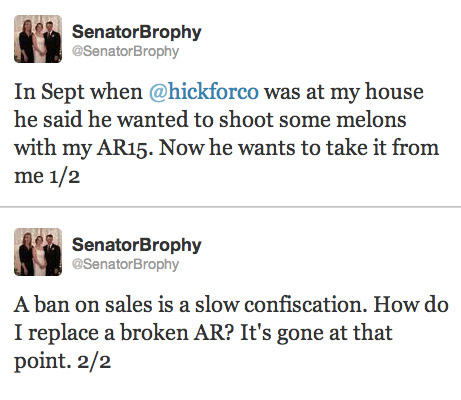
State Senator Brophy: An industrial strength slingshot, so those melons won’t go unmolested after gun control passes.

Secretary of State Scott Gessler: One threatening letter, which may be used to escape responsibility for one future abuse of public funds.

Congressman Jared Polis: A partridge in a pear tree. He already had everything else…

Representative Max Tyler: Family-sized box of Enstrom’s milk chocolate toffee.

Congressman Ed Perlmutter: Winter coats for his staff, currently freezing in their mandatory ponchos.

Representative Jonathan Singer: Get-out-of-trouble-free card permitting ONE, and ONLY one “joint committee” or “high stakes” pun about Amendment 64 on the House floor.

Brian Watson: Free entry into an adult spelling bee.

Lang Sias: A newer edition of Photoshop for better sign clean-up the NEXT time he’s heralded as a “rising star” when jumping into a clearly lost race against a solid incumbent.

Attorney General John Suthers: A raise, pre-wrapped for regifting to the next person to hold his seat.

Representative Dan Pabon: Diapers and one good night’s sleep.

Secretary Ken Salazar: Large punch bowl, to be filled and kept handy for the next time a journalist upsets him. What are you talking about? He just offered that reporter a festive beverage! See, there’s another gallon of it right here, have a cup.

Congressman Mike Coffman: Body double willing to occasionally talk to CD6 constituents.

Denver Post Editorial Board: A list of people who may possibly run for Congress in 2014, besides the incumbents–with two years’ lead time, who knows, maybe they’ll endorse one.

If anyone else has Christmas intel on what Colorado’s boldface names found under their trees, post it in the comments…

John Boehner’s “Plan B” Crashes and Burns

UPDATE: FOX 31’s Eli Stokols answers one question:

Rep. Cory Gardner, R-Yuma, and Rep. Doug Lamborn, R-Colorado Springs, both planned to vote against Boehner’s “Plan B”, which was pulled from the floor Thursday night after Boehner failed to whip enough members of his divided GOP caucus in line…

According to talking points Lamborn gave his staff to pass on to constituents who bombarded the office with phone calls Thursday, the congressman “cannot support Plan B because it fails to give tax relief for one class of Americans.

“President Obama campaigned on a pledge to raise taxes, and Congressman Lamborn does not wish to assist him in raising taxes on any Americans,” the talking points continued. “Congressman Lamborn would like to see the Bush tax rates extended permanently for all Americans.”

Gardner, who is viewed as a rising star within the House GOP caucus but is closer to Majority Leader Eric Cantor than Boehner himself, “was not going to vote for it because it didn’t address spending at all,” according to spokeswoman Rachel George.

—–

Updating the fiscal cliff battle, Politico reports on yesterday’s dramatic failure in the House as Speaker John Boehner tried unsuccessfully to get the votes for his “Plan B” tax bill.

Things were so bad for Speaker John Boehner Thursday night, support for his Plan B tax bill so diminished, the limits of his power with his own party laid bare, that he stood in front of the House Republican Conference and recited the Serenity Prayer.

“God grant me the serenity to accept the things I cannot change, the courage to change the things I can, and the wisdom to know the difference.”

…It was supposed to be a moment of strength, a way to drag Obama and the Democrats toward them in the high-stakes fiscal cliff negotiations that have Washington teetering on the brink. Instead, it showed the world that either Boehner couldn’t bring 217 of his own members to his side, or they were unwilling to be led by him in this fight.

Yesterday’s failure by Speaker Boehner to pass his alternative measure significantly weakens his negotiating position. We haven’t heard whether any Colorado GOP representatives were part of the revolt; we expect that will come out soon enough. The House is reportedly on notice to be ready to head back to Washington, but this story indicates they may not reconvene before 2013–after the “fiscal cliff’s” mandatory spending cuts and tax increases have kicked in.

Rep. Mike Coffman had this to say to The Hill as the dust settled:

[A]fter a day and a half of intense lobbying on the part of the GOP leaders, rank-and-file members were stunned to learn that Boehner’s team was giving up the fight.

“I’ve never seen anything like it where leadership just completely backed down. I guess they made an assessment that the people who were no votes were entrenched no votes, because otherwise I think they would have just pulled it and they would have worked it longer,” Colorado Rep. Mike Coffman (R) told The Hill.

Coffman called the meeting “awful.” “It’s the first time I’ve ever seen leadership retreat. It was a real shock – the Speaker looked shocked,” he said.

It’s difficult to predict what’s going to happen next, but Boehner can only effectively negotiate as the leader of the House of Representatives if he has the power to lead. Otherwise it’s honestly not clear on whose behalf he is “negotiating.” Either way, Boehner’s leverage to continue demanding entitlement cuts opposed by the voting public in exchange for bringing his caucus along on a deal may have just evaporated. How many moderate Republicans would need to defect to a Democratic solution? It’s not that many, folks.

And Rep. Coffman’s remarks on yesterday’s failure to pass Boehner’s plan oblige us to consider whether speculation about Boehner’s speakership imploding is coming true.

A Whole New Colorado Pols Is Coming…

For eight years, Colorado Pols has set the standard in this state as the most widely read and discussed blog devoted to coverage of Colorado politics. Almost 19,000 blog posts and nearly 500,000 comments later, this site has become an invaluable property for news and opinion about our state’s politics, and the collective wisdom of our authors and community members has become a trusted institution all by itself.

In January of 2013, we’re making major upgrades. We’ve been working for months on a complete redesign of Colorado Pols, and migration to a new software platform. For users, this will mean an enhanced experience, and far better organization of content. You’ll retain your same usernames and passwords once the conversion is complete. Front-page editors will still promote posts to the home page. Over time, we hope to roll out exciting new features, but in the meantime we’ve worked hard to preserve the community you’ve spent years inhabiting.

Best of all, this is a work in progress, and puts us in a position to be better responsive to requests from readers for future improvements. Use this space to freely discuss the types of features you’d like to see in an ideal Colorado political blog, and we’ll see what we can do.

Front Page Guest Editor Elections This Weekend

We had great front page guest editors for the 2012 election season. Thanks very much to ClubTwitty, ProgressiveCowgirl, and SSG_Dan for their contributions to our blog in the last six months. Colorado Pols is the most read and discussed political blog in our state for eight years and counting because of our robust community of readers, and our elected front page guest editors represent the qualities we value in all of you.

We will hold an election for two new front-page guest editors this weekend, December 22nd and 23rd. The new editors will start on January 1st, and barring anything unexpected will hold their positions through June of 2013–at which time we’ll have another election. We’ll conduct one poll of nominees, and the top two finishers from that poll will win coveted front page editor spots. Our current editors are automatically renominated unless they decline.

Use this thread to nominate candidates for the two guest editor positions available. We’ll finalize the list of nominees tomorrow evening.

To learn more about the privileges and expectations of our guest editors, read this post, and feel free to ask questions. As always, we will be watching closely to ensure the election is fraud-free, so we remind readers as we do every time to not bother trying to cheat. We’ll catch you, and our whole community will join in humiliating you and everything you stand for.

Please Don’t Threaten The “Honey Badger”

We’re obliged to note Westword’s report out yesterday:

Secretary of State Scott Gessler has faced a lot of pushback for his efforts to identify immigrants who are illegally on Colorado’s voter rolls. But over the summer, those criticisms escalated to a new level when he received multiple violent threats, some targeting his family. Through an Open Records request, we now have new details on one disturbing phone call and the subsequent investigation — and more information is expected this week.

While the threats took place over the summer — and death threats toward politicians are not all that uncommon — these cases have a lot of significance now and will continue to be important in the coming months.

Why?

Because Gessler, a Republican and the state’s chief election officer, is currently the focus of criminal and ethics investigations, both the result of complaints from Colorado Ethics Watch, a watchdog group that has closely scrutinized Gessler on a number of issues. Based on open records requests it filed with the Secretary of State’s office, in October Ethics Watch alleged that Gessler had misused state funds for travels outside the scope of his office.

As Westword’s Sam Levin reports, a call placed to the state’s election information line last August turned into a long rant about the letters Gessler sent over the summer to registered voters he dubiously “suspected” may not be citizens. The caller said Republicans “should be shot in the head,” and indicated that “many people” know where Gessler’s family lives.

The call was investigated by the CBI, but Denver DA Mitch Morrissey declined to press charges. Investigation reportedly reveals this person made a similar threat toward Rep. Doug Lamborn last year, and Levin’s retelling of the CBI report paints a picture of a harmless, albeit very stupid, crackpot. That said, we don’t think anyone will dispute the necessity of taking any such threats made against the Secretary of State or his family seriously.

In terms of the investigation(s) underway regarding Gessler’s alleged misuse of discretionary funds, however, Westword’s Open Records Act request explains only one detail among numerous questionable incidents–from using these funds to attend partisan events at all, to “sweeping” the account empty at fiscal year’s end in a check to himself. Sympathy for Gessler over threats made against him or his family, which we’ll say again are totally unacceptable, doesn’t extend to excusing unethical or illegal behavior on his part.

But if any of you happen to recognize this crackpot, please let him know he’s not helping.

Hickenlooper Proposes Gun, Mental Health Access Reforms

As the Durango Herald’s Joe Hanel reports:

Gov. John Hickenlooper announced plans Tuesday to improve the state’s psychiatric-crisis care and keep mentally unstable people from buying guns.

Hickenlooper and his Cabinet began working on the plan just days after the Aurora movie theater massacre in July, and they scheduled Tuesday’s announcement well before a gunman killed 20 children and seven adults and himself last Friday in Connecticut.

“We have a duty after tragedy to look at what we do, how we act and how we help others,” Hickenlooper said.

Hickenlooper wants Colorado courts to send mental-health commitment records to the Colorado Bureau of Investigation in real time so they can be used for background checks of people who want to buy guns. Currently, the CBI gets the information twice a year on a CD-ROM.

Hickenlooper could not explain why it has taken so long to send the information to the CBI.

“There are too many things like that in government,” he said.

As upset as Republicans are about Gov. John Hickenlooper’s recent embrace of modest gun law reforms in Colorado, it’s going to be very hard on a practical level to find opposition to closing the “loophole” noted above. The idea that in the modern connected world, the Colorado Bureau of Investigations only receives notifications about mental health commitments twice a year will be rightly considered absurd by most citizens, even as the gun lobby indiscriminately, if toothlessly, declares any such attempt to improve existing law a threat.

The second proposal Hanel reports on from Gov. Hickenlooper, to create a new mental health hotline and walk-in crisis centers, refutes criticism from some Republicans that mental health access should be the focus, not restricting access to guns. Presumably this means the $18 million Hickenlooper is seeking to pay for that will not be a problem.

These proposals from Hickenlooper are unlikely to represent everything we’ll see on the issue in the upcoming Colorado legislative session; look for legislation on universal background checks on gun sales, as well as a possible ban on certain high-capacity ammunition magazines. We don’t how how much more will be possible at the state level, but these are significant measures–a major reversal of momentum on the issue from before last summer. And they’re the kinds of common-sense measures that even a majority of gun owners say they support.

In fact, we really can’t see how anyone can rationally oppose any of these now.

Thanks For Playing, Open Government Institute of Colorado

During the recently-concluded election season, we spoke a few times about a new right-leaning “nonpartisan government watchdog” operating out of the offices of the arch-conservative Independence Institute. The Open Government Institute of Colorado made news this spring after filing a complaint regarding now Rep.-elect Dianne Primavera over a fundraiser invitation that mistakenly included the name of former Rep. Anne McGihon, alleging “Ms. Primavera solicited unlawful contributions from lobbyists.”
Not long after this complaint was filed, we were leaked hidden-camera video of OGI director Jessica Peck speaking at a luncheon of the Colorado Republican Business Coalition in honor of Rep. Mike Coffman. In this video, Peck makes absolutely no secret about OGI’s partisan goals and origins, and even claims to be working on projects to “benefit you,” meaning Rep. Coffman, “in your endeavors in November.” The video is now the subject of an IRS complaint alleging a violation of OGI’s 501(c)(3) “nonpartisan nonprofit charity” tax status.

Now, it won’t surprise our readers to learn that IRS investigations take a very long time to proceed, and as of this writing we don’t know the status of that complaint. But this week, a judgment was handed down in the case filed by OGI. And it’s a judgment that Ms. Peck surely isn’t happy about. Excerpted, read it all here:

This matter is a complaint pursuant to Colo. Const. art. XXVIII, sec. 9(2)(a) and the Fair Campaign Practices Act (“FCPA”), Section 1-45-101, C.R.S. et seq. Jessica K. Peck, Esq., appeared on behalf of the Complainant and Mark G. Grueskin, Esq., appeared on behalf of the Respondent…

Western United Realty, supra, at 1066 approves of the discussion of attorney fees in International Technical Instruments, Inc. v. Engineering Measurements Co., 678 P.2d 558 (Colo. App. 1983) and notes specifically the fact that the party against whom attorney fees were assessed in that case “conducted no discovery whatsoever” and “nominally attempted to establish its … claim at trial.” This description equally applies to the Complainant’s efforts in this case. [Pols emphasis]

The ALJ therefore concludes that claim 1 also lacked substantial justification in that it was substantially frivolous, substantially groundless, and substantially vexatious…

The case for attorney fees in relation to claim 2 is clear cut; no effort was made to present evidence in support of this claim.  “[A] claim … is groundless if the allegations in the complaint … are not supported by any credible evidence at trial.” Western United Realty, Inc. v. Isaacs, 679 P.2d 1063, 1069 (Colo. 1984). In Colorado Citizens for Ethics in Government v. Commission for the American Dream, 187 P.3d 1207, 1219-1220 (Colo. App. 2008) the Court upheld an ALJ’s imposition of attorney 8 fees on a party in a campaign finance case where the party dismissed a claim at hearing. At 1220 the Court cited Engel v. Engel, 902 P.2d 442, 446 (Colo. App. 1995) and Bilawsky v. Faseehudin, 916 P.2d 586, 590 (Colo. App. 1995) for the proposition that an action may be substantially groundless even though dismissed on the morning of trial.

In this case, the Complainant only acquiesced, through counsel, to the Respondent’s motion to dismiss claim 2 after the presentation of his evidence. Claim 2 lacked substantial justification in that it was substantially frivolous, substantially groundless, and substantially vexatious. The Complainant never voluntarily dismissed the claim (a basis not to assess attorney fees per Section 13-17-102 (5)). Section 13- 17-102 (6) is inapplicable as the Complainant was represented…

It is therefore the Agency Decision of the Secretary of State that no violation of Section 1-45-105.5(1)(a)(I) has been proven. It is furthermore the Agency Decision that the Complainant and the Complainant’s counsel are jointly and severally liable per Section 1-45-111.5(2) for the $17,712.38 amount. [Pols emphasis] Complainant’s counsel only is responsible for the $400 of attorney fees related to the additional expense on December 11, 2012.

In short, the OGI’s case against Rep.-elect Primavera was so bad that the judge has awarded about $18,000 in attorney’s fees to McGihon and her lawyer Mark Grueskin. Short of frog-marching somebody, we really don’t know how much more of a repudiation can be legally delivered in a case like this. After every right-wing mouthpiece in the state took up the cause, berating reporters into covering it, today you know the case against Primavera was so “frivolous, groundless, and vexatious” that OGI has been ordered to pay for wasting everyone’s time.

We’ve heard rumors that OGI Colorado has already, for all practical purposes, shut down operations. So hopefully there’s still $18,000 in the bank to collect–we’d hate to see the private citizen who nominally filed the OGI’s complaint get stuck with the tab.

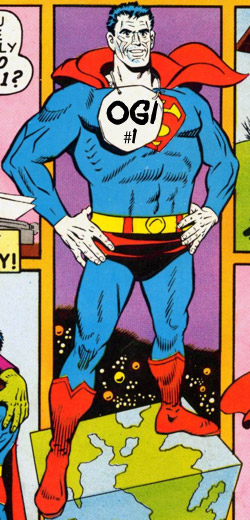
For our part, the thoroughly delicious irony is entertainment enough: thousands in donations to OGI, meant to “help Mike Coffman,” instead going to Mark Grueskin. And it’s a lesson to Republicans, licking their wounds after yet another losing election cycle in Colorado, envious of the “Colorado Model” of Democratic-aligned activist and message groups that OGI was meant to help replicate for the GOP. OGI may have been set up as the right’s Colorado Ethics Watch, but it filled the role more like Bizarro Superman. Suffice to say, this is not the path to victory.

Boehner’s Baby Steps and Grover Norquist’s Pound of Flesh

UPDATE: Whatever a lopsided majority may say in polls, they apparently don’t live in Rep. Cory Gardner’s district. From the conservative website Newsmax.com:

Over-regulation and too much spending is plaguing the economy, Gardner said in an exclusive interview with Newsmax TV.

“I’m frustrated, [and] my constituents are frustrated, because they see Washington doing the same exact thing,” he said. “This was the most predictable crisis anybody could ever imagine. So, months ago we knew this was going to happen. It got closer, closer, closer and here we are now days away instead of months away and we’re talking about kicking the can down the road, and the American public, the constituents I represent, they’re tired of it. They want to see tax rates that are lower, not higher…” [Pols emphasis]

It’s a very safe seat, after all.

—–

Politico reports on the latest development in ongoing negotiations to avoid the so-called “fiscal cliff” at the end of this year. It should be noted that Republican Speaker of the House John Boehner made a new offer Friday, which includes a big at-least rhetorical concession:

“The President and the Speaker are meeting at the White House to continue their discussions about the fiscal cliff and balanced deficit reduction,” according to an identical statement issued by aides to Boehner and Obama [Monday].

Boehner jump-started the talks with a proposal Friday to boost marginal tax rates on income over $1 million, in what was a significant departure from his party’s no-new-taxes plank.

Democrats described the movement on rates as “progress,” but cautioned that a deal is not imminent because of the high income threshold and proposed cuts to Medicare, including raising the eligibility age from 65 to 67. Obama wants tax rates to rise on family income above $250,000 a year, and he has not publicly embraced cuts to Medicare beneficiaries in the latest round of talks.

As we and most media coverage has noted throughout these negotiations, public opinion polls show overwhelming support for allowing the 2001 and 2003 Bush tax cuts to expire on income greater than $250,000 per household. At the same time, polling is tepid at best on any move to cut Medicare, Social Security, or other so-called “entitlements” valued by the middle class.

So what we have is Boehner agreeing, belatedly and only partly, to one piece of the public’s desired solution, using that as leverage to demand things the public doesn’t want.

Boehner needs robust changes to the hugely popular seniors health program to sell any kind of tax-rate increase to his conservative-dominated Republican Conference. [Pols emphasis]

The public’s failure to embrace cuts to popular institutions like Medicare and Social Security isn’t due to a lack of trying. The Fix The Debt campaign, Alan Simpson dancing “Gangnam Style,” and the millions spent trying to make Hugh Jidette a household name have all dismally failed to turn Americans into voters willing to accept Ryan Plan-style austerity. They know better.

This means Boehner and the Republicans are in a desperate political conundrum. The real constituency supporting sweeping entitlement cuts is exposed as embarrassingly small and ideologically motivated. Boehner must hold out for cuts to popular programs that the public doesn’t want–cuts only supported by a small minority for uningratiating reasons.

No doubt this latest smallish concession from Boehner seems rudely shocking and offensive to Grover Norquist, and other “starve the beast” ideological opponents of anything that doesn’t “shrink the size of government.” The lesson in this, however, may not be Boehner’s concession, but how far the Republican Party has drifted from the mainstream of public opinion.

Who’s Afraid Of The NRA?

UPDATE: Sen. Greg Brophy’s opposing view noted for the record:


—–

A major story coming out of the 2012 elections last month concerned lavish amounts of money spent by favored Republican message groups–the most frequently-cited example being Karl Rove’s “Super PAC” American Crossroads–with an absolutely horrible “rate of return” on that spending as measured by candidates who actually won. In the case of American Crossroads, the nonpartisan Sunlight Foundation estimated that only about six percent of the hundreds of millions spent by that group was spent in races where the Republican candiate prevailed.

So the question naturally occurred to us this weekend: how did the gun lobby do?

As the Washington Post reported right after the elections:

The Sunlight Foundation ran the numbers and found that after spending nearly $11 million in the general election, the National Rifle Association got a less than one percent return on its investment this cycle. That is, less than one percent of the money went toward the desired result.

The group supported 27 winning candidates, but most of its money was spent targeting winning Democrats (including over $7 million against President Obama) or bolstering losing Republicans (including $1.8 million supporting Mitt Romney and $500,000 backing Indiana Senate candidate Richard Mourdock).

The NRA’s lobbying arm, the  NRA Institute for Legislative Action, fared only a bit better – 10 percent of its money went to winning candidates.

Answer: not real well, folks.

There are two ways to look at this situation. The fact that the National Rifle Association was able to bring tremendous assets to bear in races around the country demonstrates what an on-paper formidable organization the gun lobby remains. Certainly, Republicans can’t be expected to perform as poorly in every election as they did in 2012–it just wasn’t a Republican year, in so many respects that have nothing whatsoever to do with guns.

But the NRA’s extremely poor rate of return on its electoral spending in 2012, even lower than Rove’s embarrassingly bad success rate with the millions he controlled at American Crossroads, reveals something nonetheless important: the gun lobby doesn’t have any special powers of persuasion. Guns, as a partisan electoral issue, appear no more persuasive for Republicans than anything else they run on, and in 2012, that meant the issue wasn’t persuasive at all.

In Western states like Colorado, Democrats naturally run on a more deferential platform toward gun rights than their counterparts in, say, New Jersey. This reduces the effectiveness of gun policy as a GOP issue here, and also allows local Democrats to lead on gun policy reforms, when the moment presents itself, with a degree of bipartisan credibility. The simpleminded attacks against “gun grabbing” Democrats don’t work as well here, because our Democrats are less vulnerable to them, and better able to appeal to responsible gun owners.

In key ways, we’d say the much-feared “gun lobby” has an underreported bark/bite imbalance.

More on the conservative talk-radio echo chamber and the damage done

In  a post Thursday, I discussed a conversation between two local talk-radio hosts and Colorado Springs Gazette Editorial Page Editor, Wayne Laugesen.

Unfortunately, the good folks at KLZ’s Grassroots Radio Colorado thought I unfairly presented their show as attacking every garden-variety environmentalist under the sun, not just the radical fringe.

I disagree, but I’ve posted more of the exchange between Laugesen and the KLZ hosts below, including more insight into Laugesen’s thinking on whom he’s referring to when he talks about “radical” environmentalists. Warning: he’s pretty vague, as some suspected on ColoradoPols and elsewhere.

I’d love to meet the soccer-mom environmentalist from Jefferson County who feels good about the Republican Party after hearing this conversation on conservative talk radio.

If the KLZ radio hosts, and Laugesen for that matter, really cared about the toxic effect of talk radio on the Republican Party, here’s a suggestion on how they could begin to do something about it.

Have an actual debate! Bring a mainstream environmentalist on the show, for example, when you talk about radical environmentalists or environmentalism as religion. Refuse to be a guest unless more than shades of conservative gray are present. I’m not saying this never happens, but do it more often, please.

Chances are, when the echo chamber starts echoing on talk radio, it’s turning off most of the electorate. That’s when you need to bring in an opposing view.

Recent Comments


Posts about

Donald Trump
SEE MORE

Posts about

Rep. Lauren Boebert
SEE MORE

Posts about

Rep. Gabe Evans
SEE MORE

Posts about

Colorado House
SEE MORE

Posts about

Colorado Senate
SEE MORE

43 readers online now

Newsletter

Subscribe to our monthly newsletter to stay in the loop with regular updates!