
U.S. Senate See Full Big Line

(D) J. Hickenlooper*

(D) Julie Gonzales

(R) Mark Baisley

80%

20%↓

10%

(D) Phil Weiser

(D) Michael Bennet

(R) Victor Marx
50%↑

50%

20%
Att. General See Full Big Line

(D) Jena Griswold

(D) M. Dougherty

(D) Hetal Doshi

40%

30%↑

30%

Sec. of State See Full Big Line
(D) J. Danielson

(D) A. Gonzalez

(R) James Wiley
50%

50%

10%
State Treasurer See Full Big Line

(D) Jeff Bridges

(R) Kevin Grantham

80%↑

20%↓

CO-01 (Denver) See Full Big Line

(D) Diana DeGette*

(D) Melat Kiros

(D) Wanda James

55%↓

45%↑

10%↓

CO-02 (Boulder-ish) See Full Big Line

(D) Joe Neguse*

(R) Somebody

90%

2%

CO-03 (West & Southern CO) See Full Big Line

(R) Jeff Hurd*

(D) Dwayne Romero

(D) Alex Kelloff

50%↓

35%↑

30%↓

CO-04 (Northeast-ish Colorado) See Full Big Line

(R) Lauren Boebert*

(D) E. Laubacher

80%

20%

CO-05 (Colorado Springs) See Full Big Line

(R) Jeff Crank*

(D) Jessica Killin

53%↓

48%↑

CO-06 (Aurora) See Full Big Line

(D) Jason Crow*

(R) Mel Tewahade

90%

2%

CO-07 (Jefferson County) See Full Big Line

(D) B. Pettersen*

(R) A. Capobianco

90%

2%

CO-08 (Northern Colo.) See Full Big Line

(R) Gabe Evans*

(D) Manny Rutinel

(D) Shannon Bird

45%↓

40%↑

30%

State Senate Majority See Full Big Line

DEMOCRATS

REPUBLICANS

80%

20%

State House Majority See Full Big Line

DEMOCRATS

REPUBLICANS

95%

5%

[wpdreams_ajaxsearchlite]
June 22, 2026 03:53 PM UTC

Big Beautiful Bill Costs State $5 Billion Over 5 Years, Affecting Over 700,000 Coloradans

(Don’t look up — Promoted by Colorado Pols)

Originally posted at the Colorado Times Recorder

Colorado’s budget pain will be inflamed by the loss of over $5 billion in federal funds in the next five years, due to the Big Beautiful Bill (BBB), passed by congressional Republicans and signed by President Donald Trump last year.
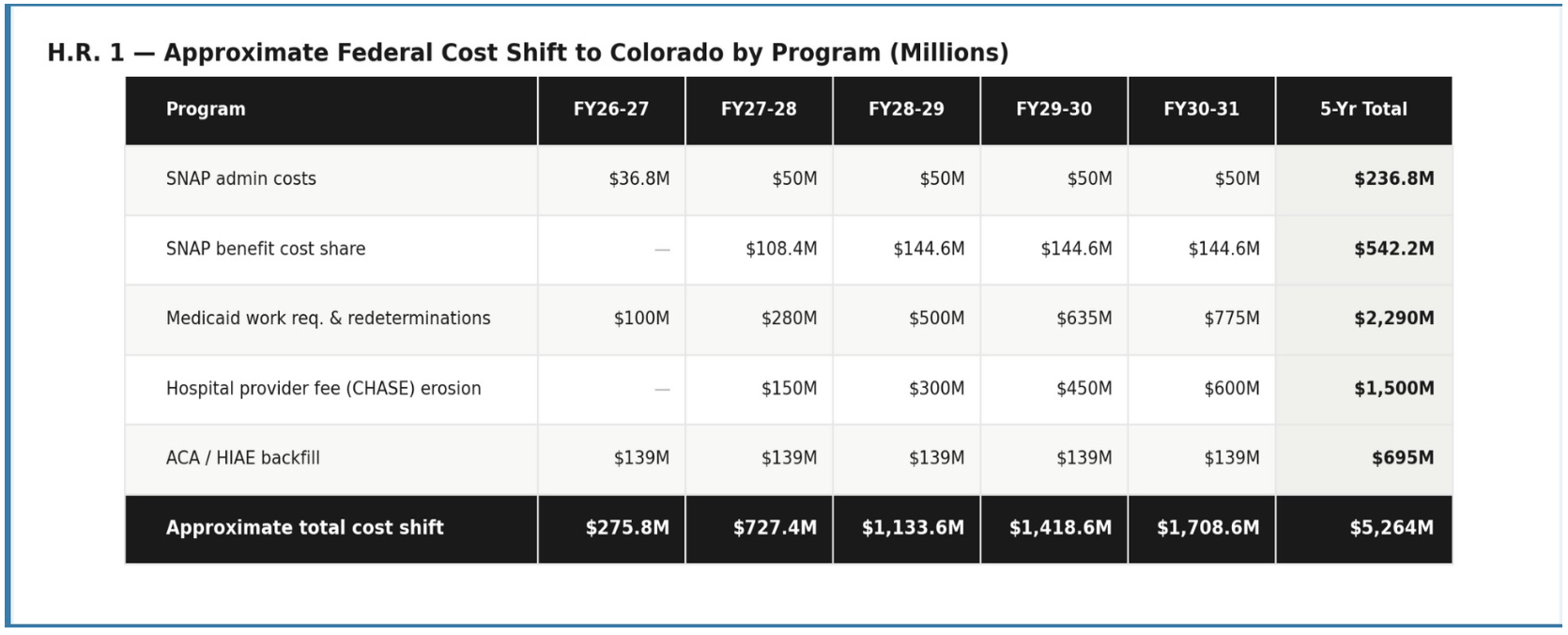
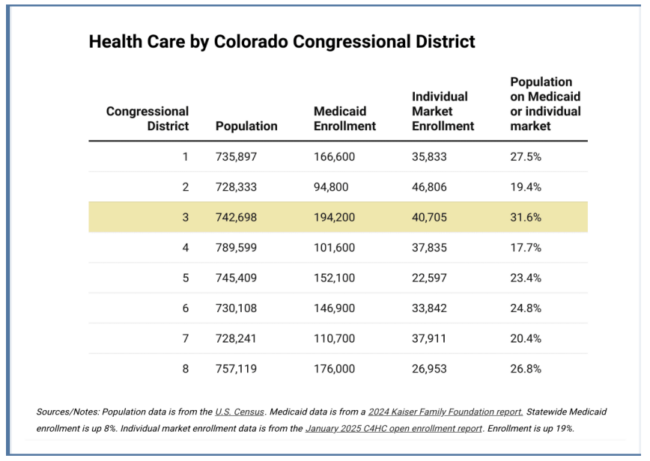
That’s the conclusion of an analysis released last week that details how the BBB shifts costs — year by year over five years — from the federal government to Colorado, including funds for Medicaid, SNAP, the Affordable Care Act, and other health care funding.

The result is that Colorado must now pay over $5 billion, which otherwise would have been picked up by the federal government.

The lost funds could affect more than 700,000 Coloradans or about 12 of every 100 residents, according to the analysis, written by Scott Wasserman, former director of the Bell Policy Center, a progressive think tank, and commissioned by Mainstream Colorado, a liberal advocacy group.

Wasserman called the BBB “nothing short of a fiscal asteroid for Colorado.”

The BBB asteroid struck when Colorado’s budget was already facing a tsunami. Even without the BBB, Colorado lawmakers would have likely had to cut the state budget this year, as they did, and in future years. This is because state expenses for basic services are increasing at a greater rate than the state is allowed to spend, unless voters increase taxes or tweak the Taxpayer Bill of Rights (TABOR). Over $2 billion in cuts and accounting maneuvers were made during the last two legislative sessions.

“Now, on top of recessionary fears and long-standing budgetary challenges, Colorado needs to figure out how to piece its health and human services back together and solve for a $5 billion hole over the next five years,” he said in a news release.

Next year, the projected gap in Colorado’s budget is $315 million, which is a bit of a reprieve before steep cuts, driven by the BBB, are projected to be needed.

As the BBB kicks in during the coming years, the amount of lost federal money in Colorado’s budget increases, from $275 million in this year’s budget to $1.7 billion in 2031, totalling $5.26 billion in lost federal funding over the five years analyzed, according to the report.


Source: “The One Big Beautiful Bill Act Asteroid, How HR 1 Hurt Coloradans”

Over 85% of the lost dollars would have gone to healthcare, with $2.3 billion taken from Medicaid, a state-federal health insurance program for low-income residents, creating an “overwhelming threat to the state’s healthcare ecosystem, risking coverage rates, rural hospital solvency, provider availability and much more,” according to the report.

The analysis states that the BBB “gave massive tax benefits to some of the wealthiest taxpayers in America while simultaneously cutting programs for vulnerable Americans, shifting massive costs from the Federal ledger to state budgets for core health and human services. The bill included not only changes to the tax code, but major policy changes to other federal policies that states like Colorado had built their budgets around for over a decade.”

Source: “The One Big Beautiful Bill Act Asteroid, How HR 1 Hurt Coloradans.”

The analysis doesn’t address multiple ballot initiatives currently circulating in Colorado that, should either or both make the ballot, would also have dramatic effects on the state budget.

The Bell Policy Center is leading an effort to revamp the income tax structure to cut taxes for the vast majority of Coloradans, while raising rates on only the wealthiest residents — those making over $500,000 per year. Despite the very rich comprising only 3% of the state’s population, the Initiative 195 proposed tax rate is estimated to generate about $2 billion in new revenue while cutting taxes for 97% of Coloradans.

Meanwhile, conservative Advance Colorado is gathering signatures for Initiative 232, which would permanently cap the state’s personal and corporate tax rates at the current 4.4% rate.

Should the conflicting initiatives each make the ballot and voters approve both, then, if 232 receives more votes, the tax increases for the top 3% could not go into effect.

Comments

Recent Comments


Posts about Donald Trump

Posts about Rep. Gabe Evans

Posts about Rep. Lauren Boebert

Posts about the Colorado House

Posts about the Colorado Senate


155 readers online now

Newsletter

Subscribe to our monthly newsletter to stay in the loop with regular updates!