U.S. Senate See Full Big Line

(D) J. Hickenlooper*

(D) Julie Gonzales

(R) Mark Baisley

80%

20%

10%

(D) Michael Bennet

(D) Phil Weiser

(R) Victor Marx
50%↓

50%↑

20%
Att. General See Full Big Line

(D) Jena Griswold

(D) M. Dougherty

(D) Hetal Doshi

40%↓

30%

30%

Sec. of State See Full Big Line
(D) J. Danielson (D) A. Gonzalez (R) James Wiley
50%↓

30%↑

10%
State Treasurer See Full Big Line

(D) Jeff Bridges

(R) Kevin Grantham

80%↑

20%↓

CO-01 (Denver) See Full Big Line

(D) Diana DeGette*

(D) Milat Kiros

(D) Wanda James

70%↓

20%↑

10%↓

CO-02 (Boulder-ish) See Full Big Line

(D) Joe Neguse*

(R) Somebody

90%

2%

CO-03 (West & Southern CO) See Full Big Line

(R) Jeff Hurd*

(D) Alex Kelloff

(D) Dwayne Romero

(R) Ron Hanks

60%↓

30%↓

30%↑

30%

CO-04 (Northeast-ish Colorado) See Full Big Line

(R) Lauren Boebert*

(D) E. Laubacher

80%

20%

CO-05 (Colorado Springs) See Full Big Line

(R) Jeff Crank*

(D) Jessica Killin

53%↓

48%↑

CO-06 (Aurora) See Full Big Line

(D) Jason Crow*

(R) Somebody

90%

2%

CO-07 (Jefferson County) See Full Big Line

(D) B. Pettersen*

(R) Somebody

90%

2%

CO-08 (Northern Colo.) See Full Big Line

(R) Gabe Evans*

(D) Shannon Bird

(D) Manny Rutinel

45%↓

30%

30%

State Senate Majority See Full Big Line

DEMOCRATS

REPUBLICANS

80%

20%

State House Majority See Full Big Line

DEMOCRATS

REPUBLICANS

95%

5%

[wpdreams_ajaxsearchlite]
April 21, 2026 08:32 AM UTC

Colorado GOP Goes For Unaffiliated-Free Primary This Year

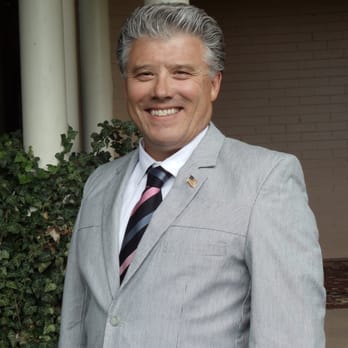
GOP attorney Randy Corporon.

As Jesse Paul reports for the Colorado Sun, lawyers for the Colorado Republican Party who prevailed in federal court at the beginning of the month in their legal challenge against Colorado’s Proposition 108, the measure passed by voters allowing unaffiliated voters to participate in either party’s primary elections, are now seeking an emergency injunction to prevent unaffiliated voters from getting ballots in the June 30th primary:

Randy Corporon and Alexander Haberbush, two lawyers for the Colorado GOP, wrote that since the party’s opt-out vote had to happen by Oct. 1, 2025, and Brimmer’s ruling wasn’t issued until March 31, unaffiliated voters should be blocked from participating in the Republican primaries “to prevent irreparable constitutional injury.”

County clerks must send ballots for the June 30 primary to military and overseas voters by May 16, the same day elections officials are required to provide a ballot to any voter who requests one in person at a county clerk’s office. Clerks can mail ballots to the rest of the electorate on May 29.

Unaffiliated voters, who now make up a majority of the state’s active, registered electorate, have been able to cast ballots in either the state’s Democratic or Republican primaries since 2018.

Although the federal judge’s ruling early this month did not formally invalidate Proposition 108, the judge ruled that the 75% vote threshold specified in the law for parties to opt out was too high. It’s therefore not clear whether the appropriate remedy would be to disenfranchise unaffiliated voters completely, or simply to tell Republicans to figure it out by the next election. If the court does rule with Republicans, it could result in Democratic primaries including unaffiliated voters, since there is no equivalent desire among Democrats to exclude them, while the Republican primary would close.

While we wait for the judge to rule, let’s revisit for a moment the reason Proposition 108 was passed, and the effect it has on primary elections:

In 2016, voters passed Proposition 108, opening up the primaries to unaffiliateds. But a faction of Republicans has tried ever since to halt unaffiliated participation in GOP primaries, arguing that it dilutes the conservatism of their candidates. [Pols emphasis]

The “dilution” Republicans are upset about with unaffiliated participation in truth has very different impacts for the two parties. With both Republicans and Democrats, unaffiliateds arguably are a moderating influence on the primary vote. The difference is that in the Colorado Republican Party, the far-right ideologues who chafe at this moderating influence are in charge of the party. The result is that unaffiliated voters are welcomed, even counted on in the Democratic primary to produce the most electable candidate, while Republicans prefer the opposite.

The “undiluted” conservative. In practice, especially under its most recent leadership, this has meant openly favoring primary candidates who are the less electable choice in the general election. While unaffiliated voters help Democrats deliver mainstream candidates, shunning those voters would drive Colorado Republicans further toward the fringe.

And that appears to be exactly what Colorado Republicans want. To win their primaries, then get flattened in the general election. The one caveat, of course, is that these people tend not to accept the results of elections they lose. But whether they go quietly or not, by excluding the voters who now comprise a majority of our state’s electorate, Colorado Republicans are choosing the road to irrelevance.

Comments

Recent Comments


Posts about Donald Trump

Posts about Rep. Gabe Evans

Posts about Rep. Lauren Boebert

Posts about the Colorado House

Posts about the Colorado Senate


60 readers online now

Newsletter

Subscribe to our monthly newsletter to stay in the loop with regular updates!