 December 31, 2025 10:52 AM UTC
Colorado Pols' Top Ten Stories of 2025

- by: Colorado Pols
1. Trump’s personal war on Colorado
 From the #NeverTrump snub of 2016 to Trump v. Anderson and now the extortionate fight over convicted election denier Tina Peters, few states have put themselves in the way of President Donald Trump’s vengeful wrath like the state of Colorado–excepting Trump’s native New York, of course, where Trump’s retaliation against his enemies is the stuff of legend. In September, Trump finally made good on his longstanding promise to move the U.S. Space Command to Alabama as a reward for that state’s political loyalty. Trump’s threats of “harsh measures” against Colorado if Peters was not released have been realized in the form of massive cuts to local programs that did not spare the districts of local loyal Republicans like freshman Rep. Gabe Evans. The latest act of retaliation came just yesterday in the form of Trump’s veto of Rep. Lauren Boebert’s unanimously approved bill to fund the critical Arkansas Valley Conduit water project. A crucial bright spot as Trump’s first year back in office comes to a close is the high success rate of legal action taken by Colorado against Trump’s multitude of misdeeds. But January of 2029 feels very far away.
2. Trumponomics, Tariffs, and the “Big Beautiful Boondoggle” take their toll on Colorado
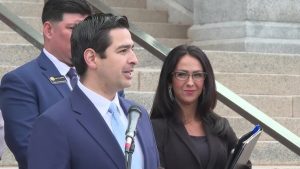 What got lost in the noise of the Democratic drama at the presidential level in 2024 came back to haunt everyone in Colorado when Trump’s Second Coming became reality and started actually implementing the Project 2025 agenda. Colorado’s economy was particularly vulnerable to the whiteboard fantasies of Project 2025 authors due to our reliance on tourism and trade, our hub of scientific research and federal offices, and a state budget that counted on federal dollars and was pegged to federal tax policy. Once Trump started pushing his inflationary tariff policies like a mad king, it became clear that Colorado jobs would be on the chopping block. But the massive tax giveaways and cuts to health care stored in his “We’re All Going To Die Act” budget bill would not have been possible without willing lieutenants in Congress, which ended up including all the Republicans in the state’s delegation [see below] who are now tasked with selling this policy or outright lying about it now that the bill is coming due.
3. Gabe Evans rides the MAGA ship down
 Colorado’s Eighth Congressional District was drawn to be as perfectly balanced as possible between Republican, Democratic, and unaffiliated voters with the express purpose of creating a district that would be accountable to a broad majority, and repellent to political radicalism originating on either side of the aisle. But that’s not what CO-08 voters got in Rep. Gabe Evans, who narrowly won this seat over a troubled but undeniably moderate Democratic incumbent in 2024. Despite the second Trump administration’s policies quickly alienating the voters of his swing district, Evans has remained steadfastly loyal to Trump and Republican leadership in Congress in plain opposition to the best interests of his constituents. Evans’ decisive vote for massive cuts to Medicaid, health insurance subsidies, food assistance, and renewable energy programs directly hurting stakeholders in his district was bad, but his willful emergence as the public face defending these cuts and otherwise carrying the administration’s unpopular message has been nothing short of politically inexplicable. The evident misfit Evans has demonstrated himself to be for this most competitive of congressional seats is why he is broadly considered the most vulnerable incumbent member of Congress going into next year’s midterm elections.
4. Jeff Hurd: From Bread Sandwich To Sh!t Sandwich
 Rep. Jeff Hurd announced his primary challenge against then-CO-03 incumbent Rep. Lauren Boebert in late 2023, promising to take the district out of the scandal sheets and restore competent representation to constituents formerly served by the somnolent but minimally competent Rep. Scott Tipton. Not long after, Boebert’s congressional career took a dive for the gutter that nearly sent her home to Rifle (the town, not the noun) in disgrace. Boebert’s carpetbagging sidestep to the friendlier pastures of Colorado’s Eastern Plains to scoop up the retiring Rep. Ken Buck’s super-safe seat opened the door for Hurd to walk into Congress. Hurd briefly inspired hope that he might meaningfully buck the Republican Party’s lurch toward authoritarianism and neglect under Trump, with Hurd speaking out against Trump’s pardon of January 6th rioters and mass layoffs of federal workers. But as the year went on, Hurd’s resolve eventually gave in, and his vote for the Republican budget bill full of cuts Hurd pretended to oppose was a “masks off” moment. Hurd’s weak and unsuccessful attempts after the fact to persuade fellow Republicans to extend health insurance subsidies in the end only highlighted Hurd’s original vote to let them expire. Like fellow Republicans who still go through the motions of responding to questions, Hurd has been reduced to pleading to angry constituents how his first year in office could have been even worse.
5. Jeff Crank, Lauren Boebert, and the Epstein Files
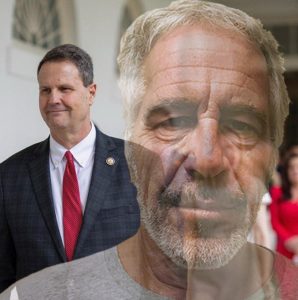 The explosive controversy over the Trump administration’s mishandling of the case of deceased billionaire pedophile Jeffrey Epstein, in which Donald Trump and cronies who had campaigned on a promised release of the full facts regardless of who was implicated spectacularly failed to deliver on that promise after taking over the White House and the Department of Justice. The administration’s public about-face to a position of “nothing to see here” followed by Trump’s sudden pivot to calling the whole case the “Epstein hoax” confounded and dismayed the MAGA base, and ended with Trump’s seeming capitulation on the issue by signing the bill to release the Epstein files had had previously exerted every possible leverage to kill. Trump’s hand was forced in part by the refusal of a handful of Republican lawmakers to give in that included Colorado’s Rep. Lauren Boebert, who received what may be her first sincere bipartisan accolades for sticking to her metaphorical guns. Which is more than can be said for the rest of the Republicans in Colorado’s delegation that sidestepped the issue, including Rep. Jeff Crank of Colorado Springs, who ignored the pleas from the family of a victim of Epstein’s abuse who resides in his district.
6. Tina Peters stays in jail
 Despite Trump’s diabolical threats of “harsh measures” against Colorado in retaliation for former Mesa County Clerk Tina Peters’ imprisonment on state felony charges related to her failed attempt to help Trump prove the 2020 presidential election was stolen, Peters remains in a state prison in Pueblo with over two years remaining before she becomes eligible for parole. Trump’s inability to effect Peters’ release has led to increasingly farcical measures including a “pardon” that has absolutely no legal value. Trump supporters riled up by questionable tales about Peters’ supposed bad treatment by jail authorities and the broader falsehoods surrounding her case have threatened to storm the prison where Peters is being held, a threat Peters herself has disavowed. As the only person still in custody over Trump’s refusal to accept defeat in the 2020 presidential election, Peters has become a proxy battlefield for Trump’s campaign to rewrite history. This has put our small state in the position of defending the integrity of elections across the nation by requiring Tina Peters to serve out her sentence. So far, despite Trump applying the full weight of federal power to persuade Colorado otherwise, Gov. Jared Polis has done just that.
7. Boxwine Brandi, Ryan Armagost, and Weinberg’s Weiner: House GOP follies continue
 Although Colorado House Republicans managed to barely prevent Democrats from holding another supermajority in the Colorado House in the 2024 elections, to say they failed to capitalize on that modest success in this year’s legislative session is a considerable understatement. This is principally the result of continuing infighting within the Republican minority caucus, punctuated by alarming instances of misconduct that raised serious questions about the leadership of now-former House Minority Leader Rose Pugliese. A scandal over a photo taken by GOP Rep. Ryan Armagost of a female Democratic lawmaker precipitated Armagost’s resignation under threat of a censure motion, while increasingly bizarre behavior from Rep. Ron Weinberg that included allegedly sneaking into the offices of other lawmakers derailed his bid to succeed Pugliese after she announced her high-drama resignation. Meanwhile, Rep. Brandi “Boxwine” Bradley waged a variety of personality conflicts with fellow Republicans, temporarily bullying freshman Rep. Dusty Johnson off her seat on the House Health and Human Services Committee. The succession battle ultimately produced the young and feisty Rep. Jarvis Caldwell to be the next Minority Leader, but whether he proves any better at herding the cats of the House GOP minority is anybody’s guess. Democrats, for their part, are excited to flip several House seats that narrowly went the GOP’s way and return them to super-minority status in 2027.
8. The end of Mike Coffman’s Aurora
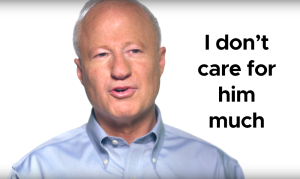 After losing his seat in Congress in 2018 in a midterm referendum on Donald Trump, Rep. Mike Coffman spent years rebuilding a power base as the Mayor of Aurora, the largest city in his former district. By funneling big Republican donor bucks into municipal races and even suing to allow the Mayor to fund city council candidates, Coffman built a conservative City Council majority to do his bidding that included his former congressional aide Dustin Zvonek. But once again, Trump came in like a wrecking ball. Seizing on wildly exaggerated claims that Aurora had “fallen” to Venezuelan gang members, Trump promised to launch “Operation Aurora,” a nationwide deportation campaign named after Coffman’s town. Caught between the interests of the city Coffman was sworn to serve and partisan political demands, Coffman was far too timid in his attempts to refute Trump’s nutty claims–and was squelched anyway by fellow Republicans like Rep. Gabe Evans who were happy to repeat the “Aurora Has Fallen” fabrication. Coffman’s erstwhile city council ally Danielle Jurinsky took the stage at Trump’s rally to trash the city. In November of 2025, the voters of Aurora delivered their own verdict, throwing Jurinsky and Coffman’s conservative majority on the Aurora City Council from office despite a huge funding disparity between the conservatives and their progressive opponents. For the second time, Donald Trump brought Mike Coffman’s careful plans to ruin.
9. The “Republican Bench” in Colorado is just a few old recliners
 We’ve said for years that the Republican bench in Colorado could fit inside a phone booth (this joke worked better when there were still, you know, phone booths). But the 2026 election cycle is exposing the lack of GOP options in Colorado like never before. Statewide beatdowns in 2018 and 2022 may have scared potential Republican candidates away from contention altogether. Consider: There are five major statewide races in 2026, and Republicans are at the end of 2025 not even attempting to contest three of them. The GOP has no serious candidate for U.S. Senate, and is basically conceding races for Attorney General and Secretary of State by not even putting anyone up for consideration. Even in races where Republicans ARE running, they aren’t doing much. There are approximately 23 GOP candidates for Governor, but if you combined their fundraising totals and then doubled that amount, you still wouldn’t have half as much money as Democrats Michael Bennet or Phil Weiser have raised thus far.
10. Epilogue: Hope at the ballot box
 The special session of the Colorado General Assembly convened last summer to close the billion-dollar hole created in this year’s state budget by the passage of the “We’re All Going To Die Act” federal budget bill was unfortunately just the beginning of what’s expected to be years of painful cuts necessary to annually balance the state budget as we are constitutionally obliged to do. With the pain from these cuts showing up in the daily lives of voters, the possibility of favorable political conditions to pass a proposed graduated income tax proposal at the ballot box next year increases substantially. This election, fiscal progressives are moving ahead with a measure that reduces taxes for most Coloradans while increasing them incrementally on the highest earners. If passed, it could be the biggest game-changer for Colorado’s self-imposed perpetual fiscal starvation diet since 2005’s Referendum C.


Comments