
U.S. Senate
See Full Big Line
(D) J. Hickenlooper*
(D) Julie Gonzales
(R) Mark Baisley
80%
20%↓
10%
Governor
See Full Big Line
(D) Phil Weiser
(D) Michael Bennet
(R) Victor Marx
50%↑
50%
20%
Att. General
See Full Big Line
(D) Jena Griswold
(D) M. Dougherty
(D) Hetal Doshi
40%
30%↑
30%
Sec. of State
See Full Big Line
(D) J. Danielson
(D) A. Gonzalez
(R) James Wiley
50%
50%
10%
State Treasurer
See Full Big Line
(D) Jeff Bridges
(R) Kevin Grantham
80%↑
20%↓
CO-01 (Denver)
See Full Big Line
(D) Diana DeGette*
(D) Melat Kiros
(D) Wanda James
55%↓
45%↑
10%↓
CO-02 (Boulder-ish)
See Full Big Line
(D) Joe Neguse*
(R) Somebody
90%
2%
CO-03 (West & Southern CO)
See Full Big Line
(R) Jeff Hurd*
(D) Dwayne Romero(D) Alex Kelloff
50%↓
35%↑
30%↓
CO-04 (Northeast-ish Colorado)
See Full Big Line
(R) Lauren Boebert*
(D) E. Laubacher
80%
20%
CO-05 (Colorado Springs)
See Full Big Line
(R) Jeff Crank*
(D) Jessica Killin
53%↓
48%↑
CO-06 (Aurora)
See Full Big Line
(D) Jason Crow*
(R) Jason Clark
90%
2%
CO-07 (Jefferson County)
See Full Big Line
(D) B. Pettersen*
(R) A. Capobianco
90%
2%
CO-08 (Northern Colo.)
See Full Big Line
(R) Gabe Evans*
(D) Manny Rutinel
(D) Shannon Bird
45%↓
40%↑
30%
State Senate Majority
See Full Big Line
DEMOCRATS
REPUBLICANS
80%
20%
State House Majority
See Full Big Line
DEMOCRATS
REPUBLICANS
95%
5%
[wpdreams_ajaxsearchlite]
 December 21, 2023 09:35 AM UTC

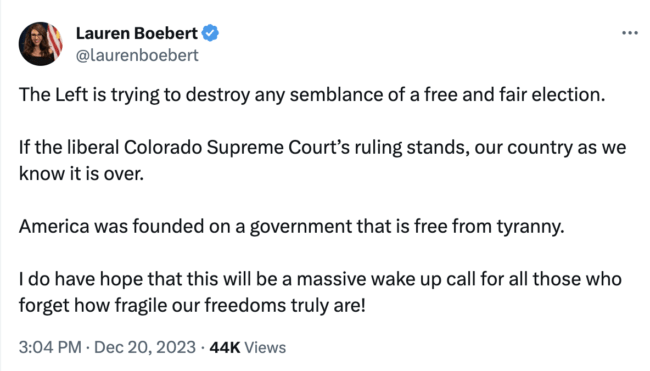
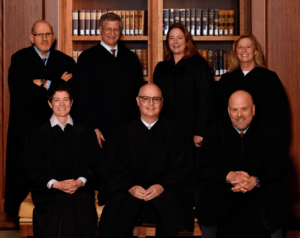 It is an abdication of responsibility and a mockery of both our system of law and form of government for courts to shrug off election-related decisions that fall to them. Just as Sheriffs shouldn’t be free to pick and choose which laws they choose to enforce, judges shouldn’t vacillate on doing their job depending on the difficulty of the question. The Colorado Supreme Court did its job, and we should be proud of that.
Comments