U.S. Senate See Full Big Line

(D) J. Hickenlooper*

(R) Janak Joshi

80%

20%

(D) Michael Bennet

(D) Phil Weiser
55%

50%↑
Att. General See Full Big Line

(D) Jena Griswold

(D) M. Dougherty

(D) Hetal Doshi

50%

40%↓

30%

Sec. of State See Full Big Line
(D) J. Danielson

(D) A. Gonzalez
50%↑

20%↓
State Treasurer See Full Big Line

(D) Jeff Bridges

(D) Brianna Titone

(R) Kevin Grantham

50%↑

40%↓

30%

CO-01 (Denver) See Full Big Line

(D) Diana DeGette*

(D) Wanda James

(D) Milat Kiros

80%

20%

10%↓

CO-02 (Boulder-ish) See Full Big Line

(D) Joe Neguse*

(R) Somebody

90%

2%

CO-03 (West & Southern CO) See Full Big Line

(R) Jeff Hurd*

(D) Alex Kelloff

(R) H. Scheppelman

60%↓

40%↓

30%↑

CO-04 (Northeast-ish Colorado) See Full Big Line

(R) Lauren Boebert*

(D) E. Laubacher

(D) Trisha Calvarese

90%

30%↑

20%

CO-05 (Colorado Springs) See Full Big Line

(R) Jeff Crank*

(D) Jessica Killin

60%↓

40%↑

CO-06 (Aurora) See Full Big Line

(D) Jason Crow*

(R) Somebody

90%

2%

CO-07 (Jefferson County) See Full Big Line

(D) B. Pettersen*

(R) Somebody

90%

2%

CO-08 (Northern Colo.) See Full Big Line

(R) Gabe Evans*

(D) Shannon Bird

(D) Manny Rutinel

45%↓

30%

30%

State Senate Majority See Full Big Line

DEMOCRATS

REPUBLICANS

80%

20%

State House Majority See Full Big Line

DEMOCRATS

REPUBLICANS

95%

5%

Generic selectors
Exact matches only
Search in title
Search in content
Post Type Selectors
March 22, 2014 05:29 PM UTC

Why Would Cory Gardner Flip-Flop on Personhood?

  •  
  • by: Colorado Pols

We said it on Friday, and we'll say it again here: Republican Cory Gardner's unfathomable flip-flop over his support of "Personhood" may well prove to be the decisive event in the 2014 U.S. Senate race.

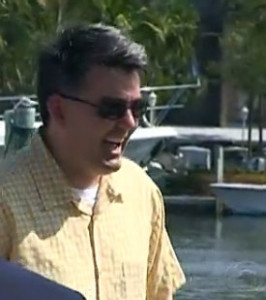
Rep. Cory Gardner (R).
Dark sunglasses? Check. Flip-flops? Check.

In case you missed the news, Gardner told Lynn Bartels of the Denver Post on Friday that he no longer supports "Personhood," despite a long history of backing the extreme anti-abortion policy that would give full human rights to a fertilized egg. This is a monumental change of position on an issue that has ended the career of more than one Republican politician. As we explained on Friday:

In order to understand what a massive reversal this is for Gardner, you can watch the clip of a 2010 9NEWS CD-4 GOP primary debate (above), in which Gardner explains how he not only supported that year's Amendment 62, but actually circulated petitions to help the measure reach the ballot. As a state legislator in 2007, Gardner co-sponsored Senate Bill 07-143-a near clone of this year's Republican abortion ban bill, which makes no exceptions for victims of rape or incest. Gardner's statement that it's a "lie" to say he opposes abortion even in cases of rape or incest is further tripped up by his co-sponsorship of 2011's H.R. 3, the "Redefining Rape" bill also sponsored by Rep. Todd "Legitimate Rape" Akin of Missouri, which included the word "forcible" in the definition of rape to further prohibit federal funding of abortions. Colorado Right to Life, a major proponent of the Personhood abortion bans, says that Gardner "hasn't yet responded" to their 2014 survey, but listed him in 2010 as "supports Personhood, responded to our survey, has participated in CRTL events, and is considered 100% Pro-Life."…

…Cory Gardner claims that he started rethinking his support for the Personhood abortion ban "after voters rejected it by 3-to1 margin in 2010." As reported by Lynn Bartels, that appears very hard to believe, in light of the fact that Gardner signed on as a co-sponsor on July 23rd of last year to H.R. 1091: the federal Life at Conception Act. Like Colorado's Personhood abortion bans, this bill would extend "the right to life" to "every member of the species homo sapiens at all stages of life, including the moment of fertilization."

Ever since the surprise late-February announcement that Gardner would be running for Senate, we have consistently wondered aloud how Gardner would be able to convince voters that he is more moderate than his ultra-partisan record would suggest. When we pondered whether Gardner was fundamentally different enough than Ken Buck to defeat Sen. Mark Udall, we weren't joking. It was lost in the media storm surrounding the Gardner/Buck CD-4 switcheroo, but Gardner's record is so partisan that it was always going to be extremely difficult for him to move to the middle.

So what do we make of Friday's announcement from Gardner? Is this part of a broader strategy to publicly pretend to re-invent himself? We asked those questions, and then we answered them. Here's how it went:

Q: What do you make of Cory Gardner's announcement that he no longer supports "Personhood"?

A: Remember this number: 70. Gardner supported "Personhood" ballot measures in Colorado in 2008 and 2010. Both measures were crushed at the polls, with more than 70% of Colorado voters in opposition. Those are huge percentages of the vote, and Republicans know that it is nightmare issue for them. Even "Both Ways Bob" Beauprez recognizes the problem and has tried to reverse himself.

Democrats jumped on Gardner's backing of "Personhood" as soon as he made his Senate intentions known, spreading a 2010 video of Gardner voicing his strong support. It's not unlikely that Gardner's campaign has seen recent polling data indicating just how much this issue damages his candidacy, so they made the decision to try to reverse course early in the campaign.

—–

Q: Did it work? Does this solve his problem with voters over "Personhood"?

A: No, because it's not even close to being genuine. Gardner tried to play the card that it's good for a politician to re-examine issues, but the timing of this announcement betrayed any sincerity. You drop "bad news" on a Friday afternoon because you hope that fewer people will see it or remember past the weekend — hell, everybody knows that. Gardner just wants to be on the record as saying he changed his position so that he can use that defense in a few months when the issue comes back up. Even the least-cynical politico watching this unfold would understand that this was done for purely political reasons. 

Don't forget that Gardner's public support for "Personhood" came in 2010, when Gardner was wooing Republican voters in order to become the GOP nominee in CD-4. Gardner might have had trouble winning that nomination in 2010 had he not been such a firm supporter of "Personhood." If Gardner really doesn't support "Personhood" now, then he was being disingenuous at best by claiming such fervent belief in 2010.

—–

Q: Oh, Well. No harm in trying, right?

A: Put it this way: Gardner's campaign is in a worse position today than it was on Friday morning. Not only did Gardner not solve his "Personhood" problem, but he unnecessarily created new concerns for himself. He has now opened himself up to the always-effective "flip-flopper" attack, which will be particularly devastating for Gardner because there is video of him supporting "Personhood" with his own words. That problem boxes him in on a whole host of other difficult issues where his record won't align with moderate voters. From here on out, Gardner can't try to adjust his position on anything without feeding more fuel into the "flip-flopper" fire; that's very important, because the next stop after "flip-flopper" is "untrustworthy," which is extremely difficult to overcome.

We understand the thinking behind trying to change public perception of where you stand on a critical issue, but "Personhood" isn't one of those squishy issues that people don't have a strong feeling about one way or the other. Gardner didn't just flip-flop on giving subsidies to Ukraine; where you stand on "Personhood" is much more of a core belief that speaks to who you are as a human being.

—–

Q: Is this part of a broader strategy to publicly to re-invent himself (or at least pretend as much)?

A: Perhaps, though it's difficult to see how this would be successful. People dislike a "flip-flopper" about as much as any trait in a candidate. Voters didn't like President Bush when he ran for re-election in 2004, but they didn't believe anything that came out of John Kerry's mouth; you can still win if voters dislike you, but it's much, much harder if they don't trust you.

The fact that Gardner's campaign might even consider a strategy that involves "re-inventing" his position on high-profile issues brings us back to late February and our initial reaction to a Gardner Senate bid. The headline that day read: "How Does Cory Gardner for Senate Make Any Sense At All?" Yes, Republicans needed a better candidate if they hoped to defeat Sen. Udall in November, and Gardner certainly has shown that he can raise money (which none of the other GOP candidates could master). But Gardner is also the 10th most Republican member of Congress — a level of partisanship that is unmatched in Colorado — with a very specific and clear record of support for issues that play well in CD-4 but are completely at-odds with the majority of Colorado voters.

To paraphrase a famous football coach, "He is who we thought he was."

—–

Q: You said that this may end up being the single most decisive event in the 2014 Senate race. Why?

A: Gardner's campaign is extremely worried about how to sell him to statewide voters, and they clearly don't have a good plan for moderating his record. Friday's plan was this: "We'll drop a grenade in the afternoon, duck behind a table, and hope nobody hears it explode."

Gardner's extreme-right-wing, highly-partisan record is a massive problem for someone attempting to woo a moderate electorate…but it might be even worse than anyone thought. Gardner's flip-flop on "Personhood" tells us that his campaign is incredibly worried about how to overcome his background. Intentionally, strategically flip-flopping on a well-known and divisive issue is risky at best, with a very low chance at success. There aren't any scenarios that come to mind where this might have worked out well for Gardner, but he and his advisors obviously felt that doing nothing was the greater risk. Gardner is trying frantically to define himself before it is done for him, but how does he get out of the corner that he painted for himself these last four years in Congress?

This is the Gardner campaign strategy in a nutshell: 1) try to tie Udall to Obamacare, and 2) distract voters from looking at Gardner's record.

That's not a strategy. It's buying a lottery ticket.


Comments

Recent Comments


Posts about

Donald Trump
SEE MORE

Posts about

Rep. Lauren Boebert
SEE MORE

Posts about

Rep. Gabe Evans
SEE MORE

Posts about

Colorado House
SEE MORE

Posts about

Colorado Senate
SEE MORE

44 readers online now

Newsletter

Subscribe to our monthly newsletter to stay in the loop with regular updates!