
U.S. Senate
See Full Big Line
(D) J. Hickenlooper*
(D) Julie Gonzales
(R) Mark Baisley
80%
20%↓
10%
Governor
See Full Big Line
(D) Phil Weiser
(D) Michael Bennet
(R) Victor Marx
50%↑
50%
20%
Att. General
See Full Big Line
(D) Jena Griswold
(D) M. Dougherty
(D) Hetal Doshi
40%
30%↑
30%
Sec. of State
See Full Big Line
(D) J. Danielson
(D) A. Gonzalez
(R) James Wiley
50%
50%
10%
State Treasurer
See Full Big Line
(D) Jeff Bridges
(R) Kevin Grantham
80%↑
20%↓
CO-01 (Denver)
See Full Big Line
(D) Diana DeGette*
(D) Melat Kiros
(D) Wanda James
55%↓
45%↑
10%↓
CO-02 (Boulder-ish)
See Full Big Line
(D) Joe Neguse*
(R) Somebody
90%
2%
CO-03 (West & Southern CO)
See Full Big Line
(R) Jeff Hurd*
(D) Dwayne Romero(D) Alex Kelloff
50%↓
35%↑
30%↓
CO-04 (Northeast-ish Colorado)
See Full Big Line
(R) Lauren Boebert*
(D) E. Laubacher
80%
20%
CO-05 (Colorado Springs)
See Full Big Line
(R) Jeff Crank*
(D) Jessica Killin
53%↓
48%↑
CO-06 (Aurora)
See Full Big Line
(D) Jason Crow*
(R) Mel Tewahade
90%
2%
CO-07 (Jefferson County)
See Full Big Line
(D) B. Pettersen*
(R) A. Capobianco
90%
2%
CO-08 (Northern Colo.)
See Full Big Line
(R) Gabe Evans*
(D) Manny Rutinel
(D) Shannon Bird
45%↓
40%↑
30%
State Senate Majority
See Full Big Line
DEMOCRATS
REPUBLICANS
80%
20%
State House Majority
See Full Big Line
DEMOCRATS
REPUBLICANS
95%
5%
[wpdreams_ajaxsearchlite]
 May 18, 2026 01:10 PM UTC
 A redistricting war has been underway for the last year after President Trump directed Republicans to re-draw congressional boundaries in order to give the GOP an advantage as it tries to maintain control of Congress in 2026. New polling numbers suggest that it won’t be enough to survive a coming Blue Wave.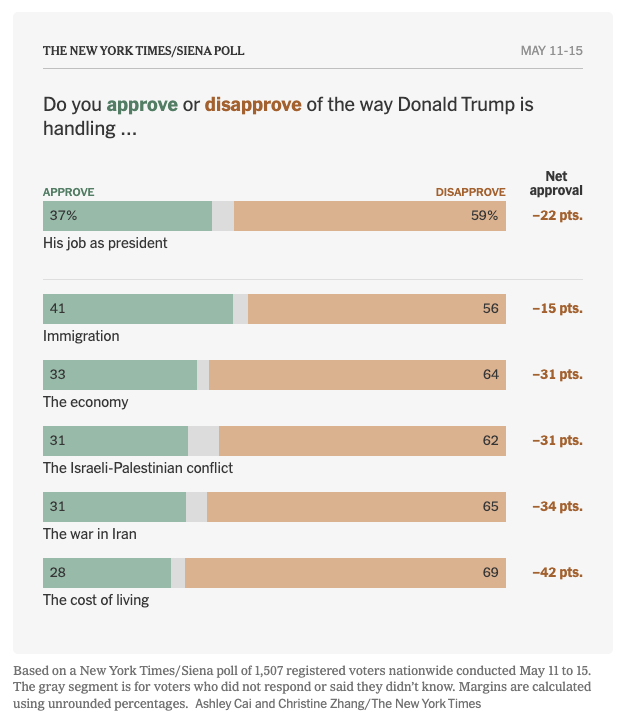
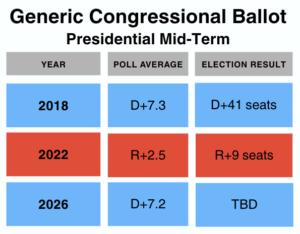 Recent history shows that polling data on the “Generic Congressional Ballot” tends to be fairly predictive of future election results. The average Generic Congressional Ballot result is now at D+7.2 (via
Comments