As the Grand Junction Sentinel’s Joe Vaccarelli reports, Republican faithful looking to act on their frustrations over the massive defeat for their party in the 2018 elections and the resulting loss of any power to stall legislation passed by the Colorado General Assembly have a few options beyond the most obvious and probably best choice of trying harder to not lose in 2020.
If you’re not interested in signing on with the virulent anti-Semites who want to recall Gov. Jared Polis or helping the Neville family live down their disastrous management of House Republican electoral messaging but would still like to lodge your disapproval, try this:
Hundreds of Grand Junction voters turned out Saturday to make their voice heard regarding a recently passed state law.
While they weren’t casting ballots this day, they hope to in the future. Voters signed petitions to support an effort to put a question on the 2020 ballot to repeal the National Popular Vote Bill, which was signed into law March 15…
The effort to place a question on the ballot is led by Mesa County Commissioner Rose Pugliese and Town of Monument Mayor Don Wilson. The bill — which would change the way Colorado commits its presidential electoral votes in future elections — passed through the State House of Representatives in February and was later signed by Gov. Jared Polis.
Colorado law provides a method by which voters can petition to have a recently-passed statute put before the voters for a second guess. In order to qualify such a repeal question for the ballot, opponents need to collect a similar number of valid signatures to what’s required to place a statewide proposition before voters. And time is short: the petition deadline is August 1st, and if they can’t get enough signatures to qualify the question the national popular vote compact law will “take effect”–which in this case means nothing unless enough states join the compact to produce an Electoral College majority.
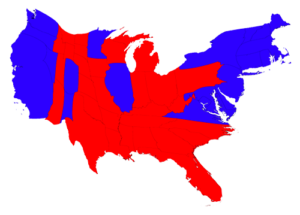
If you support changing the system to reduce the possibility that the Electoral College might come to a different result than the popular vote, as most recently occurred in 2000 and 2016 resulting in the election of Republican presidents in both cases, you’re not going to be very excited about a petition campaign to block the law from taking effect. On the other hand, collecting over 125,000 valid Colorado voter signatures to force a 2020 ballot question on blocking Colorado from joining the National Popular Vote Compact, which is years from becoming binding if it ever happens at all, is a tall order–leading to an expenditure of resources that Republicans would arguably be much better served by devoting to Republican candidates in the 2020 general election.
But the fact remains that blocking a law from taking effect by petition is a legitimate process permitted under Colorado law, and it’s a far more appropriate protest than attempting to recall lawmakers for passing legislation. And the fact is, if opponents do manage to achieve this lofty goal it would be a more potent statement in their favor than an opportunistic recall of some legislator nobody outside their district has heard of.
Again, the best way to handle defeat in any election is to try to not lose the next election. But if you’re a vengeful Republican with money burning a hole in your pocket, this is perhaps a more honorable way to console yourself.
Subscribe to our monthly newsletter to stay in the loop with regular updates!
Comments