U.S. Senate See Full Big Line

(D) J. Hickenlooper*

(R) Janak Joshi

80%

20%

(D) Michael Bennet

(D) Phil Weiser
55%

50%↑
Att. General See Full Big Line

(D) Jena Griswold

(D) M. Dougherty

(D) Hetal Doshi

50%

40%↓

30%

Sec. of State See Full Big Line
(D) J. Danielson

(D) A. Gonzalez
50%↑

20%↓
State Treasurer See Full Big Line

(D) Jeff Bridges

(D) Brianna Titone

(R) Kevin Grantham

50%↑

40%↓

30%

CO-01 (Denver) See Full Big Line

(D) Diana DeGette*

(D) Wanda James

(D) Milat Kiros

80%

20%

10%↓

CO-02 (Boulder-ish) See Full Big Line

(D) Joe Neguse*

(R) Somebody

90%

2%

CO-03 (West & Southern CO) See Full Big Line

(R) Jeff Hurd*

(D) Alex Kelloff

(R) H. Scheppelman

60%↓

40%↓

30%↑

CO-04 (Northeast-ish Colorado) See Full Big Line

(R) Lauren Boebert*

(D) E. Laubacher

(D) Trisha Calvarese

90%

30%↑

20%

CO-05 (Colorado Springs) See Full Big Line

(R) Jeff Crank*

(D) Jessica Killin

60%↓

40%↑

CO-06 (Aurora) See Full Big Line

(D) Jason Crow*

(R) Somebody

90%

2%

CO-07 (Jefferson County) See Full Big Line

(D) B. Pettersen*

(R) Somebody

90%

2%

CO-08 (Northern Colo.) See Full Big Line

(R) Gabe Evans*

(D) Shannon Bird

(D) Manny Rutinel

45%↓

30%

30%

State Senate Majority See Full Big Line

DEMOCRATS

REPUBLICANS

80%

20%

State House Majority See Full Big Line

DEMOCRATS

REPUBLICANS

95%

5%

Generic selectors
Exact matches only
Search in title
Search in content
Post Type Selectors
December 29, 2017 11:08 AM UTC

Top Ten Stories of 2017 #7: The House That Blew Up

  •  
  • by: Colorado Pols

Like smoking, lawn darts, and bars on cribs spaced just far enough apart for babies to stick their heads through, oil and gas development in Colorado wasn’t always considered to be a problem. It wasn’t controversial for several reasons–in addition to the lack of public knowledge of the health and safety risks. For decades, Colorado’s “split estate” mineral rights law establishing property rights under the surface of the land in addition to the rights of landowners on the surface operated without major conflicts. Colorado’s wide open spaces gave drillers plenty to explore, and the population centers along the Front Range didn’t have the most easily-accessible minerals underneath them.

But over time, two things happened: the increasingly urban Front Range started to expand into energy-producing areas, and a maturing technology for extracting oil and gas known as hydraulic fracturing put minerals under residential communities within economical reach. Because under Colorado law mineral rights have parity with the rights of surface landowners, within regulations controlled by the state’s Oil and Gas Conservation Commission drillers are routinely allowed to override local zoning and place heavy industrial operations in the immediate vicinity of homes and schools.

As the political battle between concerned residents of local communities threatened by drilling and the energy industry has heated up in recent years, the industry has spent lavishly to influence Colorado’s political leadership on both sides of the aisle. This has resulted in gridlock at the Colorado legislature on the issue, especially for the last seven years under an avowedly pro-energy Democratic governor and frequently split control of the General Assembly. When citizens turned to the state’s initiative process to get relief by popular vote, the energy industry bankrolled 2016’s Amendment 71 to make it prohibitively harder to get constitutional measures on a statewide ballot.

Entering 2017, the fight over oil and gas drilling in Colorado was simmering but hardly boiling over. The success of Amendment 71, and the likelihood of no real movement on the issue until after Gov. John Hickenlooper leaves office, combined with the much bigger threat of the Trump administration over this and so many other issues left supporters of better protections feeling defeated.

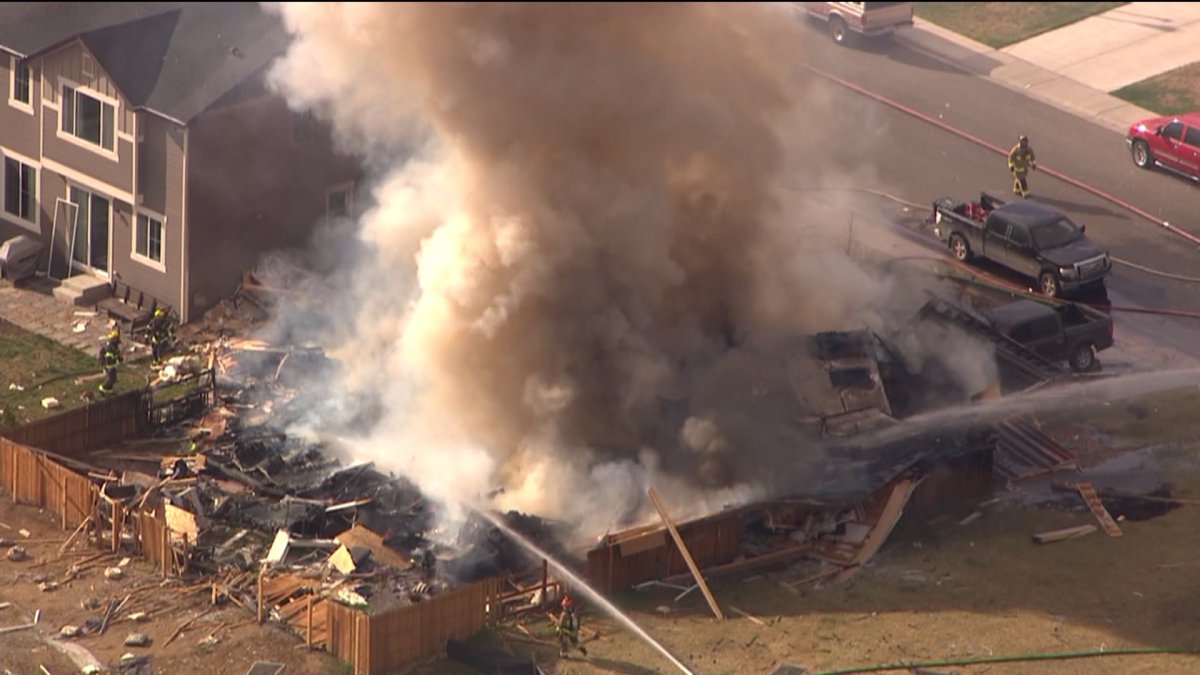
On April 17th, a recently-built home in Firestone north of Denver suddenly exploded, killing two people and severely injuring two others inside. The home was totally destroyed in the explosion, which also damaged nearby homes and caused a fire that took hours to extinguish. Investigators determined that a flow line connected to a disused well owned by Anadarko Petroleum had not been properly disconnected from the well. Raw methane gas, lacking the telltale additive to warn of high concentrations by smell, began to flow again through this line, accumulating undetected in the basement of the home until being ignited accidentally by the homeowners with tragic results. After the explosion, more underground plumes of methane in the immediate area were discovered and vented.

The Firestone home explosion immediately brought the issue of oil and gas production near homes back to the fore. In this case, homes were built near abandoned wells from which methane had seeped, but that certainly doesn’t absolve the industry of responsibility of not just properly capping old wells but ensuring all infrastructure in place for energy extraction is rendered safe before homes are built over them. And obviously, if the industry is this careless with abandoned flow lines, it invites basic questions about how careful the industry is with everything else they do.

But in Denver, the industry’s sway over leadership on both sides of the aisle ensured little would change. A limited set of reforms announced by Gov. Hickenlooper in August fell pitifully short of addressing concerns, as the Denver Post reported:

Colorado Gov. John Hickenlooper is asking oil and gas operators to pony up money to plug the 700 to 800 “orphan wells” in the state, but is shying from taking stances on more contentious policies, such as how close new homes can be built to existing wells.

The governor also won’t force the energy industry to allow state officials to compile a publicly available map of all oil and gas pipelines. Instead, he said he wanted to enhance the 811 call program to ensure homeowners can use their telephones to access pipeline information for site-specific areas. Hickenlooper said industry officials were concerned a comprehensive statewide map could lead to people illegally tapping pipelines to siphon off gas. [Pols emphasis]

Hickenlooper’s thoroughly ridiculous contention that scavengers might “siphon off gas” if the public is made aware of oil and gas pipelines running through their neighborhoods, and that this concern somehow trumps the rights of residents to know where these potentially deadly gas lines are located in relation to their homes, perfectly symbolizes the tone-deaf approach of his administration on oil and gas drilling–arguably Hickenlooper’s greatest failure in office. There is simply no way to overstate how offensive this was to concerned citizens in Firestone and elsewhere.

Meanwhile, the industry attempted to vilify gubernatorial candidate Jared Polis by proxy in municipal elections in Greeley this fall, linking his donations to city council candidates with his support for better protections from drilling. That attempt turned disastrous after one of the candidates backed by the industry was revealed to be a convicted felon and whose seat on the Greeley City Council is now in doubt. It’s fair to say that Polis, who doesn’t support a “statewide fracking ban” but has supported initiatives for local control and wider setbacks from drilling, is not under the industry’s thumb. As a result Polis is set to face the most shrill attacks imaginable from the industry and their many supporters next year–to include lots of affected hand-wringing from pro-energy Democrats during the upcoming gubernatorial primary.

It has been our contention since before John Hickenlooper won the governor’s race in 2010 that at some point, Colorado Democrats will face a seminal choice–to continue alienating their base of support and swing votes in impacted communities by currying favor with the oil and gas industry in this state, or to face them down on behalf of affected communities once and for all. We believe based on our years of experience that the political risks to Democrats standing up to oil and gas are much smaller than conventional wisdom suggests, and indeed that much of said “conventional wisdom” is a fabrication of the industry’s bought-off mouthpieces in both parties. On the other hand, this issue has done more to anger the Democratic base in Colorado than perhaps any other in recent years, making the benefits of a new approach easy to recognize.

What’s it going to take for Democrats in Colorado to remember where their loyalties should lie?

The right candidate. And an election to prove it.

Comments

Recent Comments


Posts about

Donald Trump
SEE MORE

Posts about

Rep. Lauren Boebert
SEE MORE

Posts about

Rep. Gabe Evans
SEE MORE

Posts about

Colorado House
SEE MORE

Posts about

Colorado Senate
SEE MORE

44 readers online now

Newsletter

Subscribe to our monthly newsletter to stay in the loop with regular updates!