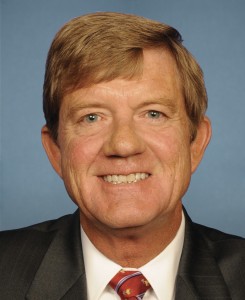
The Aspen Daily News’ Todd Hartley follows up on a story we’ve been watching for some days now, growing controversy over a “public lands” bill from Republican Rep. Scott Tipton and backed by Sen. Cory Gardner introduced in direct competition with the CORE Act–legislation Colorado Democrats are hoping to get bipartisan consensus on in order to move any kind of public lands protection bill forward in the current divided Congress.
As Hartley reports, Tipton is responding to the blowback with vague promises to revisit a major difference in the two bills pertaining to the Thompson Divide area, additional protections for which was “left out” of the Republican version:
“The congressman is interested and plans to have those conversations regarding Thompson Divide,” said Matt Atwood, Tipton’s communications director. “That’s part of the reason we left it out, because it is a ‘discussion draft,’ and we want to get all sides of the story before we introduce the full bill.”
That’s better than nothing, we guess, but it sidesteps the larger problem: why run two bills at all?
The prospect of having Thompson Divide protections included in an amended draft of the bill is welcomed by leaders of local conservation groups, but they still expressed skepticism about the underlying motivation behind the REC Act and the exclusion of the divide in the first place…
“We believe that the CORE Act is a well-crafted, well-vetted compromise that is the result of a decade of consensus and stakeholder engagement, and it has really broad community support,” said Julia Morton, interim executive director of the Thompson Divide Coalition. “We believe the solution that has been crafted in the CORE Act is a really fair and good one, and so I think our preference is, obviously, for Tipton to support the CORE Act.” [Pols emphasis]
Not surprisingly, it’s a sentiment echoed by Bennet and his staff.
“The CORE Act is the result of Coloradans working together to hammer out compromises and develop proposals that have widespread local support, including in places such as the Thompson Divide,” said Courtney Gidner, a spokesperson for Bennet. “Our focus is on advancing each of the four components of the CORE Act together. Any contribution that leads us to accomplish these goals is welcome, and we hope Congressman Tipton will join this effort.”
The problem, as we’ve outlined in previous posts, is straightforward. In a divided Congress, the only public lands protection bills that have any realistic chance of passage are bills that enjoy enough bipartisan support to survive the Democratic-controlled House and GOP-controlled Senate to arrive on the President’s desk. If Democrats have a bill and Republicans introduce competing legislation instead of working out their differences with Democrats, the most likely outcome is that no legislation at all passes. That’s why supporters of the CORE Act, the product of years of study and negotiation, were blindsided by Tipton’s introduction of the “REC Act” to accomplish many of the same goals but with certain key differences–in the case of Thompson Divide, taking a side by omission in a long-running fight over protecting a vast natural area from oil and gas drilling.
What happens next? We’ll have to wait. There’s always a chance of a resolution that’s acceptable to all parties, which would take this issue off the table politically ahead of a pivotal general election next year. But if the more likely outcome of no bill at all prevails, Scott Tipton’s bad faith is going to be plain for all CD-3 voters to see.
Subscribe to our monthly newsletter to stay in the loop with regular updates!
Comments