Roll Call’s Nathan Gonzales looks at a fascinating convergence of swing congressional races and hotly competitive presidential general election battlegrounds setting up this year:
It’s going to be hard for most House races to get any attention this year, with a competitive presidential race and the fight for control of the Senate. But a handful of districts have the luxury of not only hosting a competitive House race, but also being swing areas of presidential battleground states.
In states such as New York, California or Minnesota, House strategists and campaigns are largely on their own to motivate voters and get them to the polls. But in a few districts, House strategists and candidates can focus on persuading voters, since the presidential nominees, national parties and, in some cases, the Senate campaigns will have done the heavy lifting to get out the vote…

Topping the list of districts with the dual variables of a hot congressional race and competition for presidential votes? The perennial marquee face-off in Colorado’s 6th Congressional District:
Colorado’s 6th District: Democratic state Sen. Morgan Carroll is challenging GOP Rep. Mike Coffman in this Aurora-based swing district of an emerging swing state. President George W. Bush carried the district 54-45 percent in 2004 and President Barack Obama won it in 2008 (54-45 percent) and 2012 (52-46 percent). Each outcome was nearly identical to the statewide outcome. Colorado’s 9 electoral votes are likely up for grabs in November. House Race Rating: Leans Republican. Presidential Rating: Tossup.
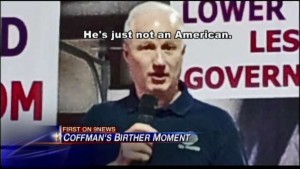
In these numbers, you can see plainly why CD-6 and Rep. Mike Coffman is a top target for Democrats year after year, and especially in presidential election years. Coffman has managed to hold on to his swing seat, even as Barack Obama has won in the same district. For reasons we still can’t quite puzzle out, Coffman survived publicly disparaging Obama’s citizenship in 2012, claiming the President of the United States “is just not an American.”
Obviously though, this is a dangerous game for Coffman. Each election cycle since his district was remade into a competitive battleground in 2011 has been a fraught affair, with Coffman evading his long hard-right record just long enough to win–easier to accomplish in midterms than presidential years. In 2012 a relatively unknown and underfunded challenger came within two points of beating Coffman, proving what the combination of a presidential election year and Coffman’s own liabilities could result in.
For 2016, add Coffman’s most formidable challenge ever to the mix.
And then add Donald Trump.
As Coffman’s “first choice” Marco Rubio fades to black, questions he does not want to answer are becoming urgent.
Subscribe to our monthly newsletter to stay in the loop with regular updates!
Comments