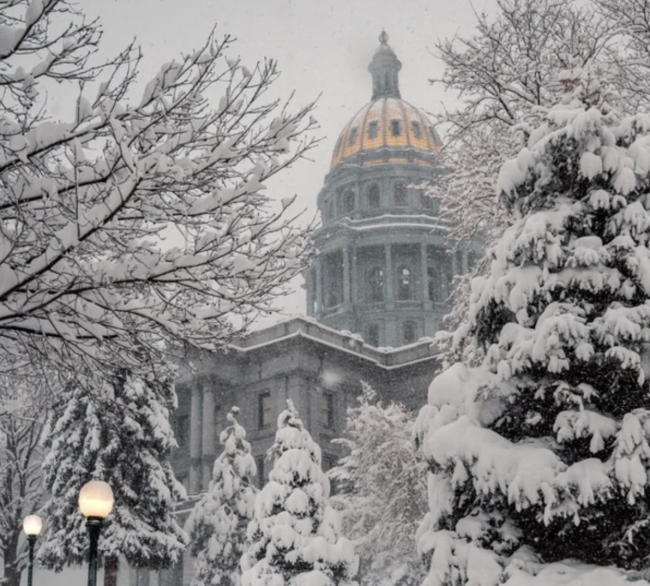
As 9NEWS’ Marshall Zelinger reported last week, lawmakers in the Colorado General Assembly head back to work tomorrow with the fiscal devastation wrought mostly by Republicans in Washington, D.C. no longer a hypothetical to be dreaded, but a reality to be mitigated as best they can:
Colorado’s Democratic legislative leaders said they will not bow to President Donald Trump’s financial pressure tactics, even as the state faces an $800 million budget shortfall and the daily possibility of losing additional federal funding.
House Speaker Julie McCluskie (D-Dillion) and Senate President James Coleman (D-Denver) told 9NEWS that they oppose releasing Tina Peters, a Trump ally imprisoned in Colorado for her role in an a scheme to uncover unfounded election rigging, despite the president’s retaliation against the state for keeping her incarcerated. Trump has withheld federal disaster relief funding, canceled grants and vetoed water quality projects affecting rural Colorado in response to Peters’ continued imprisonment…
The lawmakers’ defiance comes as Colorado legislators prepare to return Wednesday for the 2026 legislative session with more looming budget cuts. Lawmakers cut $1.2 billion from the 2025-26 budget during last year’s session and then had to cut $1 billion during a special session following the passage of the federal budget bill H.R. 1.
Changes made by the Republican-led Congress resulted in Colorado receiving fewer federal tax dollars, meaning the balanced budget was a $1 billion short. If nothing changes in the state budget for 2026-27, there’s a large deficit looming.
Unlike previous years in which Democrats kicked off the legislative session with an ambitious and fiscal note-heavy agenda, the 2026 session is getting underway with the hard choices to cut hundreds of millions more from the budget looming in everyone’s minds. It’s not an easy moment to brand politically, other than to educate voters about why the bad news is happening, reaffirm the value of disparaged programs like Medicaid which have been subject to large cost increases while federal support declines–and hope that the political backlash focuses on the party responsible for forcing these painful cuts from afar instead of the local Democrats constitutionally obligated to balance the state’s budget.
This is where the personal interests of certain lawmakers who are candidates for higher office will become evident, with Sen. Barb Kirkmeyer in particular looking to weaponize every tough choice majority Democrats have to make while at the same time putting daylight between herself and the deeply unpopular Trump administration and Washington Republicans who have made these cuts necessary. As we’ve discussed, this isn’t going to be an easy or an honest strategy for Kirkmeyer, but it’s the only option she has.
Apart from the tough financial choices that await lawmakers, the focus is expected to be on what’s considered the prime political buzzword of 2026, affordability: affordable housing, health care, and legislation that would make it much easier to install solar and wind power at the residential level. The one ray of hope in the state’s difficult fiscal outlook for at least the next few years lies in a graduated income tax proposal in the works from progressive fiscal policy advocates.
For the time being, however, this legislative session will be another harsh lesson on why elections matter.
Subscribe to our monthly newsletter to stay in the loop with regular updates!
Comments