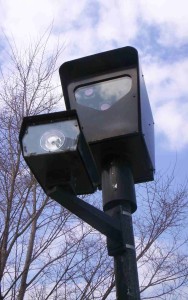
UPDATE: Food for thought as legislators consider Senate Bill 14-181, here are some interesting points in favor of red light cameras from the Colorado Association of Chiefs of Police:
Year-to-year changes in red-light running fatalities reveal an average annual decrease of 5.6% from 2007 to 2011. U.S. and worldwide studies show a 25 to 30 % reduction in injury crashes at locations with red-light safety cameras, Insurance Institute for Highway Safety reports. A five-year study by the Insurance Institute for Highway Safety in 2011 found red-light cameras saved more than 150 lives in 14 of the largest U.S. cities, reducing fatalities by 24 percent.
Cameras get drivers’ attention, and reduce the most dangerous type of collisions – right angle crashes. A 2011 Texas Transportation Institute study of 11,122 crash records from 275 intersections showed 633 fewer crashes at intersections with cameras; and a 32% decrease in right-angle crashes…
The use of photo speed radar enforcement is already strictly limited to residential streets, school zones and construction zones. It can be used only where the speed limits is not more than 35 miles per hour. A violator must be exceeding the speed limit by at least 10 miles per hour to receive a ticket. Photo speed radar vans are manned by qualified personnel. Red light cameras are deployed at selected high risk intersections. Fines are limited to a maximum $40 for speeding and $75 for red light infractions. No points are assessed against a driver’s record.
—–
As the Denver Post's Kurtis Lee reports, the red-light camera ban bill, supported by a bipartisan election-year coalition and hotly opposed by local government reaping big bucks from installed cameras, has passed the Colorado Senate:
At its core, Senate Bill 181 would bar local municipalities from using automated vehicle-identification systems that pinpoint drivers. Along with red-light cameras, the measure includes photo radar cameras that detect speed.
The bill moved out of the Senate on a 21-14 vote. The only amendment attached allows for toll roads to continue using photo radar cameras that detect speed.
The measure has support from Democrats and Republicans in the legislature. Gov. John Hickenlooper on Monday was noncommittal toward the bill. Hickenlooper, a Democrat, said at an afternoon news conference he's seen earlier versions of the bill, but has yet to view its current form.
"I think there are a number of people that feel a level of anger over what they feel is an intrusion and is not making their roads safer, and their opinion is that it's a way for local governments to try to increase their revenues," Hickenlooper said when asked about his personal views on the concept of banning photo red-light cameras. "That creates a real frustration in a lot of elected officials."
Gov. John Hickenlooper's sympathy for those poor, misunderstood elected officials notwithstanding, the public at large seems to be the most "frustrated" party over red-light cameras. The disagreement over the public safety value of these systems is difficult to sort through legitimately, due to what's perceived to be an ulterior motive to raise badly-needed revenue for local government–one thing red-light cameras excel at. Sometimes it falls to your humble hosts to remind our readers that revenue for our local governments is a good thing, or failing that at least a necessary evil–and if TABOR won't let governments get it the old-fashioned way, they've got to get creative.
A poll follows: will Gov. Hickenlooper sign Senate Bill 14-181 if it passes?
Subscribe to our monthly newsletter to stay in the loop with regular updates!
Comments