The Colorado Independent reports on the fallout from the passage this year of Senate Bill 17-267, the hard-fought compromise to save rural hospitals and give the state budget a small bit of breathing room through the reclassification of the state’s Hospital Provider Fee program to exempt it from revenue limits imposed by the 1992 Taxpayer’s Bill of Rights (TABOR). Though the deal is done, among Republicans the finger-pointing continues:
In the days after the end of the latest legislative session, a narrative that emerged was one of bipartisanship and compromise.
But “compromise” can sometimes be a dirty word, especially when it comes to party primaries, plenty of which could take place in 2018. Some potential challenges follow a high-stakes deal lawmakers passed to reclassify the state’s hospital provider fee so it is exempt from the Taxpayer’s Bill of Rights, commonly known as TABOR…
Now, with the session over, election season soon begins. And one looming question will be whether TABOR hardliners will try to make those Republicans who voted for the plan pay for what they did.
The Colorado Union of Taxpayers, for one, has thrown down the gauntlet.
“As Rush Limbaugh said after Obamacare repeal passed, ‘there’s no reason to vote for Republicans,’ and that applies to the Colorado Republican Party as well,” CUT’s president, Greg Golyansky told The Colorado Independent.
We noted last week the Independence Institute’s Jon Caldara’s bitter denunciation of Republicans who supported the Hospital Provider Fee fix, calling out GOP leadership by name and claiming the deal is the “largest ‘grand betrayal’ from Republicans I have ever witnessed in my more than 25 years in Colorado politics.” Much like the aftermath of 2005’s bipartisan Referendum C campaign to give the state a “time out” from TABOR limits, Caldara finds himself not just on the losing side, but at odds with elected GOP leadership in Colorado.
With that said, Caldara’s rage does appear to have tripped up at least one Colorado Republican gubernatorial candidate, in a way eerily similar to how Referendum C caused terminal problems for GOP gubernatorial candidate Bob Beauprez in 2005-06:
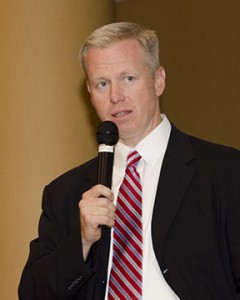
One of the Republican candidates who said he would sign the law was Arapahoe County-area District Attorney George Brauchler. He would do it, he said that day, but grudgingly.
“I think the alternative is too devastating for the rural community and I think we’re sort of in a place now where we’ve got to take this the way it’s at,” he said. “My regret is that because of a lack of leadership and political pressure from an office that could have exerted both we’re at a place where we’re going to have to accept not the best outcome here. But I think we have to do it for rural Colorado and for that I support it.”
Post-Caldara freakout, George Brauchler has pulled a full-on “Both Ways Bob.”
UPDATE: Since this story was posted, 18th Judicial District Attorney George Brauchler, who is running for governor as a Republican, said after thinking about it more he would not have signed the law. He said he believes it is unconstitutional. He said he would find the money to save rural hospitals elsewhere in the budget. He said he was a reluctant supporter at best on the day the compromise passed. “Certainly I’ve changed my position on signing it, but the distance between those positions isn’t that dramatic,” he said. [Pols emphasis]
Wait a minute–the “distance” between taking action to prevent something “devastating for the rural community” and not taking that action…”isn’t that dramatic?” For the communities that could have seen their hospitals close, it would be pretty damned dramatic. Given what other Republicans have said about the urgency of the problem, like Sen. Jerry Sonnenberg, Brauchler’s dismissal of his own flip-flop on the Hospital Provider Fee fix is nonsensical in the extreme.
And he’s given his primary opponents the perfect wedge — one that GOP primary voters have smelled before.
Subscribe to our monthly newsletter to stay in the loop with regular updates!
Comments