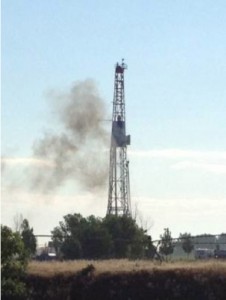
We’ve talked a lot about fracking in this space and the political quagmire it has become for local and state elected officials alike. We’ve half-joked about Gov. John Hickenlooper drinking “fracking fluid” in a silly effort to prove that fracking is safe – a misguided notion on more than one level. It is true that the chemicals used in fracking fluid may be harmful to the environment, but there is another big problem when it comes to increased oil and gas drilling: air quality.
According to a widely-reported study in 2012, little ‘ol Erie, Colo. had worse air pollution than Houston – and the number of oil and gas wells have only increased since then. Air pollutants from fracking and other drilling, specifically methane, are massive contributors to climate change. The New York Times reported last week on a new study suggesting that natural gas is not nearly as clean as advertised in large part because of the amount of fugitive methane gas released into the atmosphere.
Last November, Gov. Hickenlooper proposed a set of regulations to protect Colorado’s air quality. On Wednesday, the Air Quality Control Commission will meet to begin discussions of the proposed regulations – new rules created with input from scientists, environmental organizations, and oil and gas developers such as Noble Energy, Anadarko, and Encana.
But not everyone is holding hands and signing Kumbaya. Out-of-state interest groups such as the Koch Brothers’ Americans for Prosperity are beating the oil drums on behalf of the likes of Chevron, Exxon, and the American Petroleum Institute as part of an effort to derail any new regulations. You know the routine: any new regulations will destroy businesses in Colorado, cost the state quadrillions of dollars, and force oil and gas companies to move out of Colorado and drill elsewhere (as though there are massive oil and gas fields in every state). Also, the terrorists will win.
The opposition from Chevron and Exxon is particularly interesting considering that Colorado’s leading oil and natural gas producers are already supporting the proposed regulations–enough to account for 75% of the total cost to the industry associated with new clean air protections (an average cost of $820 per well; we’d say that’s a drop in the bucket if it wasn’t such an awful pun). Chevron is not one of the major oil and gas extractors in Colorado, with only about 10% of the number of wells compared to Noble and Anadarko, but they are fighting regulations in our state because they don’t want to open the door to increased clean air regulations anywhere.
Chevron certainly has the money to spend if they decide to go all-out in Colorado. In 2012, Chevron’s $2.5 million donation to the Congressional Leadership SuperPac (which seeks to elect Republicans to Congress) was the single largest corporate donation in history. In fact, the company spent nearly $10 million lobbying Congress in 2012 alone.
Chevron’s political expenditures have paid off handsomely, earning the company some $700 million in annual tax breaks (Chevron’s 19% tax rate is about half of the top corporate tax rate of 35%).
If Chevron does end up convincing Colorado officials to ditch the proposed regulations, there’s still hope that they might one day spring for pizza and soda, as they did in Pennsylvania recently when a fracked well exploded.
Subscribe to our monthly newsletter to stay in the loop with regular updates!
Comments