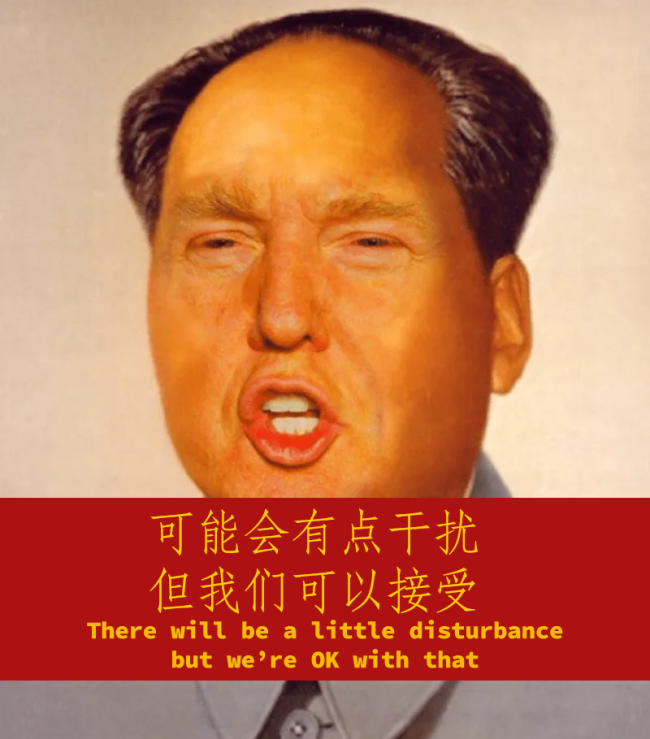
As CBS News reports, today is a day dreaded from the start of Donald Trump’s second administration, the announcement of a sweeping new scheme of “reciprocal” tariffs meant to force other economies to either drop their own trade barriers or move the manufacturing of their products to the U.S. Trump has declared today “Liberation Day,” but for everyone trying to understand what this new trade war will mean for the American economy at least in the short run, the feeling is anything but liberating:
The president hasn’t yet said what the tariff rates on foreign goods will be and whether they will be global or affect only products from specific countries, and on Tuesday afternoon, White House press secretary Karoline Leavitt said the president was still finalizing the details of the plan with his trade team. But Leavitt said Monday that the president’s plan will place reciprocal tariffs on nearly all U.S. trading partners. And on Tuesday, she said the reciprocal tariffs will go into effect “immediately.”
In the audience for the president’s announcement will be rank-and-file steelworkers and auto workers, as well as most of Mr. Trump’s Cabinet, including Vice President JD Vance, two White House officials told CBS News.
The 25% tariffs the president has announced on foreign cars and foreign auto parts are set to go into effect Thursday at midnight, that is, just after 11:59 p.m. Wednesday.
Leavitt said the president’s new tariffs will bring back manufacturing jobs, “improve American competitiveness in every area of industry, reduce our massive trade deficits, and ultimately protect our economic and national security.”
As the Denver Post’s Aldo Svaldi reports, uncertainty over the future of the national economy has deeply undercut local business confidence according to the latest survey from the conservative CU Leeds School of Business:
Colorado business leaders reported a steep drop in confidence as a wait-and-see attitude on the direction of a second Trump administration shifted to fears of policy turmoil, new tariffs and a softer economy, according to a quarterly survey from the University of Colorado Boulder Leeds School of Business…
Expectations in the fourth quarter for the first quarter had edged higher, from 46.7 to 50, as neutral as the index can get and reflective of a balanced approach. But once business leaders had a better sense of the new agenda, it plunged to 31.9 for the second quarter and 32.2 for the third quarter.
Awaiting today’s 2PM Mountain Rose Garden press conference, the mood is divided into two very distinct camps: those who believe the administration’s actions will produce long-term prosperity that makes any short-term disruption worth the self-inflicted pain, and those who foresee major economic upheaval in the short term with no guarantee that the goals of this trade war will ever be attained–any more than you can grow coffee in Colorado, which if you haven’t heard, you can’t.
Colorado’s GOP freshman Rep. Gabe Evans, one of the most vulnerable House Republicans in the nation, has once again aligned himself fully with the Trump administration, praising Trump’s tariff agenda and the supposed benefits for Colorado business:
Evans said in a written statement to the Colorado Times Recorder that tariffs restore balance in international trade and bring more jobs to Colorado.
“Reciprocal tariffs ensure free and fair trade for American producers, including energy producers,” Evans said.
That rosy assessment does not match the view of Colorado business owners who are reckoning with higher costs across the board for their own operations, like the Olathe sweet corn grower who harvests his winter crop in Mexico. As for energy production, a large percentage of the gasoline consumed in Colorado is produced from Canadian crude oil delivered to Suncor’s Commerce City refinery by pipeline.
At least in the short term, Trump’s impending trade war offers no relief to consumers still suffering from high inflation, despite Trump’s repeated promises on the campaign trail to “bring prices down on Day One.” Instead of practical steps to reduce prices on goods consumers need, the nation is strapped in for an economic flight of fancy that has no resemblance to conservative economic policy as the nation has understood it for the last 80 years. MAGA-typecast Republicans like Gabe Evans have no choice but to sing the praises of Trump’s Great Leap Forward even though every part of it runs contrary to their own ideological “free market” convictions.
Even if successful, it could take decades of painful economic adjustment to realize Trump’s “Made in America or else” dreams. If Trump’s trade war fails, he will have set back global trade relations to the Gilded Age at the expense of horrendous damage to the American economy.
Far from “liberation,” this is a historic economic gamble. And every American is on the hook.
Subscribe to our monthly newsletter to stay in the loop with regular updates!
Comments