U.S. Senate See Full Big Line

(D) J. Hickenlooper*

(D) Julie Gonzales

(R) Janak Joshi

80%

40%

20%

(D) Michael Bennet

(D) Phil Weiser
55%

50%↑
Att. General See Full Big Line

(D) Jena Griswold

(D) M. Dougherty

(D) Hetal Doshi

50%

40%↓

30%

Sec. of State See Full Big Line
(D) J. Danielson

(D) A. Gonzalez
50%↑

20%↓
State Treasurer See Full Big Line

(D) Jeff Bridges

(D) Brianna Titone

(R) Kevin Grantham

50%↑

40%↓

30%

CO-01 (Denver) See Full Big Line

(D) Diana DeGette*

(D) Wanda James

(D) Milat Kiros

80%

20%

10%↓

CO-02 (Boulder-ish) See Full Big Line

(D) Joe Neguse*

(R) Somebody

90%

2%

CO-03 (West & Southern CO) See Full Big Line

(R) Jeff Hurd*

(D) Alex Kelloff

(R) H. Scheppelman

60%↓

40%↓

30%↑

CO-04 (Northeast-ish Colorado) See Full Big Line

(R) Lauren Boebert*

(D) E. Laubacher

(D) Trisha Calvarese

90%

30%↑

20%

CO-05 (Colorado Springs) See Full Big Line

(R) Jeff Crank*

(D) Jessica Killin

55%↓

45%↑

CO-06 (Aurora) See Full Big Line

(D) Jason Crow*

(R) Somebody

90%

2%

CO-07 (Jefferson County) See Full Big Line

(D) B. Pettersen*

(R) Somebody

90%

2%

CO-08 (Northern Colo.) See Full Big Line

(R) Gabe Evans*

(D) Shannon Bird

(D) Manny Rutinel

45%↓

30%

30%

State Senate Majority See Full Big Line

DEMOCRATS

REPUBLICANS

80%

20%

State House Majority See Full Big Line

DEMOCRATS

REPUBLICANS

95%

5%

Generic selectors
Exact matches only
Search in title
Search in content
Post Type Selectors
May 26, 2014 09:34 AM UTC

"Lose By Winning"--The Colorado GOP's Long-Term Dilemma

  •  
  • by: Colorado Pols
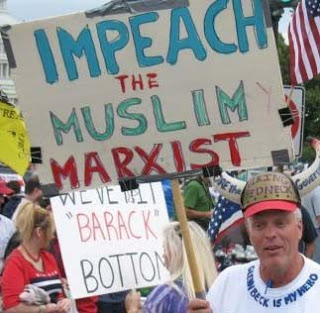
The Republican base (increasingly to scale).

A great analytical piece from Politico's Todd Purdum this weekend makes points that observers of Colorado politics should keep in mind, and have been borne out by Colorado's recent political history as we'll explain:

It’s the predominant paradox of contemporary American politics: If Republicans prevail in this year’s midterm congressional elections, it will be because of their party’s sharp-edged stances on topics like abortion and Benghazi, Obamacare and immigration, gay marriage and the minimum wage — issues that energize the GOP’s core base of support.

But if Republicans lose the race for the White House in 2016, it will be because of their party’s polarizing, out-of-step stances on those very same issues, which alienate much of the broader electorate the GOP needs to win a national contest in a country whose demographics and political realities are shifting under its feet…

“The Republican Party has essentially now two wings: a congressional wing and the national wing,” the veteran GOP pollster Bill McInturff said at a recent Pew Research Center forum on so-called millennial voters, those from 18 to 29 years of age. The congressional wing is thriving, especially in the South, in districts that are 75 percent, or even 80 percent, white, and where every incumbent’s worst fear is a challenge from the right.

…On questions like climate change and gay marriage, pollster McInturff said, younger voters no longer believe there is anything to argue about. He summed up their views as: “‘We wouldn’t fight about that. That’s just presumed to be true.’” [Pols emphasis]

Thomas Mann, the veteran political scientist and Congress-watcher at the Brookings Institution, said that, at the moment, the Republicans are “simply not a presidential party.”

In Colorado, the 2010 "GOP wave" election is generally reckoned to have been a "modest" defeat for the Republican Party. Democrats easily won a gubernatorial race in which the Republican frontrunner self-destructed, and won a narrow victory in a top-tier U.S. Senate race against a candidate whose backward views on social issues rendered him unpalatable to independent and women voters. The state didn't completely escape the effects of historic Republican victories across the nation in 2010, with the GOP picking up two congressional seats, winning the statewide races for Attorney General, Treasurer, and Secretary of State, and the Colorado House flipping to the GOP by a single extremely narrow win in the northwest Denver suburbs. But the overall result was well short of what Republicans had expected the summer before.

In 2012, Democrats in Colorado ran the table on Election Night, sweeping GOP House Speaker Frank McNulty from power in the state House and delivering the state to Barack Obama by a comfortable margin. Going into the 2014 midterms, we see the same pressure on Colorado Democrats to turn out their base voters and swing independents that was evident in the midterm elections of 2010. The question is, can Colorado Democrats minimize the impact of this midterm "wave" as they did in the last midterm election?

The answer is very logically yes, and as the story above explains, it's because the overarching demographics driving this whole midterm/presidential year dichotomy inexorably favor Democrats. One of the biggest reasons the Republican Party has lurched so far to the right since the election of Barack Obama is that, as this changing American electorate begins to decide elections, the biggest constituency Republicans have left to appeal to is the out-of-the-mainstream fringe right wing. Republicans were fully willing to embrace the "Tea Party" to win in 2010. There was a powerful short-term advantage in appealing to this segment of the electorate, in that they are extremely reliable and passionate voters. There is a tremendous enthusiasm gap between such voters, who vote in greater numbers in every kind of election, and the much larger body of voters who turn out once every four years. We're certainly not the only ones who have said this, but we've been saying it for years: 2010 wasn't about who voted, it was about who didn't vote.

And we could say the same thing about John Morse's recall. Or the Jefferson County school board.

The markedly different electorates who decide midterm and off-year vs. presidential elections can result in head-snapping results from one election to the next. Just as one example, the Jefferson County voters who turned out to re-elect Barack Obama in 2012 would never have voted in the radical conservative school board majority now causing street protests the following year. If this seems like an obvious point to you, that's great, but most voters simply don't understand these differences–and as a result, fringe minority electorates are assumed to be representative.

In 2010, Colorado Democrats used exactly what appeals to these ardent conservative voters against Republicans with the broader presidential-year electorate–and by effectively driving home the message of GOP extremism, incompetence, and moral turpitude, they turned out just enough of the 2008 electorate to break the "GOP wave." Colorado Democrats have the same challenge in 2014, but they also have the same opportunity: a rich body of material to use against Republican candidates at every level, from Cory Gardner to Victor Head.

And each year, as the changing electorate chips away at the GOP's narrowing coalition, it gets easier.

Comments

Recent Comments


Posts about

Donald Trump
SEE MORE

Posts about

Rep. Lauren Boebert
SEE MORE

Posts about

Rep. Gabe Evans
SEE MORE

Posts about

Colorado House
SEE MORE

Posts about

Colorado Senate
SEE MORE

47 readers online now

Newsletter

Subscribe to our monthly newsletter to stay in the loop with regular updates!