CBS News reports today on building urgency in the narrowly Democratic United States Senate to do something to break the logjam of 60 votes required to push through crucial Democratic agenda items before the 2022 midterm elections:
“It will be Armageddon,” Democratic Senator Jeff Merkley told CBS News when asked whether Democrats will suffer in the midterms if they don’t enact filibuster reforms. “Our base will be so dispirited, so angry, so disaffected. They will stay home. And I understand why they will stay home if we failed them.”
Merkley has long been pushing for filibuster changes, and introduced the “talking filibuster” which would require senators to actually hold the floor to hold up legislation rather than the current practice of phoning it in. In an interview with ABC News, Mr. Biden said he supported that kind of reform, which reminded him of how the upper chamber operated in his early days as a senator. Now, he said, “It’s getting to the point where, you know, democracy is having a hard time functioning.”
…[A]dvocates note that Republicans haven’t yet filibustered legislation, such as the COVID relief bill, which was passed on party lines through a reconciliation process that only requires majority support. Once the opposition begins in earnest to agenda items like voting rights, climate, immigration and other Democratic priorities, the calls from the base of the party to change the upper chamber’s rules will only grow louder.

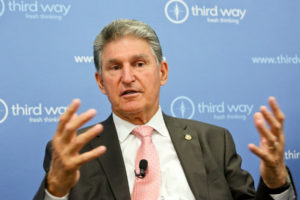
As CNN reports and everyone following this developing situation knows, “Pretendocrat” Sen. Joe Manchin of West Virginia holds all the cards as the deciding vote on any changes to the filibuster, and is as of now drawing a hard line against the most ambitious reforms in the spirit of his predecessor Sen. Robert Byrd:
Manchin says he’s protecting the rights of the minority, something he says Democrats will need whenever Republicans regain control of the chamber.
Manchin is open to some changes — such as requiring senators to stand on the floor and actually argue, a position Biden just adopted. Such a change to require a “talking filibuster” would amount to a departure from the silent filibuster permitted under current rules, which allow a simple threat to force the Senate into time-consuming procedural steps and a 60-vote threshold they must clear to advance bills.
But Manchin again made clear he is drawing a firm line: The 60-vote threshold will stay, and no exceptions will be allowed.
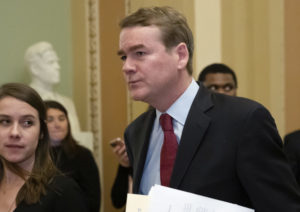
It remains to be seen whether this will remain a tenable position for Manchin and others considered reluctant to embrace the full “nuclear option” of eliminating the legislative filibuster as pressure to pass legislation send over from the U.S. House builds–an as-yet untested coalition that includes other moderates like Sens. Krysten Sinema of Arizona, Jon Tester of Montana, and (yes) Sen. John Hickenlooper of Colorado. But in today’s Unaffiliated newsletter from the Colorado Sun, Colorado’s senior Sen. Michael Bennet is signaling a willingness to do what it takes:
“I hope we get to a place where at a minimum we can figure out how to bring back the talking filibuster,” said Bennet, referencing a proposal rule to make senators speak on the chamber floor while they are trying to block a bill.
But if Republicans dig in their heels? “We may end up with obstruction that is too intense. We may end up having to reform it in some other way,” said Bennet, who spoke at a Colorado Sun event on Thursday. [Pols emphasis]
What happens next in part depends on how Senate Republicans choose to deal with the increasing backlog of important legislation coming over from the House. The more Mitch McConnell accedes to the majority’s will voluntarily, the less likely it becomes that the “nuclear option” will be necessary. At the same time, Democrats are rightly wary of false concessions from Republicans that weaken their legislative agenda and may not result in GOP support even if adopted (see: Affordable Care Act, American Rescue Plan).
What we can say, and it’s a good thing for those of you who want real progress made in these two vanishing years of full Democratic control in Washington, is that Michael Bennet is tired of playing by rules that only benefit one side–like he was in 2013, when he voted to end the filibuster of most presidential nominees to forestall obstruction of Barack Obama’s second term. And as the pressure builds to get the legislation passed by the House to Joe Biden’s desk, Bennet is today where the base will expect all Democrats to be soon.
Subscribe to our monthly newsletter to stay in the loop with regular updates!
Comments