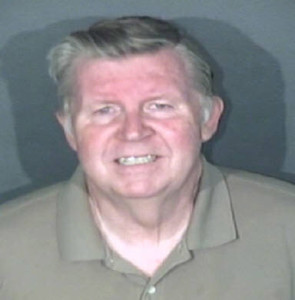
The Colorado Springs Gazette reports:
The inimitable tax-hating ex-con Doug Bruce is coming out swinging late in the campaign fight on issues he can’t stand…
The former El Paso County commissioner and state legislator, a devout Republican, takes special umbrage with his own party for supporting amendments Y and Z to change the way the state draws legislative and congressional districts, putting the map-making authority in the hands of independent commissions instead of under politicians who benefit from those maps.
Bruce said the two 12-member commissions — one for legislative and one for congressional districts — leave out minor parties, since they are one-third Republicans, one-third Democrats and one-third unaffiliated. Members also would be selected by retired judges, who overwhelming would be appointees of Democratic governors…
“It doesn’t fix it,” Bruce said of the ballot questions and gerrymandering. “It just slants everything to the Democrats, and the Republicans bought it hook, line and sinker.” [Pols emphasis]
As the author of the sweeping 1992 Taxpayer’s Bill of Rights (TABOR), Doug Bruce retains credibility among conservative Republicans that few other convicted felon tax evaders–not to mention one of the shortest and least illustrious records serving in the Colorado House–would expect. There are at least some Republican voters in Colorado who will hear that Bruce is opposed to a given measure and respond by opposing it too, just on the strength of Bruce’s recommendation. So, there’s that.
Back in reality, as the Gazette reports, the agreement that resulted in Amendments Y and Z had input from most of the principal Republican players in the last redistricting cycle, including those who claimed afterward with little factual basis that the 2011 redistricting/reapportionment process had led to a Democratic advantage. The state’s persistently split legislature and majority Republican congressional delegation do not support that contention, but it was the starting point for Republicans in the Fair Maps Colorado coalition–and their concerns have by their own admission been satisfied.
For our part, we’ve been on record for years consistent that the 2011 process was actually pretty good overall, and the resulting competitive districts and narrowly split elections we’ve seen for most of the 2010s has been reflective of the state’s political landscape as a whole. It was therefore our general view that initiatives to re-jigger the process were dubious solutions in search of problems, or at best a needless response to far worse gerrymandering headlines from other states. With that said, the careful, bipartisan crafting of Amendments Y and Z make them much less likely to produce any kind of nefarious result, which is what distinguishes this from previous failed attempts.
As for Doug Bruce? Notwithstanding a few holdouts, he’ll win these amendments more votes than he pulls.
Subscribe to our monthly newsletter to stay in the loop with regular updates!
Comments