U.S. Senate See Full Big Line

(D) J. Hickenlooper*

(D) Julie Gonzales

(R) Janak Joshi

80%

40%

20%

(D) Michael Bennet

(D) Phil Weiser
55%

50%↑
Att. General See Full Big Line

(D) Jena Griswold

(D) M. Dougherty

(D) Hetal Doshi

50%

40%↓

30%

Sec. of State See Full Big Line
(D) J. Danielson

(D) A. Gonzalez
50%↑

20%↓
State Treasurer See Full Big Line

(D) Jeff Bridges

(D) Brianna Titone

(R) Kevin Grantham

50%↑

40%↓

30%

CO-01 (Denver) See Full Big Line

(D) Diana DeGette*

(D) Wanda James

(D) Milat Kiros

80%

20%

10%↓

CO-02 (Boulder-ish) See Full Big Line

(D) Joe Neguse*

(R) Somebody

90%

2%

CO-03 (West & Southern CO) See Full Big Line

(R) Jeff Hurd*

(D) Alex Kelloff

(R) H. Scheppelman

60%↓

40%↓

30%↑

CO-04 (Northeast-ish Colorado) See Full Big Line

(R) Lauren Boebert*

(D) E. Laubacher

(D) Trisha Calvarese

90%

30%↑

20%

CO-05 (Colorado Springs) See Full Big Line

(R) Jeff Crank*

(D) Jessica Killin

55%↓

45%↑

CO-06 (Aurora) See Full Big Line

(D) Jason Crow*

(R) Somebody

90%

2%

CO-07 (Jefferson County) See Full Big Line

(D) B. Pettersen*

(R) Somebody

90%

2%

CO-08 (Northern Colo.) See Full Big Line

(R) Gabe Evans*

(D) Shannon Bird

(D) Manny Rutinel

45%↓

30%

30%

State Senate Majority See Full Big Line

DEMOCRATS

REPUBLICANS

80%

20%

State House Majority See Full Big Line

DEMOCRATS

REPUBLICANS

95%

5%

Generic selectors
Exact matches only
Search in title
Search in content
Post Type Selectors
August 05, 2014 02:06 PM UTC

Winners, Losers, and Lessons from Frackapalooza Deal

  •  
  • by: Colorado Pols
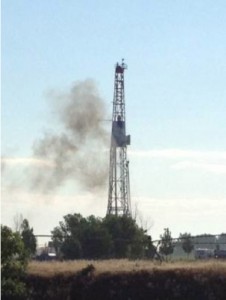
Photo courtesy Rep. Jared Polis

​News broke late yesterday that Gov. John Hickenlooper had reached a deal to avert dueling ballot measures related to fracking — and not a moment too soon. Yesterday was the final day to submit signatures to the Secretary of State's office for certification to make the November ballot. The deal has apparently met approval with Rep. Jared Polis, oil and gas executives, environmentalists, and even some Japanese tourists on 16th Street Mall (okay, we made that part up), and will culminate in the removal of four initiatives from the ballot (two backed by Polis, and two backed by the oil and gas industry) in exchange for the formation of a humongous "blue ribbon commission" that will make recommendations to the legislature. So, instead of ballot measures, the State will appoint 18 people to continue arguing about fracking long after Election Day.

Is this a good deal for Coloradans? A bad deal? That depends on who you ask, of course, and here at Colorado Pols, we sort of avoid the question because we focus our analysis on the pure politics of the deal. As always here at Colorado Pols, we limit our analysis to politics while leaving the policy debate to others. Which leads us to…

Frackapalooza 2014: Winners, Losers, and Lessons

In the interest of both time and space (relative though they may be), we're going to break this up into three separate posts. So up first, after the jump, are the big Winners from Frackapalooza:

WINNERS
Governor Hickenlooper is the big winner here, for obvious reasons. As the Denver Post editorial board opined:

It's a credit to Hickenlooper's leadership and tenacity that he was able to pull together an alternative to the ballot measures after virtually everyone else had given up on the idea weeks ago.

There's no question that a potential deal on Frackapalooza seemed out of reach just a few weeks ago, though the stakes were high enough — for all sides concerned — that enough key players never really "gave up" on the idea. Time had certainly run out on the feasibility of calling a special legislative session to deal with fracking, but the true deadline was always Aug. 4 — the final day for initiative campaigns to submit petition signatures to qualify for the 2014 ballot. All in all, there is no bigger victor than Hickenlooper, who gets to avoid the fracking issue (for the most part) in his re-election campaign; avoids a special legislative session where vote wrangling could have led to surprising outcomes; and probably makes it much more difficult for oil and gas companies to donate big money to Republican gubernatorial candidate Bob Beauprez.

Congressman Jared Polis was cast by the media as the villain in Frackapalooza — maybe "oil and gas executive" was too much of a cliche — but Polis has the luxury of time to help cement his image here. In both the short and long term, Polis is going to be remembered and recast as the politician who was able to move the system with his determination and, of course, his checkbook. Fracking isn't going to get more popular over time, and should the "blue ribbon commission" come up with some real solutions, it's likely that they will end up taking similar (if weakened) approaches that will inevitably be credited to Polis. And in a time in Congress where partisan gridlock and Republican leadership has all but shut down the legislative body, Polis showed that a Member of Congress can still work for his constituents — even if Congress itself won't budge.

Senator Mark Udall really, really wanted this issue to just sort of go away during his re-election campaign, and he got his wish. When a compromise appeared dead, briefly, Udall wasted no time in condemning the local control ballot measures proposed by Rep. Polis. For Udall, it was a pretty easy political choice to make; by coming out against the local control measures, Udall took away one of the last remaining sticks that Republican Senate candidate Cory Gardner had left in his campaign toolbox. Udall could still talk about the need to protect local communities but avoided supporting the ballot measures by calling them too broad.

The Oil and Gas Industry are obviously Winners here (though we've also designated a place for them in the "Losers" section as well). As we discussed in this space before, despite the ominous warnings from the industry and some elected officials, it's much more likely than not that the local control ballot measures would have passed in November. The O&G Industry was prepared to throw millions of dollars at the problem, but after losing 4 similar local elections last November, it's not clear that they could have found a message to penetrate the good feelings toward the theory of "local control' in general. Whatever concessions the Industry gave up to make this deal, they are much, much better off avoiding an election fight that was going to cost tens of millions to lose.

Comments

Recent Comments


Posts about

Donald Trump
SEE MORE

Posts about

Rep. Lauren Boebert
SEE MORE

Posts about

Rep. Gabe Evans
SEE MORE

Posts about

Colorado House
SEE MORE

Posts about

Colorado Senate
SEE MORE

52 readers online now

Newsletter

Subscribe to our monthly newsletter to stay in the loop with regular updates!