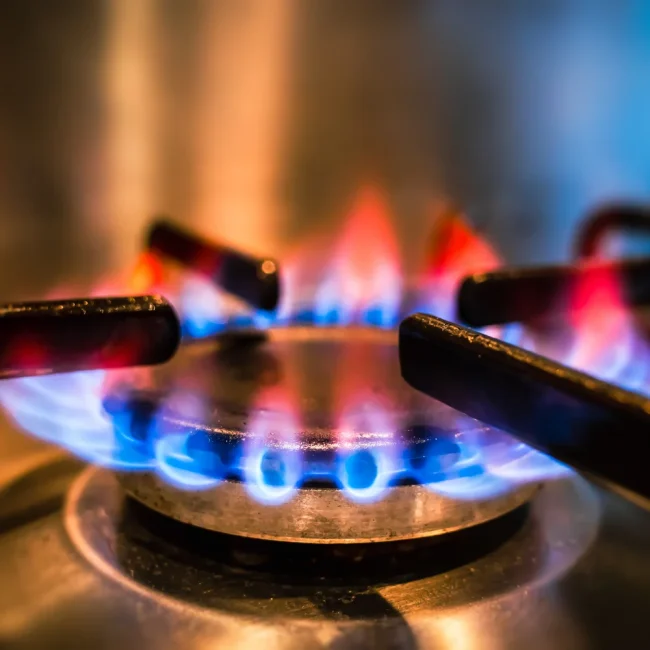
As Michael Karlik reports for the Colorado Springs Gazette’s political blog, a lawsuit seeking to halt a consumer product safety law passed this year by state lawmakers failed in federal court this week:
In June, Gov. Jared Polis signed House Bill 1161 into law, which requires retailers of gas stoves to affix a “yellow adhesive label” that reads “UNDERSTAND THE AIR QUALITY IMPLICATIONS OF HAVING AN INDOOR GAS STOVE.” The label must also include a URL or QR code to a webpage created by the state’s health department that provides “credible, evidence-based information on the health impacts of gas-fueled stoves.”
The law was scheduled to take effect on Aug. 6. However, on Aug. 5, the Association of Home Appliance Manufacturers filed a complaint asserting a single First Amendment violation and seeking an injunction against the law. The trade association alleged HB 1161’s labeling requirement unconstitutionally compels its members to convey a message they disagree with…
The injunction request from the Association of Home Appliance Manufacturers was rejected on procedural grounds and could be refiled, but the heart of the trade association’s request is that “there is no scientific consensus that gas stove use causes any health affects”–which sounds a lot like what tobacco companies argued for years about their products. As Colorado Public Radio reported last week when the case was filed, there is indeed plenty of evidence linking natural gas exposure from home appliances to health risks:
Recent studies have found that gas stoves release indoor air pollution linked to a greater risk of respiratory conditions and certain cancers. One study, for example, found roughly 13% of childhood asthma cases can be attributed to gas stoves.
Another recent study from a team at Stanford University found that gas stove emissions often contain more cancer-causing benzene than secondhand smoke. Followup research measured air quality levels in 87 homes with gas stoves in Colorado and California, concluding the appliances significantly increase cancer risk for adults and children.
The study also found that using vent hoods or opening windows can limit benzene exposure, but ventilation alone doesn’t fully eliminate cancer risk.
And that’s before we talk about blowing your house up or suffocating you.
The “burden” of requiring a sticker on gas appliances with a link to more information is pretty minimal, and other states like California routinely require product notices based on findings made by the state about the product’s safety. Republicans in the legislature opposed this bill as a “nanny state” measure, but the obvious risk of using gas appliances compared to their emission-free electric equivalents shouldn’t be controversial to point out. It only is among those who sell natural gas and products that burn the stuff.
Who happen to have aggressive legal representation.
Subscribe to our monthly newsletter to stay in the loop with regular updates!
Comments