U.S. Senate See Full Big Line

(D) J. Hickenlooper*

(D) Julie Gonzales

(R) Janak Joshi

80%

40%

20%

(D) Michael Bennet

(D) Phil Weiser
55%

50%↑
Att. General See Full Big Line

(D) Jena Griswold

(D) M. Dougherty

(D) Hetal Doshi

50%

40%↓

30%

Sec. of State See Full Big Line
(D) J. Danielson

(D) A. Gonzalez
50%↑

20%↓
State Treasurer See Full Big Line

(D) Jeff Bridges

(D) Brianna Titone

(R) Kevin Grantham

50%↑

40%↓

30%

CO-01 (Denver) See Full Big Line

(D) Diana DeGette*

(D) Wanda James

(D) Milat Kiros

80%

20%

10%↓

CO-02 (Boulder-ish) See Full Big Line

(D) Joe Neguse*

(R) Somebody

90%

2%

CO-03 (West & Southern CO) See Full Big Line

(R) Jeff Hurd*

(D) Alex Kelloff

(R) H. Scheppelman

60%↓

40%↓

30%↑

CO-04 (Northeast-ish Colorado) See Full Big Line

(R) Lauren Boebert*

(D) E. Laubacher

(D) Trisha Calvarese

90%

30%↑

20%

CO-05 (Colorado Springs) See Full Big Line

(R) Jeff Crank*

(D) Jessica Killin

55%↓

45%↑

CO-06 (Aurora) See Full Big Line

(D) Jason Crow*

(R) Somebody

90%

2%

CO-07 (Jefferson County) See Full Big Line

(D) B. Pettersen*

(R) Somebody

90%

2%

CO-08 (Northern Colo.) See Full Big Line

(R) Gabe Evans*

(D) Shannon Bird

(D) Manny Rutinel

45%↓

30%

30%

State Senate Majority See Full Big Line

DEMOCRATS

REPUBLICANS

80%

20%

State House Majority See Full Big Line

DEMOCRATS

REPUBLICANS

95%

5%

Generic selectors
Exact matches only
Search in title
Search in content
Post Type Selectors
October 24, 2024 09:51 AM UTC

Many invalidated ballots likely to result from Proposition 131

  •  
  • by: Evie Hudak

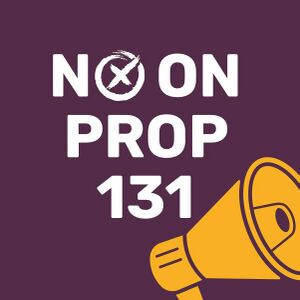
Proposition 131 is promoted as being focused on ranked-choice voting, but it is much more about implementing radical changes to the primary election system and restricting voter choice in the general election. The proposition would complicate the voting process, favor wealthier candidates, confuse voters, and fail to deliver a better system.

This measure introduces a convoluted primary voting method, potentially requiring either two separate ballots or, worse, one ballot with two sections containing entirely different voting procedures. It proposes an “all-candidate” primary for U.S. Senate and House, statewide positions like governor, and state Senate and House, asking primary voters to choose from all candidates for each of these races, regardless of political affiliation.

The top four candidates for each position would advance to the general election, regardless of the percentage of the votes they received. At the same time, voters would use the current primary process for U.S. president and many local races, selecting only one candidate for each position from their chosen political party.

This measure also requires a confusing process for the general election that is likely to create many invalidated ballots. For each specified federal and state race, voters would cast four “ranked preference” votes per race, and a computerized runoff would decide winners if no one gets 50%. If voters don’t use all four ranked votes for those races, they would lose their vote in the subsequent rounds of the computerized runoff. That’s why the University of Pennsylvania says ballots cast in RCV elections are 10 times more likely to be invalidated due to a mistake, without the voter knowing. For the presidential and local races, voters would use the current method of voting for only one candidate per race.

The “all-candidate” portion of Proposition 131 is designed to weaken the party system that many voters rely on to make informed decisions. Political parties provide voters with a framework to understand where candidates stand on key issues. Without this, voters may struggle to identify candidates’ policy positions or ideological leanings, thus tilting the advantage to wealthy candidates and wealthy donors who can afford to run expensive campaigns to influence voters. The 131 model would likely expand the use of “dark money” PACs and independent expenditures with murky or non-existent reporting rules.

And after spending an estimated $21 million in taxpayer money to rework our elections required to implement this measure, we’re not likely to see the promised results. In 2023, the University of Minnesota studied RCV elections in other states and cities and found little to no evidence it will produce the touted results of tempering elections, increasing turnout, and electing more moderate or diverse candidates.

Rather than experimenting with a flawed system like Proposition 131, we should focus on improving voter education and ensuring that all Coloradans can participate in a fair and democratic process.

This commentary does not reflect the position of any of the organizations the author belongs to other than the Colorado Democratic Party.

Comments

Recent Comments


Posts about

Donald Trump
SEE MORE

Posts about

Rep. Lauren Boebert
SEE MORE

Posts about

Rep. Gabe Evans
SEE MORE

Posts about

Colorado House
SEE MORE

Posts about

Colorado Senate
SEE MORE

83 readers online now

Newsletter

Subscribe to our monthly newsletter to stay in the loop with regular updates!