As the Denver Post’s Nick Coltrain reports, legislation that you might not have heard about being less exciting than the major fights this session nonetheless marks a significant policy victory for Democrats, expected to ease a major burden to obtaining care by the state’s most in need:
Coloradans who rely on Medicaid — the public health insurance for the state’s lowest-income individuals and children — will no longer need to pay nearly all copays under changes passed by the General Assembly and a law signed by Gov. Jared Polis.
Patients would still need to cover copays for non-emergency emergency room visits. Currently, Health First Colorado, the state’s Medicaid program, charges copays of $10 per day for inpatient hospital services, $4 for outpatient hospital services, $2 for primary care and $1 per day for radiology services, such as non-dental X-rays…
“People struggle to afford the cost of health care, even when they have insurance,” state Rep. Emily Sirota, a Denver Democrat and sponsor of the bill to eliminate most cost pays and member of the budget-writing Joint Budget Committee, said. “We know that for many Coloradans, a copay of any size can be a deterrent to seek that care. We think this will be good for our Medicaid patients and for the providers who serve them.”
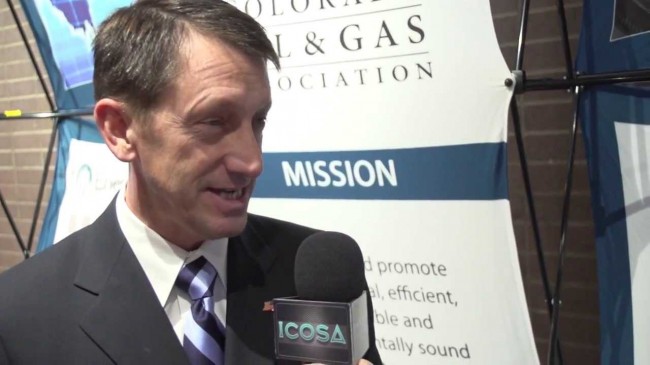
Senate Bill 23-222 eliminating copays for many covered services under Medicaid enjoyed bipartisan sponsorship from the Joint Budget Committee’s GOP Sen. Barbara Kirkmeyer, and passed the Senate with overwhelming bipartisan support. In the House the bill passed closer to party lines, with GOP Rep. Rod Bockenfeld crossing over to vote with the Democratic supermajority. But in order to understand the long-term significance of this bipartisan achievement, let’s go back in time to March of 2011, and listen to former Republican Sen. Greg Brophy talk about the importance of Medicaid recipients having, as he called it, “skin in the game.”
Brophy: We have grown the number of people getting free health care in Colorado. We’re up to 550,000 kids on Medicaid or SCHIP in Colorado, and they pay effectively nothing for their health care. And I don’t think that’s right. Everybody should have a little skin in this game, and I think what we’re going to end up doing, then, is seeking real copays and maybe even a little bit of a premium payment out of people who are on Medicaid or SCHIP.
Rosen: …Does that mean that poor kids are going to go untreated?
Brophy: Well, that’s what the opponents of charging people will say, but I think when you look at it what we’re doing as a matter of public policy is we are allowing people who have their kids on Medicaid to spend their money on other things. For instance, the average Medicaid recipient is four times more likely to smoke than the average Coloradoan. So we’re paying for their kids’ health care, and they’re buying cigarettes instead. And I think if you look at the statistics, you’ll see that they are also much more likely to play the lottery. So instead of paying for their kids’ health care, they are playing in the lottery and buying cigarettes. Oh, and by the way, most of them have air conditioning. So instead of paying for their kids’ health care, they are paying for their air conditioning bills, and it goes on and on and on. I think they should put a little bit of skin in the game.
It took every election between then and now to bring us to today’s changed political environment, where Sen. Brophy’s crass dismissal of the financial hardship faced by Medicaid recipients has not only aged poorly but now officially been repudiated in Colorado statute. Sen. Brophy’s complaints about Medicaid recipients blowing their money on “playing in the lottery and buying cigarettes” would be met with outrage in today’s State Senate, necessitating an apology like Rep. Matt Soper’s sort-of sorry earlier this session for threatening civil war over gun safety laws. Not to mention that in the era of climate change, dissing poor people for paying for “air conditioning” seems gratuitously meanspirited.
If you’re looking to show friends and neighbors a tangible example of how we’re a better state than we were ten years ago, this legislation tracks that change as well as any. It’s a good story to tell the kids about growing up to become, as a people, better people.
Subscribe to our monthly newsletter to stay in the loop with regular updates!
Comments