As the Denver Post’s Brian Eason reports, Gov. John Hickenlooper is calling state lawmakers back next month for a narrowly-focused special session of the legislature–the purpose being to fix an error in a key piece of legislation passed this year that is resulting in unexpected budget cuts to specific programs:
Gov. John Hickenlooper on Thursday called lawmakers back to the Capitol to fix a bill-drafting error that has been costing Denver-based institutions hundreds of thousands of dollars a month in marijuana revenue.
The special session set to start Oct. 2 will be the first in five years for Hickenlooper and the General Assembly, an extraordinary step for a governor who typically has deferred to lawmakers on legislative matters during his two terms.
“After hearing about the potential impact on citizens around the state, it is clear that this problem is best solved as soon as possible,” Hickenlooper said in a statement announcing his executive order, capping a day of speculation about his plans.
The error in question affects the bipartisan hospital provider fee and budget fix legislation Senate Bill 17-267, this year’s hard-won compromise bill hammered out between Democrats and Republicans led by Sen. Jerry Sonnenberg that averted much larger and more painful budget cuts. Specifically, the mistake eliminated marijuana tax funding for Denver RTD and the metro area’s Scientific and Cultural Facilities District (SCFD), along with a few other organizations, while intending to increase marijuana tax revenue–meaning an error completely counter to the bill’s intentions.
But as you might have expected, Republicans and conservative activists are howling over the special session and threatening to not cooperate–including Sen. Sonnenberg and Rep. Jon Becker, the two primary GOP sponsors of SB-267:
SB-267 Sponsor @JerrySonnenberg wasn’t contacted by Governor’s office until AFTER the session was called. #copolitics #coleg @hickforco https://t.co/di27p3bRQs
— Colorado Senate GOP (@ColoSenGOP) September 15, 2017
There was no need for special session. I am a hard NO on fix unless we fix transportation funding using current budget dollars. #coleg https://t.co/vybqJvAEOl
— Jon Becker (@RepJBecker) September 15, 2017
Intransigence that is outraging Democrats who worked with them:
Seriously? For something that was a total mistake? You want to leverage at the expense of zoo, museuems, & bus users? #coleg #copolitics
— KC Becker (@kcbecker) September 15, 2017
As for the state’s biggest conservative advocacy group, Americans for Prosperity-Colorado? Don’t bother. They’re all over the map. During the legislative session, AFP claimed to be “working with” Sen. Sonnenberg on SB-267, ostensibly to ensure it wasn’t too offensive to them. The organization was listed in lobbying disclosure forms as “monitoring” SB-267, not opposing, while then-AFP state director Michael Fields taunted Democrats about supposed GOP willingness to move forward:
$1.8B for roads in HPF bill. And helps rural hospitals. But @crisantaduran & you & @sjwasserman care more about politics #copolitics #Coleg https://t.co/QfVmA0nYFd
— Michael Fields (@MichaelCLFields) May 2, 2017
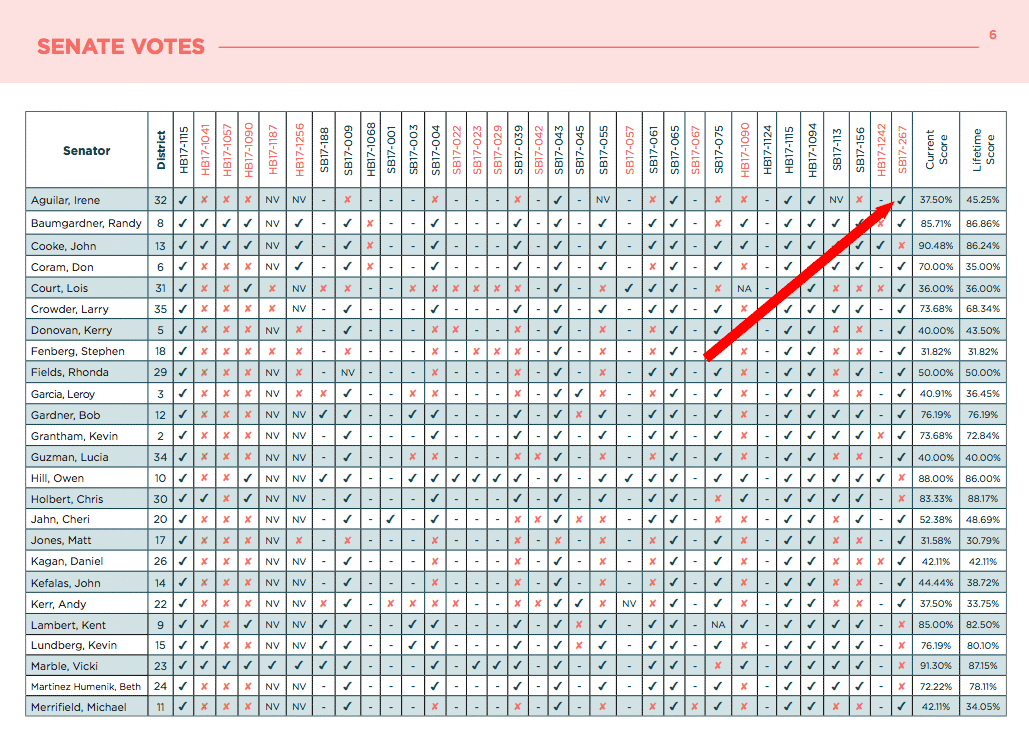
And the group’s 2017 Colorado legislative scorecard–the first version, anyway–was a little confusing, but appeared to consider a “yes” SB-267 vote a good thing:

This is from the original legislative scorecard from AFP for this year, and they count “yes” votes on SB-267 as favorable toward legislators’ scores–despite the fact that the bill is listed in red, which would seemingly mean AFP opposed it. A confusing read, but one that sat dormant for months.
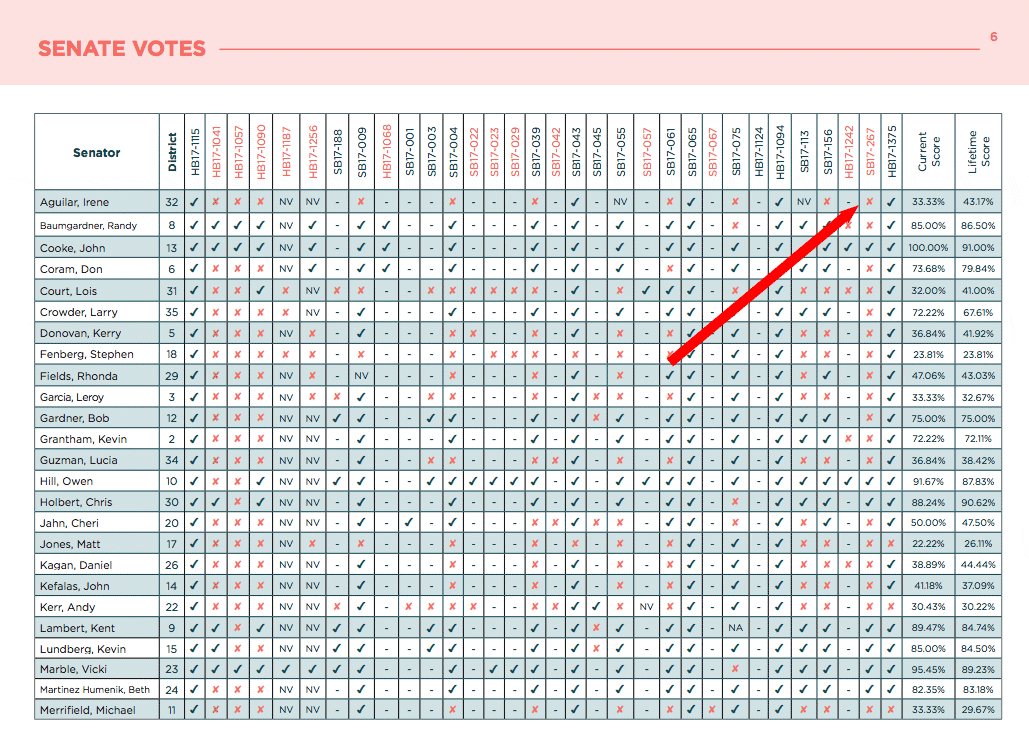
Until just yesterday, as this bill was once again bubbling up into current news–AFP released a new scorecard!

And suddenly, all those “yes” votes are unambiguously bad! You’ll notice the scores for legislators have been reweighted too, though that could be due to the introduction of other bills. Either way, it’s clear that AFP made a very large error of its own–and it could well be a result of them trying to rewrite their own history on this legislation.
Either way, what we’re talking about here is fixing what everyone agrees is an unintentional mistake–a mistake that is unintentionally costing institutions millions of dollars. There is simply no reason to hold these organizations hostage over this error to demand unrelated concessions. In fact, it could be extremely toxic politically for Republicans if they go down this road. You shouldn’t exploit bipartisan drafting errors to extract a political pound of flesh later. And if you do, voters should know that’s how you roll.
Because while voters don’t like hearing about drafting errors, they really don’t like hearing about shenanigans.
Subscribe to our monthly newsletter to stay in the loop with regular updates!
Comments