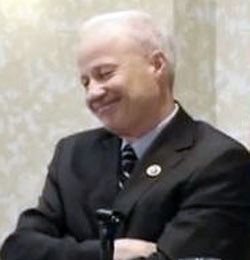
A CNN story caught our attention regarding trouble for GOP Rep. Marsha Blackburn of Tennessee, now a candidate for the U.S. Senate–but facing fierce headwinds due to her co-sponsorship of legislation now widely blamed for worsening the crisis of opioid pain killer addiction in the United States. This is the same legislation that led to the recent withdrawal of Rep. Tom Marino from consideration for the post of drug policy czar in Donald Trump’s White House:
Rep. Marsha Blackburn’s support for a drug law that she acknowledged might have caused “unintended consequences” is marring her entry into Tennessee’s Senate race — with her Democratic opponent saying she should drop out and potentially stronger foes in both parties now more seriously considering entering the contest.
Blackburn, who last week launched her bid for the retiring Sen. Bob Corker’s seat, co-sponsored the measure that was the subject of Sunday’s blockbuster investigation by “60 Minutes” and The Washington Post. The Blackburn-backed law, whistleblowers said, made it easier for drug companies to distribute opioids across American communities and thwart the Drug Enforcement Agency.
Already, the lead sponsor of that bill, Pennsylvania Republican Rep. Tom Marino, who took nearly $100,000 in campaign contributions from pharmaceutical interests, has withdrawn as President Donald Trump’s nominee to be the nation’s drug czar. Marino and Blackburn asked a government watchdog to investigate a DEA official who warned them in 2014 that their bill would aid criminals, accusing the official of intimidation.
Te perverse effect of this legislation, which was sold on the premise of “effective drug enforcement” while “ensuring patient access” to opioid pain medication, was to greatly increase the supply of powerful and addictive drugs. These drugs were both abused legally by patients who received unethically large prescriptions from doctors at walk-in “pain management” clinics, and also sold on the black market for many times their legal purchase price–both of which greatly worsened the crisis the legislation was passed to address. Newly-addicted patients who find their source of legal opioids cut off frequently turn to heroin as an alternative, with all the attendant social evils of the illicit drug trade.
Needless to say, nominating the lead sponsor of this legislation to be the White House’s drug policy czar invites fundamental questions about the Trump administration’s own ethics–not the first such questions, of course, given Trump’s Cabinet comprised of almost perfectly destructive misfits for the departments they were nominated to lead. But serious questions nonetheless.
And as CNN’s Eric Bradner continues, the and Reps. Marino and Blackburn aren’t the only ones in the hot seat:
The damage could extend beyond Marino’s nomination and Blackburn’s Senate race.
Three other Republicans who are along Democrats’ top targets in the 2018 midterms — Reps. Mike Coffman of Colorado, [Pols emphasis] Ryan Costello of Pennsylvania and George Holding of North Carolina — were all at times co-sponsors of Marino’s bill.
And with that, Tom Marino’s problem is now Rep. Mike Coffman’s problem. Yes, the bill was signed into law by President Barack Obama, but Obama’s not in office anymore. Today, the sponsors of this legislation who still have something to lose are facing the consequences of its perverse effects. For Rep. Tom Marino, those consequences just put a hard ceiling on his political career. For Rep. Blackburn, seeking to represent a state that has been ravaged by opioid addiction and preventable deaths, the same may be true.
Why exactly did Mike Coffman sign on as a sponsor of this bill? Who from the pharmaceutical industry lobbied him to do it? Was there a price? What does Mike Coffman say today about legislation he sponsored that has now been shown to have done widespread harm instead of good? A whole slew of pointed questions now need to be answered–and whatever those answers may be, the line of attack in next year’s elections against Coffman from his sponsorship of this bill is obvious.
And potentially, quite devastating.
Subscribe to our monthly newsletter to stay in the loop with regular updates!
Comments