Limited polling released so far on Proposition 115, the ballot measure to criminalize abortions in Colorado performed later in pregnancy, is running closer than previous abortion ban ballot measures in Colorado–though still expected to be defeat, likely not by the 30-point margins that characterized previous failed attempts to impose a total ban on abortion in Colorado from the moment of conception known as the “Personhood” initiatives.
This year, you can give anti-abortion activists some credit for muddying the question of banning abortion access by proposing a ban on abortion “only” after 22 weeks. The imposition of a non-medical cutoff date for abortion care with no exceptions for rape or incest would of course be a major victory for abortion opponents in Colorado, in a state which has held off attempts to politically regulate a procedure the right to which is guaranteed (for now) by the Roe v. Wade Supreme Court decision.
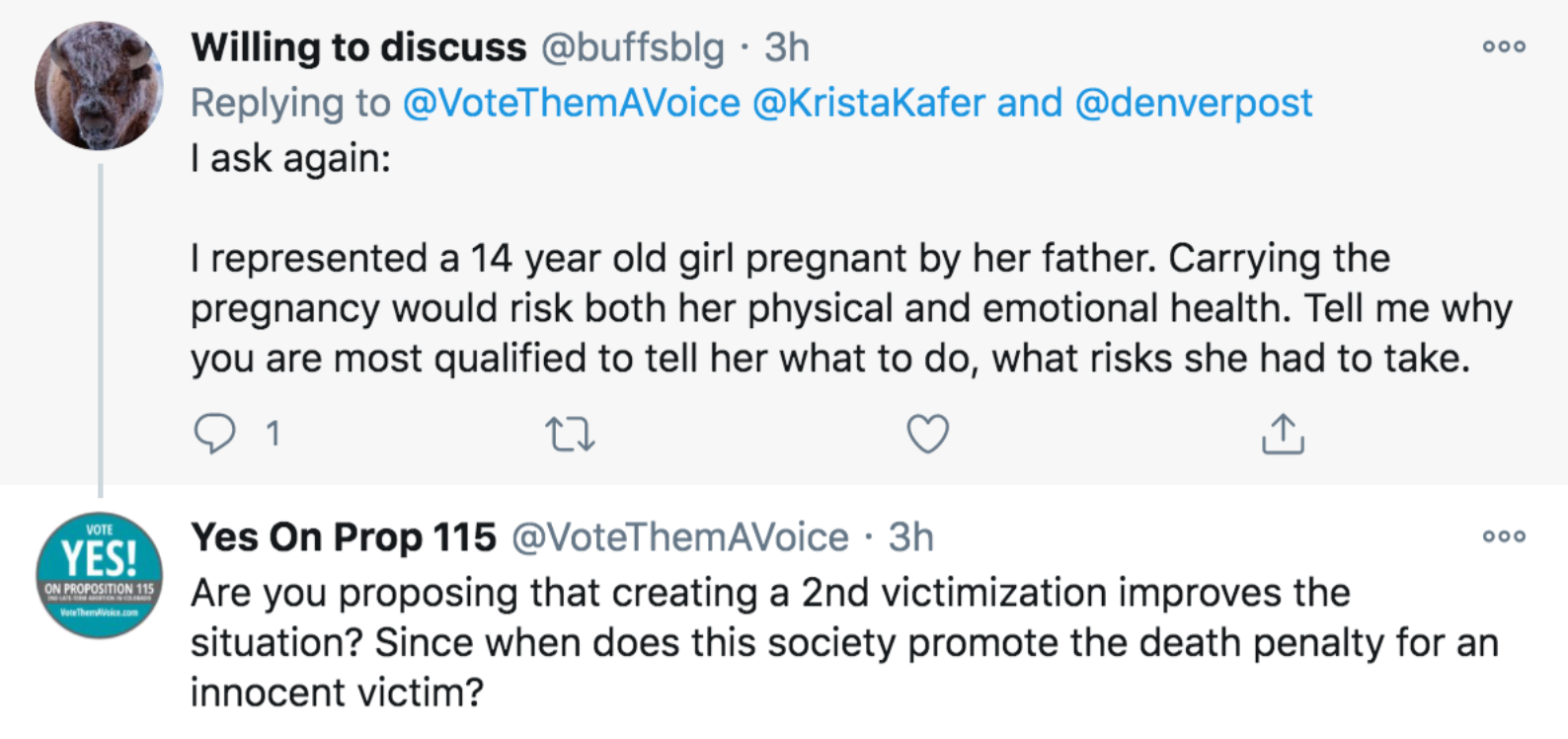
The anti-abortion activists who put this new flavor of abortion ban on the ballot have of course not suddenly become converts to legal abortion under 22 weeks. Proposition 115’s proponents consider the measure to be an incremental step along the way to a total ban on abortion–and as the election approaches, it’s getting harder for backers to conceal this:

Denver Post columnist Krista Kafer took it a step further this weekend, calling an exception for rape or incest in Proposition 115 “unnecessary”:
Some opponents of Proposition 115 want unnecessary loopholes added to the proposal. Proposition 115 only impacts late-term abortion. Abortions of babies conceived by rape or incest are almost always conducted early in the pregnancy. There is no reason to wait until the child is viable…
As you can see, it’s very easy to lure Proposition 115 supporters out into the open and expose their broader opposition to abortion well beyond the scope of this ballot measure. The argument that an exemption to allow abortion in a case incest or sexual assault is a “second victimization” applies as much to an abortion performed before 22 weeks as after. And if you believe that abortion in cases of rape and incest is a “death penalty,” you’re very much in the minority of Americans.
In Kafer’s case, she tosses out her own presumptions about questions that in Colorado are strictly between a doctor and a patient. We’re not interested in debating with Kafer or anyone else exactly how many abortions due to cases of rape or incest occur or when, at what precise point in pregnancy fatal genetic defects may be detectable, or any other presumption she makes about these issues.
And why not? Because we’re not doctors or their patients, and those are the only people who should be making these decisions. As soon as the door opens to second-guessing doctors bound by professional ethics making medical decisions with their patients, which is what Proposition 115 is all about, the much greater restrictions Proposition 115’s supporters have in mind are ready to go–awaiting only the “momentum” Prop 115 would give them.
If you believe Proposition 115 supporters have any intention of stopping with Proposition 115, and reading between the lines of their own words is not enough, all you have to do is ask them. The honest ones will readily confess it’s merely the first chip at the edifice.
Subscribe to our monthly newsletter to stay in the loop with regular updates!
Comments